 Pin this
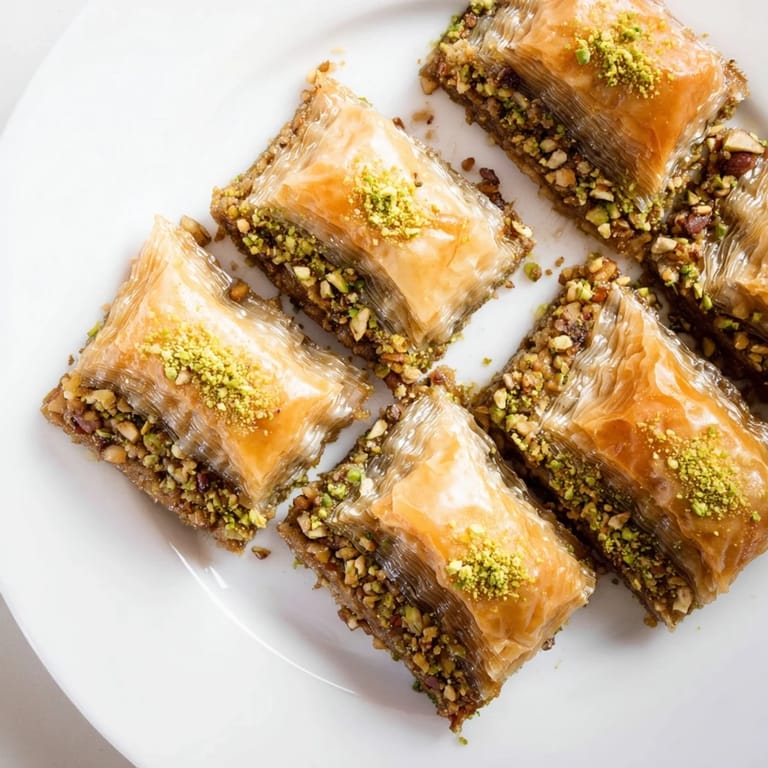
 My first encounter with baklava wasn't in a Turkish kitchen, but in a small bakery tucked behind an Istanbul carpet shop, where the owner's grandmother had been making it the same way for forty years. She handed me a piece with such pride, the honey still warm, and I bit into it expecting sweetness but found something more—a perfect balance of crisp and tender, nutty and floral. Years later, I finally asked for her secret, and she laughed: it wasn't one thing, but patience with every layer. That moment taught me that baklava is less about following steps and more about respecting the dance between phyllo and butter, nuts and syrup.
I remember making this for a book club that turned into an unexpected dinner party, and I was genuinely nervous—baklava felt fancy, untouchable. But as the layers built up and the kitchen filled with that cinnamon-butter smell, my anxiety melted away. When I poured the warm syrup over the golden pastry fresh from the oven, one friend actually gasped, and suddenly it didn't matter that I'd never made it before. That night, I understood: baklava isn't difficult, it just asks you to show up and be present with each layer.
Ingredients
- Walnuts, finely chopped (1 ½ cups): The backbone of the filling, providing earthiness and crunch that stays textured even after soaking in syrup.
- Pistachios, finely chopped (1 cup): These add a subtle color and a delicate, almost floral note that makes people pause mid-bite to ask what that flavor is.
- Almonds, finely chopped (½ cup): A gentler nut that binds the mixture slightly and prevents the filling from feeling too coarse.
- Granulated sugar for filling (½ cup): This dissolves slightly into the nuts when the syrup soaks through, creating pockets of concentrated sweetness.
- Ground cinnamon (1 tsp): Don't skip or substitute—it's the spice that makes people ask if there's cardamom or clove, even though it's just cinnamon.
- Phyllo dough, thawed (1 lb): The magic ingredient; it must be thawed slowly in the refrigerator overnight or at room temperature for hours, never rushed.
- Unsalted butter, melted (1 cup): Use real butter, not margarine—it's the difference between crispy and greasy, and it's worth the extra cost.
- Honey (1 cup): The sweetness that defines the whole dessert; use something you'd actually enjoy eating on toast, not the cheapest option.
- Water (1 cup): This dilutes the honey syrup so it soaks in rather than sitting heavy on top.
- Granulated sugar for syrup (1 cup): Combined with honey, this creates the perfect viscosity for a syrup that clings to every layer.
- Lemon juice (1 tbsp): The secret weapon that cuts through the sweetness and makes everything taste brighter.
- Lemon zest (1 strip): Added for aroma during cooking, then removed before pouring—it perfumes the syrup without overwhelming it.
- Cinnamon stick (1): Like the zest, this flavors the syrup subtly while you simmer it, adding warmth without competing with the filling's cinnamon.
Tired of Takeout? 🥡
Get 10 meals you can make faster than delivery arrives. Seriously.
One email. No spam. Unsubscribe anytime.
Instructions
- Prepare your workspace and oven:
- Preheat to 350°F and butter your 9x13 baking dish generously—this prevents sticking without overpowering the delicate flavor. Have everything ready before you touch the phyllo, because once it's exposed to air, it dries faster than you'd think.
- Mix the nut filling:
- Combine walnuts, pistachios, almonds, sugar, and cinnamon in a bowl and set it aside. The sugar begins coating the nuts, which helps them stay textured during baking.
- Unroll phyllo carefully:
- Lay the thawed phyllo dough on a work surface and immediately cover it with a barely damp kitchen towel. Phyllo is dramatic—expose it for thirty seconds too long and it'll crack and shatter when you try to layer it.
- Build the first phyllo base:
- Take one sheet of phyllo, place it in your buttered dish, and brush it thoroughly with melted butter using long, gentle strokes. Repeat this process eight times, layering and buttering each sheet until you have a sturdy base that won't tear when you add the nuts.
- Add the first layer of nuts:
- Sprinkle one-third of your nut mixture evenly over the phyllo base. Don't pack it down; let it sit loosely so the syrup can reach every layer.
- Build the middle layers:
- Layer and butter five more phyllo sheets, sprinkle another third of the nuts, then repeat with five more sheets and the final third of nuts. You're essentially creating three nut sandwiches separated by buttery phyllo.
- Finish with the top layers:
- Butter and layer the remaining eight to ten phyllo sheets on top, making sure the very top sheet is well-buttered—this is what catches the heat and becomes gorgeously golden.
- Score before baking:
- Using a sharp knife, cut the baklava into diamonds or squares. Some people score only halfway through; I cut all the way to the bottom so the syrup can seep into every crevice.
- Bake until golden:
- Bake for forty-five minutes until the top is deep golden brown and you can hear it crackling slightly when you move the dish. The aroma will be almost overwhelming.
- Make the honey syrup:
- While baklava bakes, combine honey, water, sugar, lemon juice, zest, and cinnamon stick in a saucepan. Bring to a boil, then lower heat and simmer gently for ten minutes—you're not trying to reduce it aggressively, just infuse it with warmth and flavor.
- Cool and strain the syrup:
- Remove the lemon zest and cinnamon stick, and let the syrup cool slightly—if you pour boiling syrup over hot pastry, it'll soak through too fast and make the bottom layers mushy.
- Pour the syrup immediately:
- The moment baklava comes out of the oven, pour the warm syrup slowly and evenly over the hot pastry. This is the magic moment—the contrast between hot pastry and warm syrup means it absorbs perfectly without getting soggy.
- Let it rest and soak:
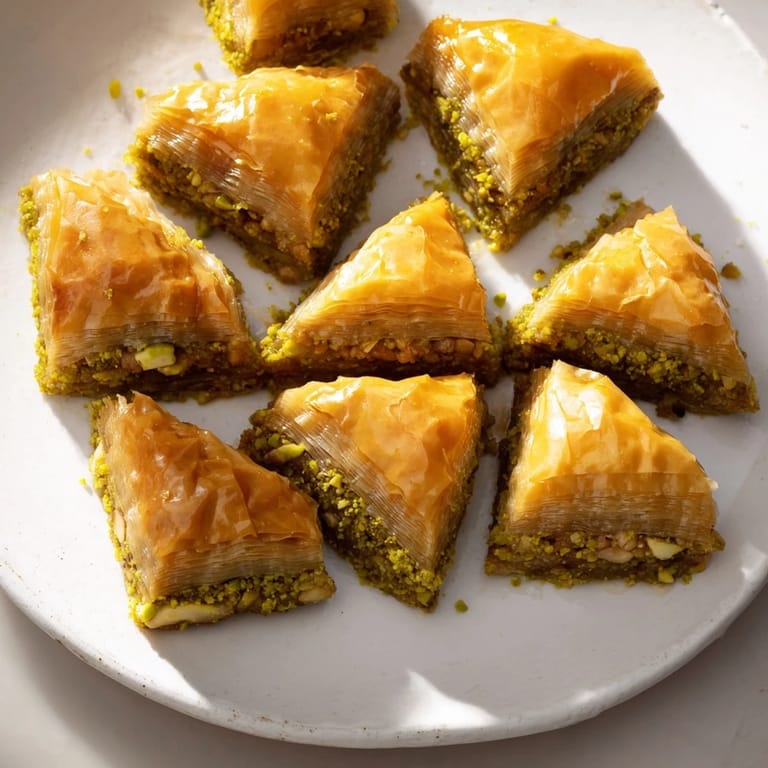
- Allow the baklava to cool completely at room temperature, which takes at least four to six hours. This resting period is when the syrup fully penetrates every layer and the texture becomes that perfect combination of crisp outside and tender inside.
 Pin this
 The best compliment I ever received for this baklava came from my neighbor who knocked on my door at ten in the morning asking if I'd made the one she'd smelled baking the day before. I hadn't expected my kitchen to broadcast its work that boldly, but there it was—cinnamon, butter, and honey announcing themselves down the hallway. When I gave her a piece, she closed her eyes mid-bite, and I realized this dessert had become a small bridge between us, a moment of shared sweetness that had nothing to do with how long I'd spent in the kitchen.
The Phyllo Mystery
Phyllo dough intimidates most home cooks, but it's really just asking for respect and moisture. The key is that it needs butter between every layer—not just for flavor, but because butter is what creates steam, and steam is what makes phyllo shatter in the most satisfying way when you bite into it. I learned this the hard way when I tried to save calories by skipping butter on a few sheets; those layers stayed tough and chewy instead of crisp. Now I brush generously, letting the butter pool slightly in the corners, and the difference is night and day.
Why Syrup Temperature Matters
The moment I understood why recipes insist on pouring warm syrup over hot baklava, everything clicked. Cold syrup on hot pastry creates a shock that causes the top to firm up too quickly, trapping the warmth inside and making the bottom layers soggy. Warm syrup on hot pastry, though, flows slowly and deliberately, seeping through layers and letting the whole thing cool uniformly together. It's the difference between something that tastes like it was made yesterday and something that tastes like it was just finished. Temperature control here is silent, invisible work that makes all the visible difference.
Storage and Sharing
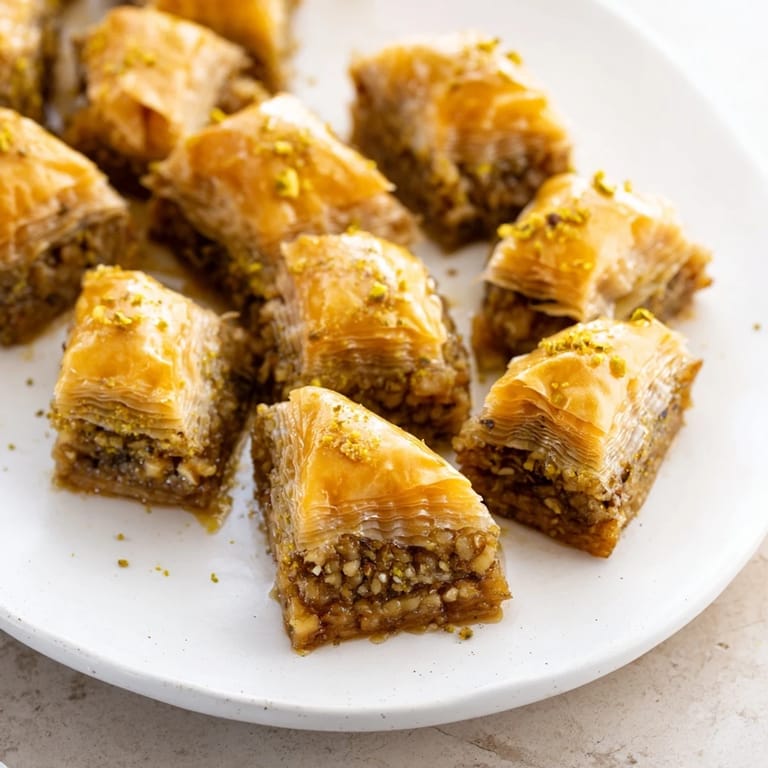
Baklava keeps for a week at room temperature in a covered container, which makes it the perfect make-ahead dessert for people who actually want time to enjoy their own party. I've learned to cut pieces in half before storing them—partially not to eat more, but because it's easier to grab one piece when you want it instead of committing to a full diamond at midnight. It also freezes beautifully for up to three months, syrup and all, so if you find yourself with leftover baklava, you've basically created edible currency.
- Keep it covered and at room temperature; refrigeration can dry it out faster than you'd expect.
- Before serving after a few days, you can gently warm individual pieces in a 275°F oven for five minutes to restore some crispness.
- Pair it with strong Turkish coffee or black tea, because the bitterness of the drink is exactly what your palate needs after all that honey.
 Pin this
 Baklava is one of those desserts that feels fancy enough for company but approachable enough to make just for yourself on a quiet afternoon. Once you've made it once, the intimidation fades and you realize you've joined a tradition that spans centuries and borders.
Recipe Questions
- → What nuts are used in this dessert?
A combination of finely chopped walnuts, pistachios, and almonds provides a rich and textured filling.
- → How is the honey syrup prepared?
Honey is simmered with water, sugar, lemon juice, lemon zest, and a cinnamon stick to create a fragrant syrup poured over the warm pastry.
- → What is the best way to achieve crisp phyllo layers?
Butter each phyllo sheet generously and layer carefully to ensure crispness after baking.
- → Can the honey syrup be customized?
Yes, substituting some honey with orange blossom water offers a lighter floral flavor.
- → How long should the dessert rest before serving?
Allow the pastry to cool completely and soak for at least 4 hours to absorb the syrup fully.