 Pin this
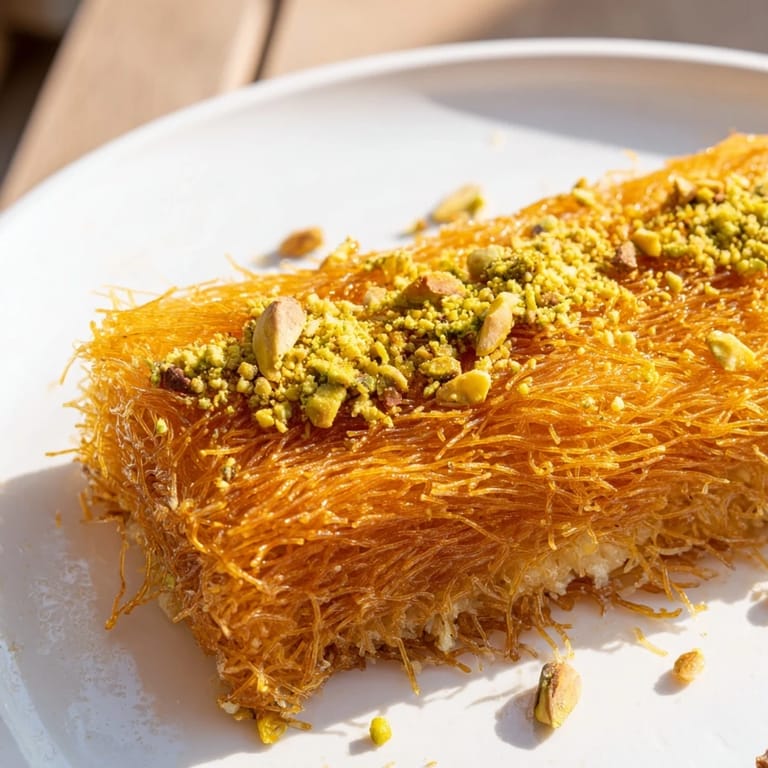
 The first time I watched my grandmother make knafeh, I couldn't take my eyes off the transformation happening in that baking dish. Golden threads of phyllo were crisping up under the oven's heat, and when she pulled it out and flipped it onto a platter with such confidence, I realized this wasn't just dessert—it was theater. The moment she poured that fragrant syrup over the still-warm pastry, the kitchen filled with the unmistakable scent of orange blossom and rose, and I understood why this dish gets brought to every celebration in our family.
I made this for my neighbors last spring when they helped us move, and I'll never forget how quiet the kitchen got once everyone took their first bite. Someone asked if I'd bought it from a bakery, and another person immediately asked for the recipe—that's when I knew this version was a keeper. Watching them enjoy something I made from scratch, something that took just an hour but tasted like it required a culinary degree, changed how I think about cooking.
Ingredients
- Akawi cheese (400 g): This salty, stretchy cheese is what makes knafeh authentic, and soaking it removes the harshness while keeping that signature melt. If you can't find it, low-moisture mozzarella works beautifully and saves you the overnight soaking step.
- Ricotta cheese (200 g): It softens the sharpness of the Akawi and adds a subtle sweetness that balances the salty-sweet nature of the dish.
- Kataifi pastry (250 g): These fine, shredded strands create that impossibly crispy texture, and you must thaw them properly or they'll break apart when you try to separate them.
- Unsalted butter (100 g): Melted and mixed through every strand of kataifi, this is what creates the crackling, golden crust that makes people audibly sigh when they eat it.
- Sugar (250 g) and water (180 ml): The syrup base that brings everything together with moisture and subtle sweetness.
- Lemon juice (1 tbsp): A small amount keeps the syrup from being cloying and adds brightness against the floral notes.
- Orange blossom water and rose water (1 tbsp each): These are the soul of the dish—they transform something simple into something that tastes like celebration. Don't skip them, and measure carefully because a little goes a long way.
- Pistachios (2 tbsp, finely chopped): The final garnish that adds color, a slight bitter edge, and proof that you cared enough to finish it properly.
Tired of Takeout? 🥡
Get 10 meals you can make faster than delivery arrives. Seriously.
One email. No spam. Unsubscribe anytime.
Instructions
- Prepare your cheese:
- If using Akawi, start soaking it hours ahead or overnight, changing the water every hour or so to draw out the salt. Pat it dry thoroughly, then shred or slice it thinly—this lets it melt evenly. Mix it with ricotta and set aside; you're creating the bridge between crispy and creamy.
- Coat the kataifi:
- Gently separate the thawed phyllo strands in a large bowl without crushing them, then pour melted butter over everything and toss gently until each strand is coated. This is where the crispiness comes from, so don't be timid.
- Build the base:
- Spread half the buttered kataifi into your greased baking dish, pressing down just enough to create a firm base. You want it compact but not compressed.
- Add the cheese layer:
- Spread your cheese mixture evenly over the pastry base. This is where the warmth of the oven will make it stretch and gooey.
- Top and finish:
- Cover with the remaining kataifi, pressing gently so everything stays together. Bake at 180°C for 30-35 minutes until the top is deep golden and you can hear a faint crackle when you tap it.
- Make the syrup while it bakes:
- Combine sugar, water, and lemon juice in a saucepan, bring to a boil, then simmer for 8-10 minutes until it thickens slightly and coats the back of a spoon. Remove from heat, stir in the orange blossom and rose water, and let it cool completely—the temperature contrast matters.
- The flip (the moment of truth):
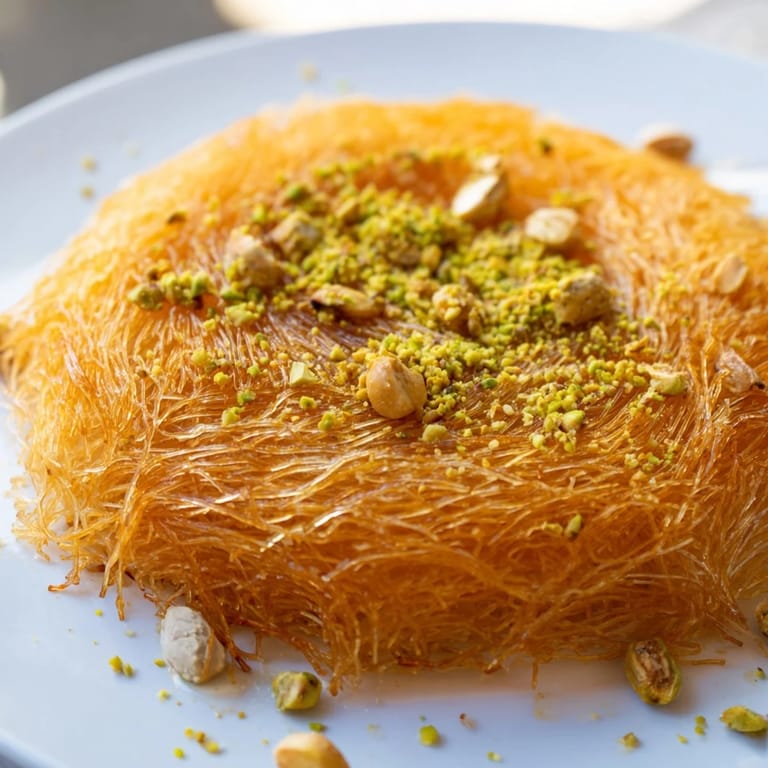
- This is where confidence wins. Let the knafeh rest for just a minute, then place your serving platter firmly on top of the baking dish and flip it decisively. Listen for that satisfying slide, then slowly lift away the dish. The cheese will be on top now, caramelized from the bottom.
- Soak and garnish:
- Pour half the cooled syrup evenly over the hot knafeh—the warmth will absorb it just enough. Scatter pistachios over the top and drizzle with honey if you like. Serve immediately while the contrast between warm and crispy is still dramatic.
 Pin this
 There's a moment between pulling knafeh from the oven and plating it where the whole kitchen smells like heaven. My son once asked if he could smell the orange blossom, and when I said yes, he understood why his great-grandmother made this for every family gathering. That's when food stops being dinner and becomes a conversation between generations.
The Texture Trick
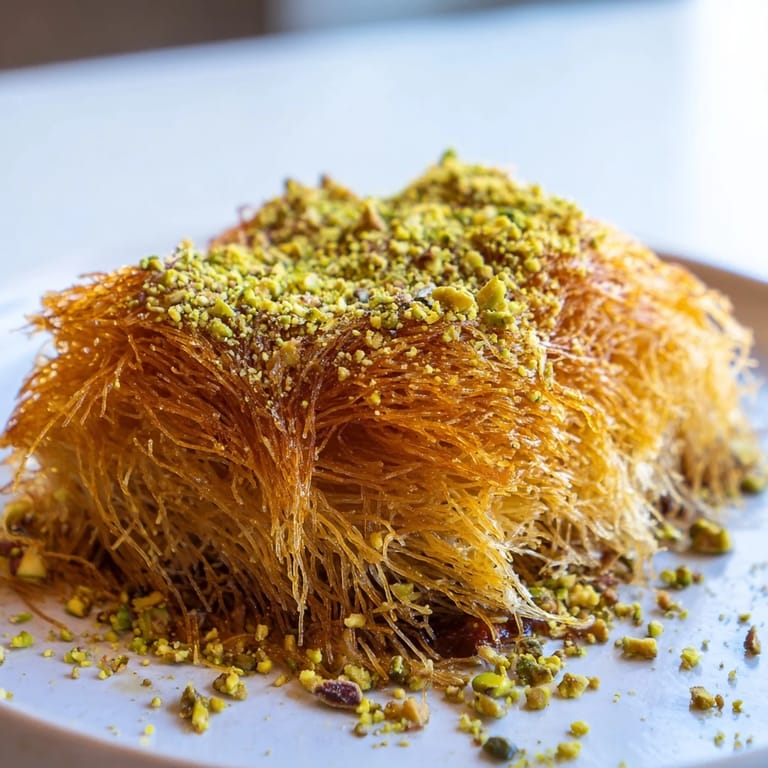
The magic of knafeh lives in the texture interplay, and once you've made it once, you'll start experimenting with timing. If you like it crispier, add a minute or two under the broiler right after baking—just watch it like a hawk because those strands go from golden to burnt in seconds. Some people prefer a softer top, and that's fine; it just means pulling it out a few minutes earlier and letting it set before inverting.
Syrup Chemistry
The syrup is where subtle technique matters most. Sugar, water, and lemon juice create the base, but those floral additions—orange blossom and rose water—need restraint. I've seen people drown knafeh in too much syrup or make it taste like perfume, and both are disappointments. The goal is for the floral notes to whisper, not shout, letting people taste the cheese and pastry first.
Timing and Service
Knafeh is one of those rare desserts where timing truly matters. Ideally, you bake it within an hour of serving, apply the syrup while everything is still warm, and get it to the table before the crispiness starts surrendering to the moisture. That said, if you make it ahead, you can reheat it gently in the oven for 5-10 minutes to restore some of that texture.
- Serve it warm, never cold, because the flavors come alive when the cheese is still pliable.
- A side of strong Turkish coffee or mint tea cuts through the sweetness perfectly and feels authentic to how this dessert is traditionally enjoyed.
- Leftover knafeh (if there is any) stays best covered at room temperature rather than refrigerated, where it hardens and loses its charm.
 Pin this
 Making knafeh isn't just about following steps—it's about understanding that layers of butter, cheese, and floral syrup can create something that tastes like a celebration. Once you nail it, you'll find yourself reaching for this recipe whenever you want to feel like you've given someone something genuinely special.
Recipe Questions
- → What cheese types work well in this dish?
Akawi cheese is traditional, but low-moisture mozzarella and ricotta provide a creamy and mild alternative.
- → How is the kataifi pastry prepared?
Gently separate the shredded phyllo strands and coat them evenly with melted butter before layering to ensure a crisp, golden finish.
- → What flavors are infused in the syrup?
The syrup is delicately flavored with orange blossom and rose waters, complemented by lemon juice for subtle tanginess.
- → How to achieve a crispier top crust?
After baking, placing the dish under a broiler for 1–2 minutes will add extra crispness to the kataifi layer.
- → Can this dish accommodate dietary restrictions?
This contains dairy, gluten, and tree nuts; check ingredients if allergen sensitivities are a concern.