 Pin this
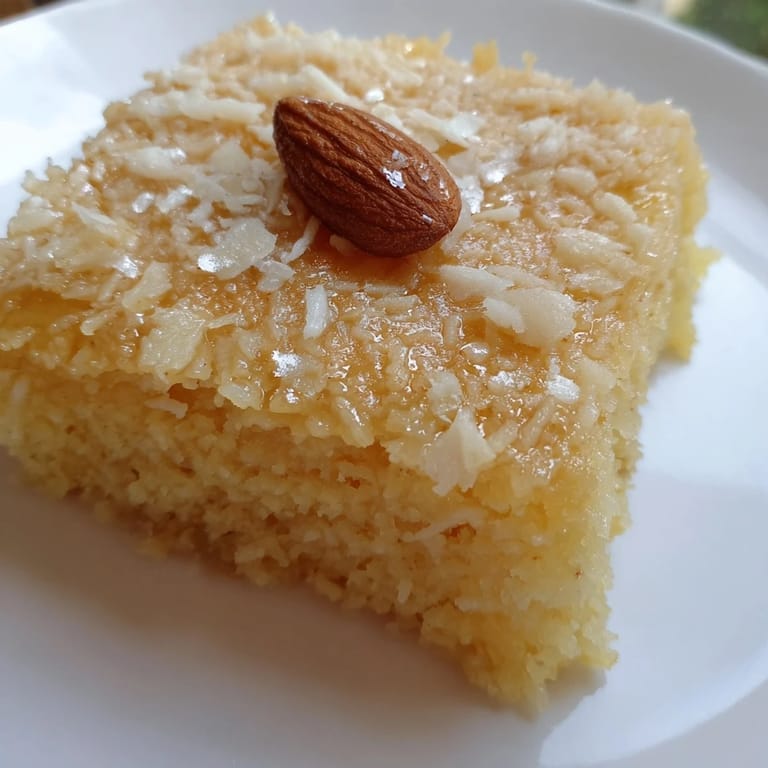
 The first time I tasted basbousa, I was sitting in my neighbor's kitchen on a Friday afternoon, and she'd just pulled this golden square from the oven. The smell hit me like a warm embrace—toasted coconut, butter, and something floral from the rose water in the syrup. She told me it was her grandmother's recipe, and when I bit into it, I understood why it had survived generations. The semolina was impossibly moist, the coconut added this subtle sweetness, and that syrup soaking through made it unforgettable. Now I make it whenever I want to feel that same comfort.
I made this for my coworkers one Monday morning, nervous because I'd only made it twice before. But as soon as I opened the container, everyone stopped talking. Someone said it tasted like a hug, and I laughed because that's exactly what my neighbor had served me that day. It became the dessert people ask me to bring to potlucks now.
Ingredients
- Fine semolina: Use fine, not coarse—it dissolves into the batter and creates that signature moist, tender crumb.
- Granulated sugar: Mix it into the dry ingredients first so you avoid lumps in the batter.
- Desiccated coconut, unsweetened: Unsweetened is key because you're adding plenty of sugar through the syrup.
- Plain yogurt: This is what keeps basbousa impossibly moist; don't skip it or use flavored varieties.
- Unsalted butter or ghee, melted: Ghee adds a richer flavor if you can find it, but melted butter works beautifully.
- Baking powder: Just enough to give the cake a gentle lift—don't add extra or it becomes cakey instead of dense and moist.
- Vanilla extract: A small touch that rounds out the flavor without overpowering the coconut.
- Salt: A pinch brings out the sweetness and balances the coconut.
- Whole blanched almonds: They look elegant pressed on top and add a subtle nuttiness; pistachios work too if almonds aren't your thing.
- For the syrup—sugar and water: This ratio creates a light syrup that soaks into the hot cake without making it soggy.
- Lemon juice: It cuts through the sweetness and keeps the syrup from feeling heavy.
- Rose water or orange blossom water: Optional, but this is the secret ingredient that makes it taste authentically Egyptian—use it if you can.
Tired of Takeout? 🥡
Get 10 meals you can make faster than delivery arrives. Seriously.
One email. No spam. Unsubscribe anytime.
Instructions
- Set your oven and pan:
- Preheat the oven to 350°F while you grease a 9x9 inch pan with butter or a light coating of tahini. Cold pans make the bottom dense, so having it ready matters more than you'd think.
- Build the dry mix:
- In a large bowl, whisk together semolina, sugar, coconut, baking powder, and salt until everything is evenly distributed. This takes about a minute and prevents clumping later.
- Bring it together:
- Pour in the yogurt, melted butter, and vanilla, then stir with a spatula until you have a thick, cohesive batter that holds together. It should feel like wet sand, not runny.
- Press and mark:
- Spread the batter into the pan and smooth the top with damp hands or a spatula. Using a sharp knife, score it into 12 squares or diamonds—this guides your cuts later and makes it look intentional.
- Top with almonds:
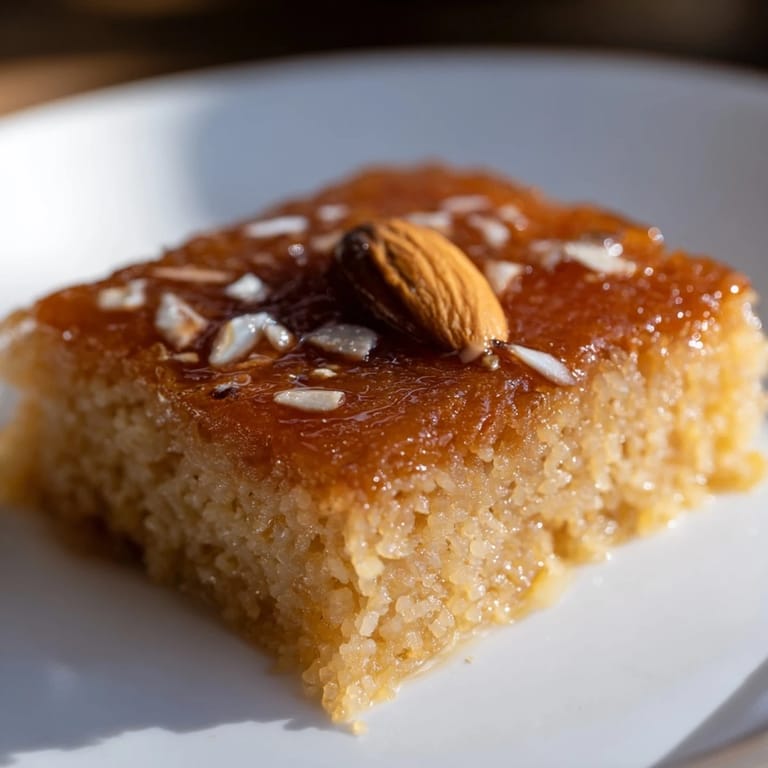
- Press one whole almond into the center of each piece. They'll stay in place and toast beautifully in the oven.
- Bake until golden:
- Bake for 30 to 35 minutes until the top is deep golden brown and a toothpick in the center comes out clean. Your kitchen will smell incredible—that's how you know it's working.
- Make the syrup while it bakes:
- In a saucepan, combine sugar, water, and lemon juice. Bring to a boil, then lower the heat and simmer for 8 to 10 minutes until it thickens slightly—it should coat the back of a spoon. Remove from heat, stir in rose or orange blossom water if using, and let it cool completely.
- The critical pour:
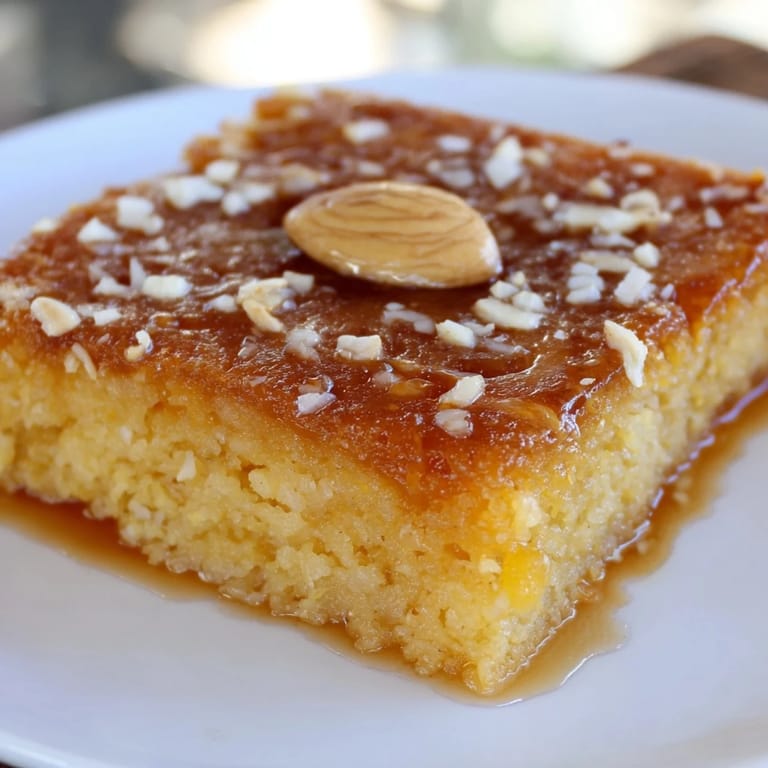
- The moment basbousa comes out of the oven is when you pour the cooled syrup evenly over the hot cake. The contrast between warm cake and cool syrup is what makes it taste so good.
- Cool and serve:
- Let it rest until it's completely cool, then re-cut along the scored lines with a sharp knife. Serve at room temperature with mint tea or Turkish coffee.
 Pin this
 The moment that changed my relationship with this recipe was when I realized I'd been making the syrup too thick. A friend mentioned her grandmother's basbousa never felt heavy, and that's when I understood—the syrup should be delicate, not a glaze. Now I simmer it just until it coats a spoon, and somehow that small adjustment made everything feel lighter and more elegant.
The Coconut Question
Basbousa lives and dies by its coconut. I once tried to make it with sweetened shredded coconut because that's what I had, and it was too much sweetness paired with the syrup—almost sickly. Unsweetened desiccated coconut has a subtle, toasty depth that balances everything. If you love extra coconut, sprinkle more on top before baking, but stick with unsweetened.
Yogurt Is Everything
The yogurt is what separates basbousa from other semolina cakes. It keeps the crumb tender and moist long after baking—I've found that pieces taste even better the next day because the yogurt continues to work its magic. If you want to experiment, replace half the yogurt with sour cream for a slightly tangy richness, but don't cut the yogurt itself.
Serving and Storage
Basbousa tastes best at room temperature with something warm to drink—the contrast of cool coconutty sweetness against hot tea is part of the magic. Store it covered at room temperature for up to three days, though I've never had any last that long. It also freezes beautifully for up to a month if you want to make a batch ahead.
- Serve with mint tea, Turkish coffee, or strong black tea to balance the sweetness.
- Almonds can be swapped for pistachios if you prefer a more floral nuttiness.
- Keep leftover syrup in the fridge to drizzle over yogurt or ice cream later.
 Pin this
 Every time I make basbousa now, I think of that Friday afternoon in my neighbor's kitchen and how a single dessert can become a bridge between people and traditions. It's simple enough that anyone can make it, but special enough that it never feels ordinary.