 Pin this
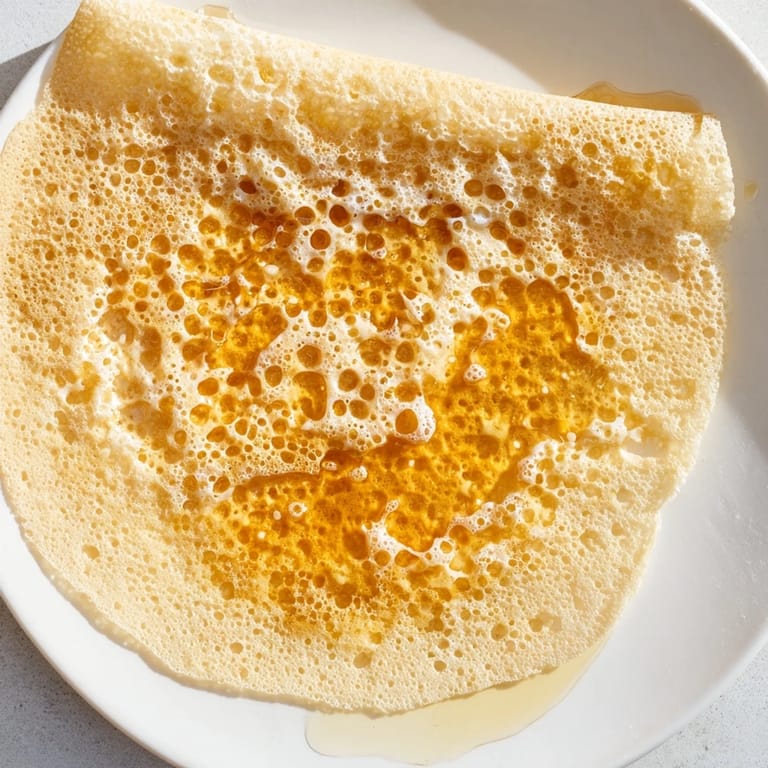
 The first time I watched my Moroccan neighbor flip baghrir onto a plate, I was struck by how the steam rose off it like something magical was happening. She'd learned it from her grandmother in Marrakech, and the way she poured the batter without looking, moving her hand in that confident circle, made it seem impossible. But then she let me try, and something clicked when I felt the batter thin out under the pan's heat and heard those tiny holes beginning to pop across the surface. Now whenever I make baghrir, I think of that afternoon in her kitchen, how she never rushed, how the whole house smelled like honey and yeast and possibility.
I brought baghrir to a potluck once thinking nobody would care, but I watched a friend tear into one and just close her eyes like she'd found something she didn't know she was missing. She kept coming back for more, and when I told her it was Moroccan, she asked if I'd learned it traveling. The truth was just as good: I'd learned it standing in someone else's kitchen, learning that breakfast could be this light, this special, with ingredients most people already have.
Ingredients
- Fine semolina: This is what gives baghrir its signature spongy texture and that slight nuttiness that makes it different from regular crepes.
- All-purpose flour: Balances the semolina and helps create structure without making the crepes tough.
- Warm water: Keep it around 110°F so the yeast wakes up properly and makes the batter light and airy.
- Active dry yeast: This is the secret ingredient that transforms ordinary batter into something honeycomb-like and full of personality.
- Baking powder: Works alongside the yeast to create even more lift and those precious air pockets.
- Granulated sugar: Feeds the yeast and adds a delicate sweetness without overpowering the dish.
- Salt: Brings out all the flavors and keeps everything balanced.
- Unsalted butter and honey: Serve them warm together so they pool into every honeycomb hole like they were made for each other.
Tired of Takeout? 🥡
Get 10 meals you can make faster than delivery arrives. Seriously.
One email. No spam. Unsubscribe anytime.
Instructions
- Mix your dry team:
- Combine the semolina, flour, sugar, yeast, baking powder, and salt in a large bowl. This is your flavor foundation, so take a breath and make sure everything is evenly distributed.
- Build the batter slowly:
- Pour the warm water in gradually while whisking, the same way you'd coax someone into conversation. You want a smooth, lump-free batter that pours easily but isn't thin like soup.
- Let time do the work:
- Cover the bowl and let it rest at room temperature for 30 minutes. You'll notice the batter starting to bubble up, which means the yeast is waking up and getting ready to create those magical air pockets.
- Heat without grease:
- Get your nonstick skillet or crepe pan over medium heat. This is important: don't add butter or oil, because you want those air bubbles to form freely on the surface.
- Pour and swirl gently:
- Ladle about ¼ cup of batter into the center and swirl it gently to spread it into a thin, even circle. The batter should flow on its own, so don't force it.
- Watch for the holes:
- Cook for 2-3 minutes until you see holes forming across the surface and the top looks mostly dry. You'll hear a soft crackling sound as the holes pop into existence, and that's how you know it's perfect. Never flip it, even if you're tempted.
- Stack and rest:
- Slide each baghrir onto a plate and repeat with the remaining batter, stirring occasionally so the yeast stays distributed. The crepes will stay warm if you stack them loosely.
- Melt the honey and butter:
- In a small saucepan over low heat, warm the butter and honey together until they're flowing and golden. Pour it generously over each crepe just before serving.
 Pin this
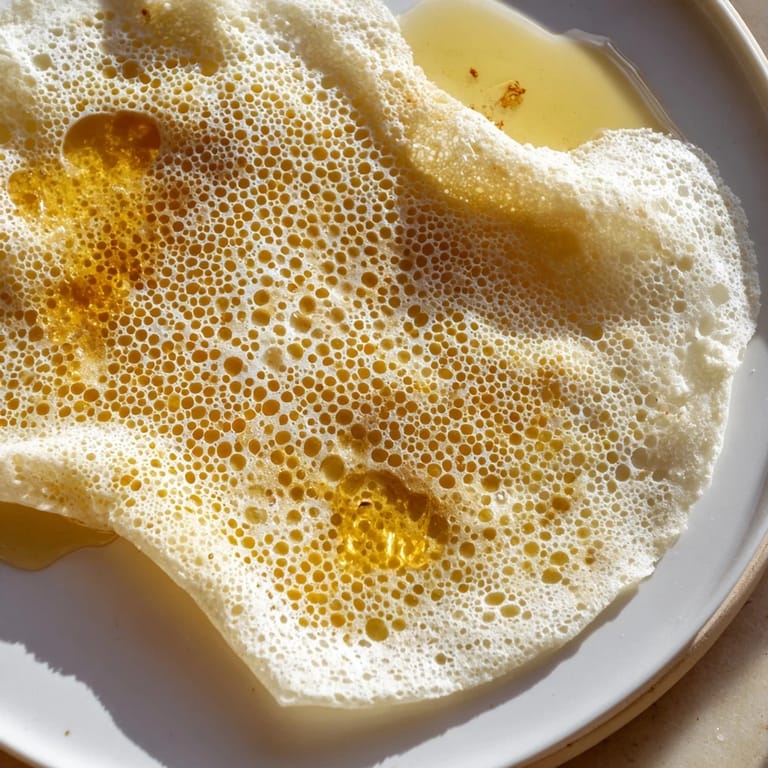
 There's something almost meditative about cooking baghrir, the way each one emerges from the pan looking slightly different, with holes in unexpected places, reminding you that food made by hand is never quite the same twice. That inconsistency is the whole point, actually, because it means every crepe carries a little bit of your attention and your mood that morning.
The Science Behind the Honeycomb
The magic of baghrir isn't just luck or tradition, it's chemistry working in your favor. The yeast ferments the batter, producing carbon dioxide that creates all those tiny bubbles, while the baking powder adds an extra boost. When the batter hits the hot pan, those bubbles expand and burst through the surface, creating that signature texture. The semolina, being coarser than regular flour, helps those holes stay open instead of closing back up, which is why you can't just swap in bread flour and expect the same results.
Serving Beyond the Basics
While honey and butter is the traditional way, baghrir is honestly flexible enough to play with. I've served it with crushed pistachios scattered on top, with a drizzle of orange blossom water mixed into the honey, even with a simple dust of cinnamon sugar. The crepes are sturdy enough to hold a little weight without falling apart, and their mild flavor means they work with both sweet and savory directions if you ever get curious enough to experiment.
Storing and Reheating Tips
Baghrir is best the moment it comes off the pan, but life isn't always that simple. If you need to make them ahead, stack them between parchment paper and they'll keep for a day or two wrapped tightly. To reheat gently, lay them in a dry skillet over very low heat for just a minute or two per side, just until they're warm again without drying out.
- Stir the batter occasionally between batches so the yeast stays active and your later crepes have the same rise as the first ones.
- If you have leftover batter, it'll keep in the fridge for a day and can be thinned with a little more water before cooking.
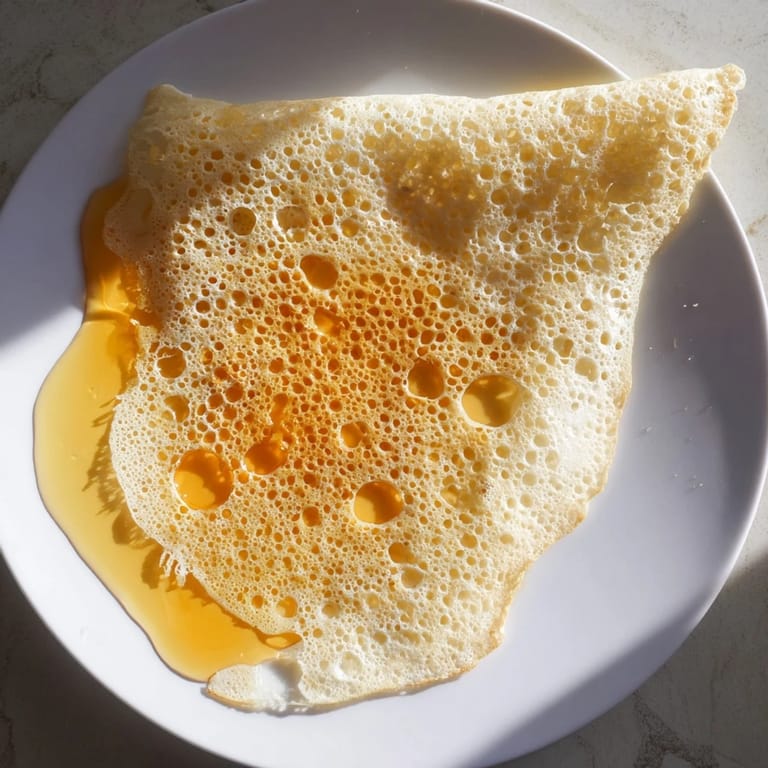
- Serve these warm and never underestimate how much honey-butter pooling into those holes matters to the whole experience.
 Pin this
 Baghrir reminds me that some of the best things we make in the kitchen come from patience rather than precision, from letting time and yeast and heat do their job. It's the kind of recipe that rewards a gentle hand and an open mind.
Recipe Questions
- → What gives Baghrir its honeycomb texture?
The texture comes from the yeast in the batter, which creates bubbles during resting and cooking, forming the characteristic holes on the crepe's surface.
- → Should Baghrir be flipped during cooking?
No, Baghrir is cooked only on one side until holes form and the top surface is dry, giving it its unique texture.
- → Can I use alternative flours for Baghrir?
Traditional Baghrir primarily uses semolina and all-purpose flour, but experimenting with different flours may affect texture and rise.
- → How should I serve Baghrir for the best taste?
Serve warm, generously drizzled with melted butter and honey to complement its mild flavor and enhance moisture.
- → What is the ideal batter consistency for Baghrir?
The batter should be smooth and pourable; if too thick after resting, add a little warm water to adjust consistency.