 Pin this
 My neighbor Sarah texted me three days before her housewarming with a slightly panicked emoji—she wanted something impressive but didn't want to spend the evening in the kitchen. That's when the charcuterie board clicked into place as the perfect solution. I remembered standing in her soon-to-be living room, imagining how a thoughtfully arranged spread could become the centerpiece of her celebration, a edible welcome mat for everyone crossing her threshold. It's become my go-to move for any gathering where you want people to linger, chat, and feel genuinely taken care of without fussy plating.
I'll never forget watching Sarah's friends gravitate toward that board the moment they walked in, their faces lighting up like they'd discovered buried treasure. Someone immediately started pairing the gouda with dried figs while another guest made an unlikely but perfect combination of prosciutto and hummus on a water cracker. That's when I realized a charcuterie board isn't just food—it's an invitation to play, experiment, and make the celebration entirely your own.
Ingredients
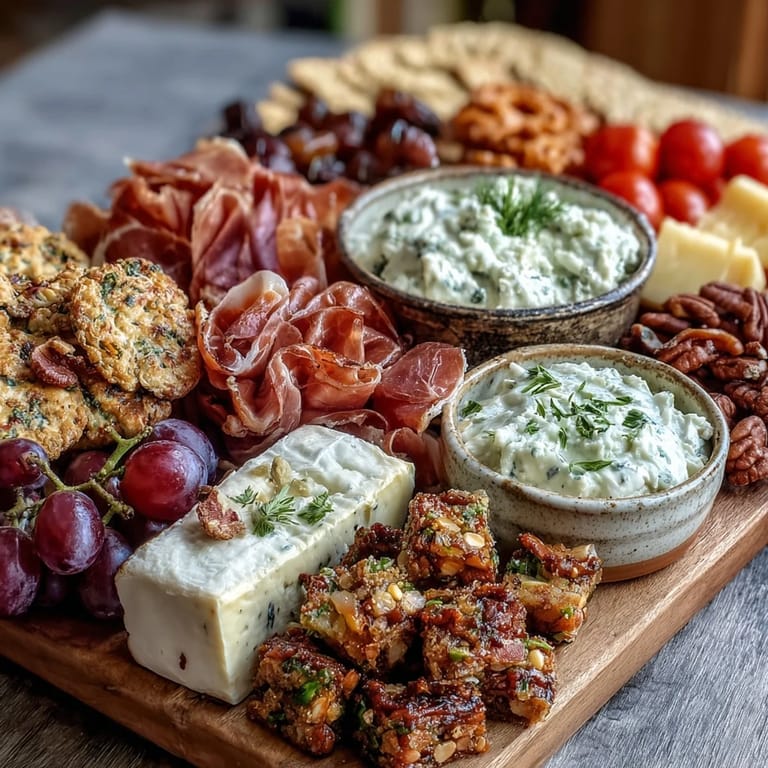
- Prosciutto: Buy it sliced thin and let it come to room temperature so it drapes beautifully without tearing—cold meat is brittle and won't fold the way you want.
- Salami: Choose a variety with good flavor, and if you can find a spicy version alongside a milder one, the contrast keeps things interesting.
- Smoked ham: This adds a subtle depth that people often can't quite name but definitely notice.
- Chorizo slices: These bring color and a hint of spice that prevents the board from feeling one-dimensional.
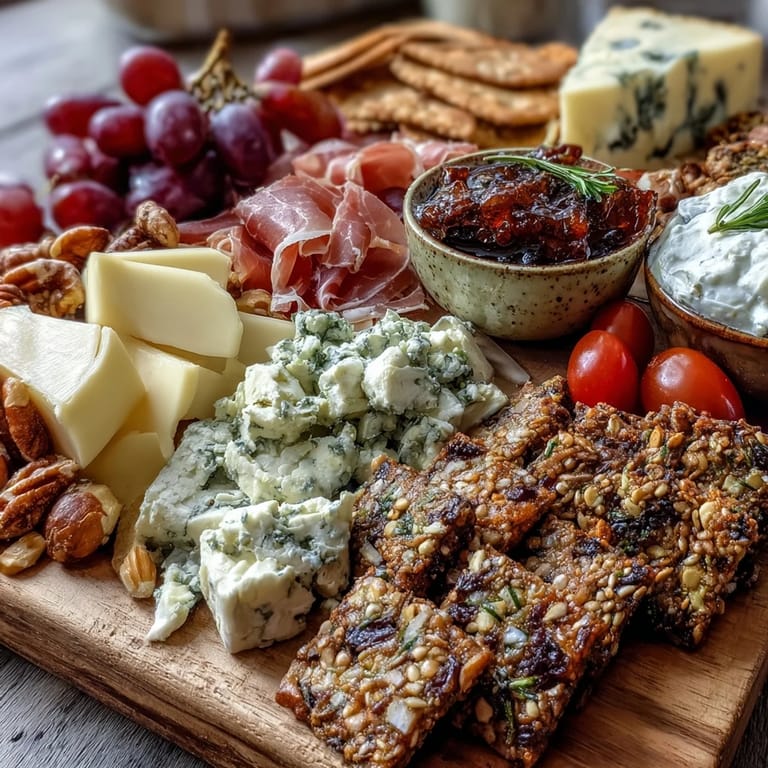
- Brie: Slicing it ahead and letting it soften slightly at room temperature makes it spreadable and luxurious.
- Aged cheddar: Cubing rather than slicing gives a different texture experience and makes it easier to grab.
- Gouda: Its buttery sweetness plays beautifully with both savory and fruit elements.
- Blue cheese: Crumble it fresh rather than buying pre-crumbled, as the texture holds up better and tastes sharper.
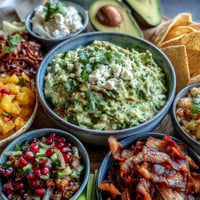
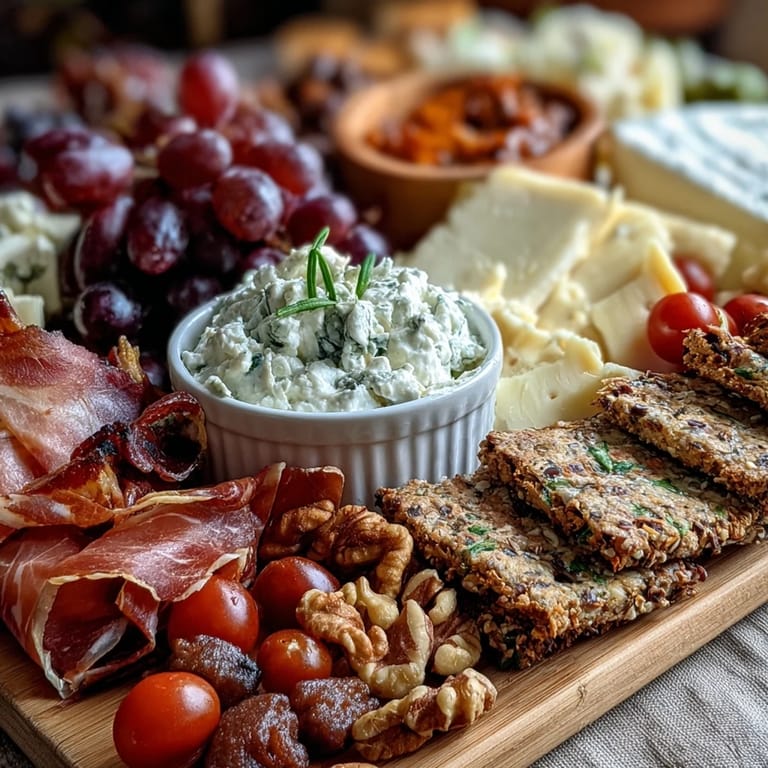
- Hummus: A tahini-based version has more character than the basic kind, and it's usually vegetarian-friendly.
- Tzatziki: Make it yourself if you have time—store-bought versions are sometimes watery, so drain it before serving.
- Roasted red pepper dip: This adds warmth and sweetness without being heavy, and it's naturally vegetarian.
- Assorted crackers: Mix textures—some delicate, some hearty—so there's something for every pairing preference.
- Baguette slices: Toast them lightly for 3 minutes at 375°F to keep them crisp longer and add a subtle flavor dimension.
- Breadsticks: These stay crisp longer than soft breads and add an elegant vertical element to your board.
- Red and green grapes: The acidity and sweetness cut through rich cheeses and meats perfectly.
- Cherry tomatoes: They add brightness and help fill visual gaps, plus their natural sweetness surprises people.
- Cucumber slices: Slice them just before serving to keep them crisp and prevent them from releasing too much water onto the board.
- Bell pepper: Roast it lightly before slicing if you prefer a softer texture, but raw gives more crunch.
- Baby carrots: These are as much about color as nutrition, creating pockets of orange that draw the eye.
- Mixed nuts: Toast them lightly in a dry pan for 2 minutes to wake up their natural oils and flavor.
- Olives: Buy them pitted to make life easier for your guests, and drain them well so they don't leave oily spots on the board.
- Dried apricots and figs: These provide chewy sweetness that anchors flavor combinations and adds visual texture.
- Fresh herbs: Rosemary and thyme aren't just decorative—they add subtle aromatics that make the entire board smell appealing.
Tired of Takeout? 🥡
Get 10 meals you can make faster than delivery arrives. Seriously.
One email. No spam. Unsubscribe anytime.
Instructions
- Start with your anchor:
- Arrange the cured meats in loose, natural folds across the board first, leaving some gaps you'll fill later. This prevents the board from feeling cramped and gives you a roadmap for the rest.
- Position the cheeses:
- Place each cheese type in a different spot, spacing them so they feel intentional rather than random. I like putting the milder cheeses on one side and bold flavors like blue cheese on another, so guests can find what calls to them.
- Nestle the dips:
- Transfer each dip into its own small bowl and position them at natural gathering points—these become focal spots that draw people in. Leave a small spoon in each dip rather than expecting guests to dig with crackers.
- Fan and arrange crackers:
- Group similar crackers together and fan them out in one section, making them look abundant without being wasteful. Standing them at an angle rather than laying them flat creates height and makes the board feel more dynamic.
- Fill the landscape:
- Now comes the fun part—use grapes, tomatoes, cucumber, and peppers to fill the remaining gaps, thinking about color balance as you go. Cluster similar items rather than spreading them evenly so the board feels generous and intentional.
- Add texture and intrigue:
- Scatter nuts, olives, dried fruit in small piles throughout, creating little flavor surprises in unexpected corners. These are also great for filling awkward gaps that make a board feel unfinished.
- Garnish and finish:
- Tuck fresh herb sprigs around the board—they're beautiful and add subtle fragrance that makes everything smell more appetizing. Step back and look for any sad empty spots that need one more element.
- Serve and replenish:
- Put the board out 15 minutes before guests arrive so everything reaches room temperature and flavors settle. As items get depleted, do small touch-ups so it always looks abundant and inviting.
 Pin this
 The real magic happened when someone who claimed to be "not a blue cheese person" tried a piece with a fig and suddenly became evangelical about the pairing. That's the gift of a well-made charcuterie board—it creates moments of discovery and conversation, turning an appetizer into an experience.
Building Visual Balance
Think of your board like a painting where you're balancing color, texture, and height. Avoid lining everything up in neat rows because that looks sterile and uninviting. Instead, create little vignettes where meats loosely drape near cheeses, where colors dance between the reds of tomatoes and the greens of grapes. I learned this by watching professional charcuterie boards and realizing that what made them stunning wasn't the ingredients—it was how they played with visual flow.
Timing Your Prep Work
The secret to not being frazzled is understanding what you can do ahead. The night before, slice your cheeses and meats, storing them in separate containers with parchment between layers so they don't stick. Cut your vegetables in the morning and store them in water to keep them crisp. On the day, you're just arranging and garnishing, which takes 20 minutes of focused, almost meditative work rather than rushed chopping.
Pairing Secrets and Flavor Logic
The best charcuterie boards aren't random assortments—they're conversations between salty, sweet, creamy, and bright. The umami of salami plays off the sweetness of dried apricots. The creaminess of brie needs the acid of grapes to sing. Blue cheese demands something assertive like a hearty cracker or something delicate like a fig. Understanding these relationships means people naturally gravitate toward combinations that work, and suddenly everyone feels like a culinary genius.
- Pair sweet dried fruits with pungent cheeses and cured meats to balance intensity.
- Always include something fresh and acidic like grapes or tomatoes to cleanse the palate between bites.
- Nuts add earthiness and crunch that prevents the board from feeling monotonous in texture.
 Pin this
 A charcuterie board succeeds because it removes the pressure from both the host and the guest—no one has to worry about eating the "right" thing. Everyone gets what delights them, and somehow that freedom makes the celebration itself taste better.
Recipe Questions
- → What meats are ideal for this platter?
Use cured options like prosciutto, salami, smoked ham, and chorizo slices for a flavorful variety.
- → Which cheeses best complement the board?
Brie, aged cheddar, gouda, and blue cheese offer a balance of creamy, sharp, and bold flavors.
- → How should dips be served?
Place dips like hummus, tzatziki, and roasted red pepper in small bowls nestled among the other components.
- → What fruits and vegetables work well on this spread?
Red and green grapes, cherry tomatoes, cucumber slices, bell pepper, and baby carrots add freshness and color.
- → Any tips for accommodating dietary needs?
Offer gluten-free crackers and customize meats or cheeses to suit preferences or restrictions.
- → How do nuts and dried fruits enhance the board?
Mixed nuts, dried apricots, and figs provide crunch and subtle sweetness, balancing savory elements.