 Pin this
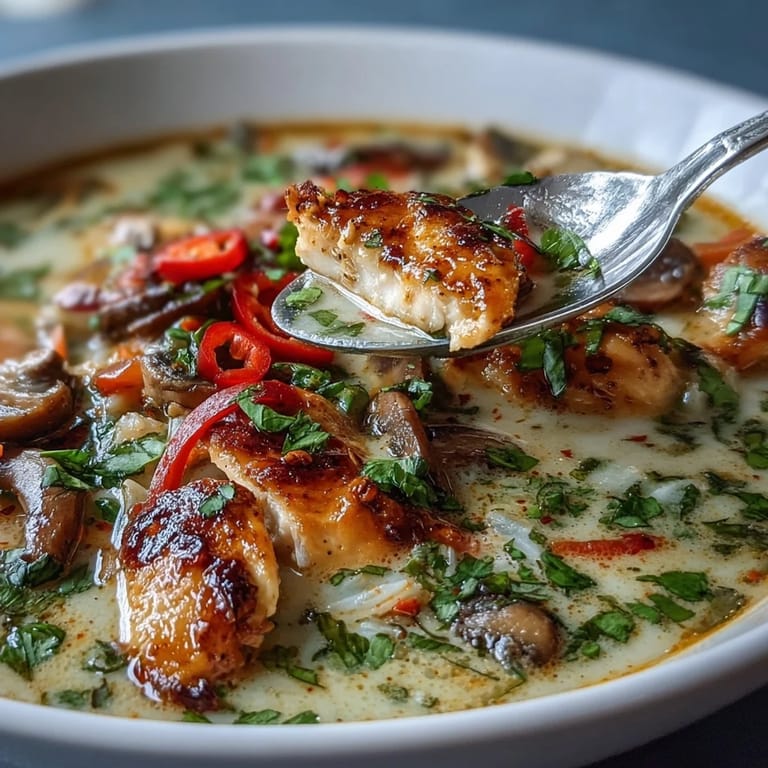
 There's a particular moment on busy weeknights when I crave something that feels both indulgent and manageable, and this Thai coconut curry soup has become my answer. I discovered it quite by accident, actually—while scrolling through a half-forgotten cookbook at a friend's place, I noticed how the recipe seemed to whisper promises of warmth and spice in equal measure. The first time I made it, my kitchen filled with this incredible fragrance that made my roommate wander in three times asking what smelled so good, and I realized I'd stumbled onto something special. It's the kind of soup that transforms a regular evening into something that feels a bit more intentional.
I made this for my partner on a rainy Sunday afternoon, and what struck me was how the soup seemed to pause time for a moment. We sat at the kitchen counter in those comfortable clothes you wear when you're not going anywhere, and somehow a simple bowl of curry soup became this quiet, intimate thing. The steam rising from the bowls, the lime wedges releasing their bright scent—it wasn't fancy or complicated, but it felt nourishing in a way that went beyond calories and nutrition.
Ingredients
- Boneless, skinless chicken breast or thighs (400 g): Thighs will give you more forgiving, juicier results than breast meat, and they hold up beautifully to the simmering without drying out—something I learned after a few batches of slightly stringy chicken.
- Fresh ginger (1 tablespoon, grated): This is where the warming character comes in; fresh ginger adds a spicy-but-bright note that ground ginger simply cannot replicate, and it's worth taking the thirty seconds to grate it yourself.
- Mushrooms (200 g, sliced): Shiitake brings earthy depth that button mushrooms can't quite achieve, but honestly, use what you have—the soup never judges.
- Coconut milk (800 ml, full fat): The full-fat version creates that luxurious mouthfeel, though light coconut milk works if you're looking to reduce calories; just know the soup will feel slightly leaner and more brothy.
- Red curry paste (2 tablespoons): This is your flavor anchor, so choose a brand you actually like—some pastes taste sharper or more balanced than others, and tasting yours beforehand helps you adjust the amount confidently.
- Chicken broth (500 ml): Homemade is wonderful if you have it, but good quality store-bought is absolutely fine and saves you from a simmering pot on another day.
- Fish sauce (1 tablespoon): I know, it smells intense in the bottle, but trust that it rounds out the flavor rather than making everything taste fishy—it's the secret that makes people say your soup tastes mysteriously delicious.
- Brown sugar (1 tablespoon): A subtle sweetness that balances the curry's heat and the fish sauce's umami; it's the gentle hand that keeps all the bold flavors from overwhelming each other.
- Lime juice: Squeeze it fresh just before serving so it pops with brightness; bottled lime juice tastes tired by comparison.
- Fresh cilantro for garnish: Some people skip this, and then they add it midway through and suddenly wonder why the soup tastes so much better—fresh herbs make the difference between good and memorable.
Tired of Takeout? 🥡
Get 10 meals you can make faster than delivery arrives. Seriously.
One email. No spam. Unsubscribe anytime.
Instructions
- Build your aromatic base:
- Heat oil in a large pot over medium heat and add ginger, garlic, and lemongrass if you're using it, cooking for about a minute until you can actually smell the ginger—this brief moment is doing important work, waking up the aromatics so they're ready to perfume everything that follows.
- Toast the curry paste:
- Stir in your red curry paste for another minute, letting it cook into the oil; this step might feel small but it transforms the paste from something raw and sharp into something mellow and integrated.
- Sear the chicken:
- Add your sliced chicken and cook for two to three minutes, stirring often so the pieces get coated and begin to turn opaque around the edges.
- Build the broth:
- Pour in coconut milk and chicken broth, then add kaffir lime leaves if you have them and your firmer vegetables like carrots and mushrooms; bring this to a gentle simmer where you can see small bubbles breaking the surface rather than a rolling boil.
- Let everything cook through gently:
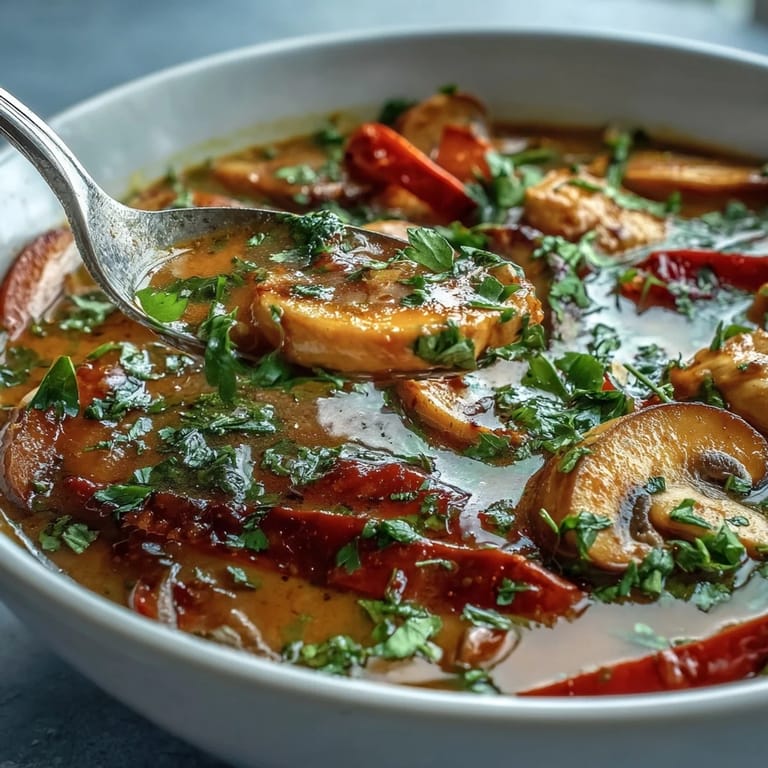
- Simmer for ten to twelve minutes until the chicken is fully cooked through and the vegetables are tender enough to cut with a spoon; you'll know it's ready when the kitchen smells even better than when you started.
- Season and balance:
- Stir in fish sauce, brown sugar, and fresh lime juice, then taste and adjust—if it's too spicy, add a splash more broth or a drizzle of coconut milk; if it needs more depth, a touch more fish sauce does wonders.
- Wilt the greens:
- Add spinach or bok choy if using, letting them soften for a minute or two in the hot broth until they're silky but still bright green.
- Finish and serve:
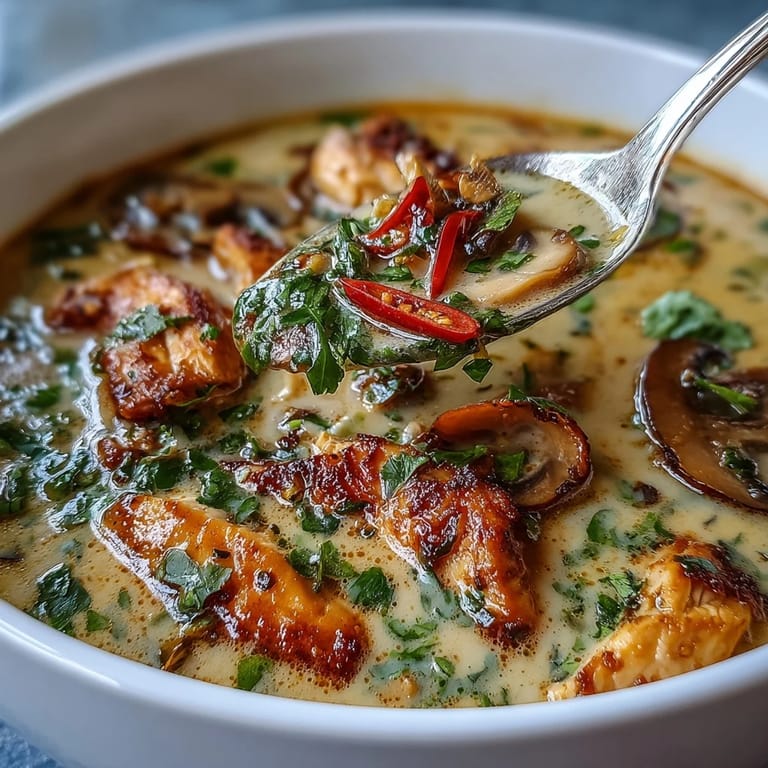
- Fish out the lemongrass stalks and kaffir lime leaves, then ladle the soup into bowls and scatter with spring onions, fresh cilantro, and sliced chili; hand around lime wedges so everyone can add their own brightness.
 Pin this
 My favorite discovery came when I made this soup the night before a dinner party and reheated it the next evening—somehow the flavors had deepened and married together even more beautifully overnight. It taught me that this isn't just a quick weeknight soup; it's one that actually improves with a little time and reflection, which felt like a small gift in a recipe.
Choosing Your Protein
Chicken thighs are honestly my first choice because they're nearly impossible to overcook and they stay tender even if life gets chaotic and your timing is off. That said, shrimp is beautiful in this soup too—add it in the last few minutes so it stays plump and sweet, or swap to firm tofu if you're going vegetarian and use vegetable broth with soy sauce instead of fish sauce. Each protein brings its own character, and there's no wrong choice, just different moods you might be in.
The Art of Spice Customization
I used to think more curry paste automatically meant more flavor, but it's actually about control and intention—you want heat that enhances rather than obliterates. Start with a tablespoon and a half, taste the finished soup, and add another half tablespoon if you want more intensity. Fresh red chili sliced over the top at the end gives you that lovely heat without cooking it down to bitterness, and it lets each person control their own experience.
Serving Ideas and Pairings
This soup is substantial enough to stand alone in a bowl, but there's something lovely about serving it with jasmine rice on the side so people can eat it however they want—soup only, or spoonfuls of rice into the broth. A crisp white wine like Riesling cuts through the richness beautifully without competing for attention, and if you're after something non-alcoholic, a cold sparkling water with lime feels equally refreshing. The beauty is that it's flexible about how you want to experience it.
- Serve with jasmine rice or rice noodles stirred directly into the bowl for a more substantial meal.
- Prepare all your garnishes before you start cooking so they're ready to scatter the moment the soup hits the bowl.
- Make a double batch and freeze half without the garnishes—it reheats beautifully and becomes a weeknight rescue plan.
 Pin this
 This soup has become my go-to when I want to cook something that feels a bit special without the fuss, and I suspect it might become yours too. It's proof that satisfying food doesn't require complicated technique, just quality ingredients and a willingness to pay attention for forty minutes.
Recipe Questions
- → Can I make this soup vegetarian?
Yes, substitute chicken with extra firm tofu and use vegetable broth instead of chicken broth. Replace fish sauce with soy sauce or tamari to maintain the savory depth.
- → How spicy is this coconut curry soup?
The spice level is moderate and adjustable. Start with 2 tablespoons of red curry paste for a gentle warmth. Increase for more heat or decrease for a milder version suitable for sensitive palates.
- → Can I freeze this soup?
This soup freezes well for up to 3 months. Cool completely before transferring to airtight containers. The coconut milk may separate slightly when reheating but will emulsify again with gentle stirring.
- → What vegetables work best in this curry?
Mushrooms, carrots, and red bell pepper provide excellent texture and flavor. You can also add baby spinach, bok choy, snow peas, or bamboo shoots. Avoid delicate vegetables that might become mushy.
- → Do I need lemongrass and kaffir lime leaves?
These aromatics enhance authenticity but are optional. The soup remains delicious without them. If unavailable, increase fresh ginger slightly and add extra lime juice to brighten the flavors.
- → What should I serve with this soup?
Jasmine rice or rice noodles make this a more substantial meal. Fresh spring rolls, crispy wontons, or a simple green salad with lime dressing complement the rich flavors beautifully.