 Pin this
 The first time I made soba noodles in summer, I was standing in my tiny kitchen with the windows open, desperate for something cool and satisfying that wouldn't heat up the apartment. A friend had just brought back a bottle of sesame oil from a trip, and I remembered her saying it changed everything. I grabbed buckwheat noodles from my pantry, whatever vegetables I could find, and started throwing things together—and somehow, that casual experiment became my go-to lunch for months after.
I made this for a potluck where everyone was stressed about bringing something that would survive the drive over, and somehow this salad became the thing people kept coming back to, even after the fancy stuff was gone. Someone asked for the recipe while still eating their second bowl, and I realized then that simple, honest food made with good ingredients is what actually wins people over.
Ingredients
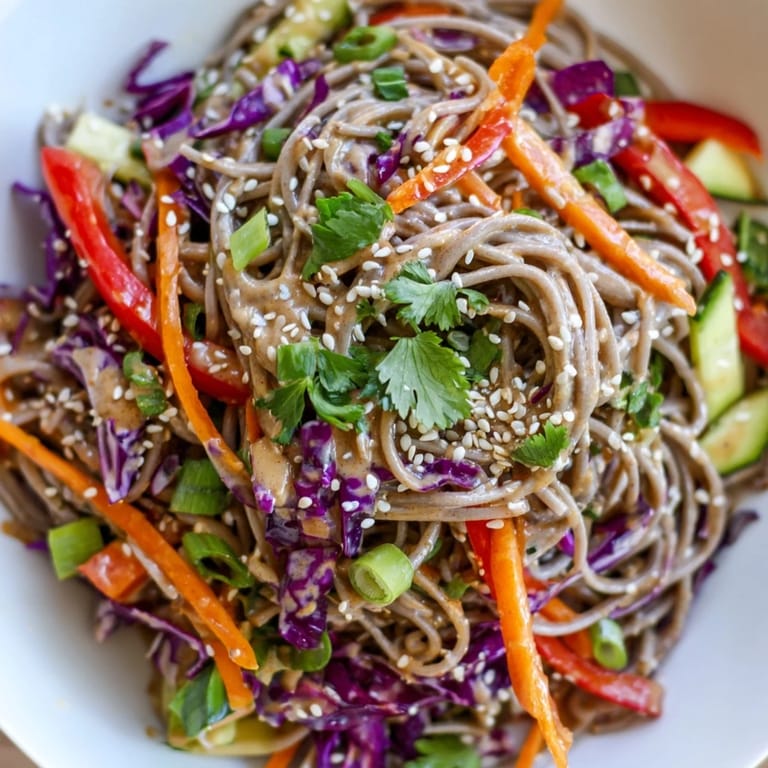
- Soba noodles (250 g): These buckwheat noodles have a slightly nutty, earthy flavor that's different from wheat pasta—they're the foundation, so don't skip rinsing them thoroughly to remove starch.
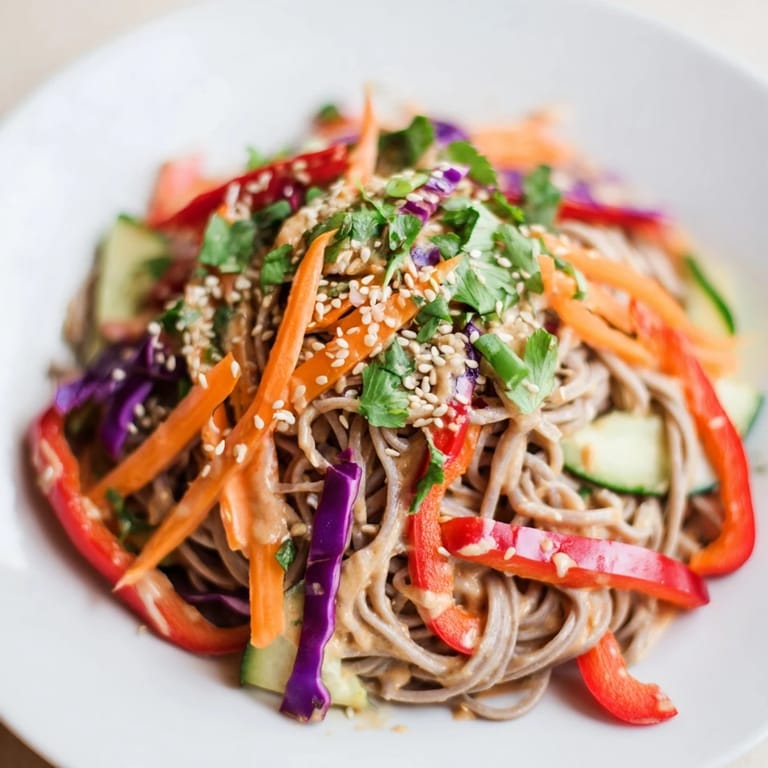
- Carrot: Julienned thin so it stays crisp and picks up the dressing without becoming limp.
- Cucumber: Cut into thin strips to keep it cool and refreshing, the watery contrast that makes every bite feel lighter.
- Red bell pepper: Sliced thin adds sweetness and crunch, and the color makes the whole bowl look alive.
- Spring onions: Just the white and light green parts, finely sliced for a gentle onion bite that doesn't overpower.
- Red cabbage (1 cup, shredded): Stays crisp longer than most vegetables and adds a slight peppery note.
- Peanut butter (3 tbsp): The heart of the dressing—smooth is essential here so it whisks without lumps.
- Soy sauce (2 tbsp): Brings saltiness and umami depth to the whole thing.
- Rice vinegar (1 tbsp): Cuts through the richness with a clean, gentle tang.
- Toasted sesame oil (1 tbsp): This is the ingredient that makes people ask what you did differently—it's that good.
- Maple syrup or honey (1 tbsp): A touch of sweetness to balance the salty and sour elements.
- Fresh ginger (1 tsp, grated): Adds warmth and a slight heat without being spicy.
- Garlic (1 small clove, minced): Just enough to whisper in the background, not shout.
- Water (1–2 tbsp): Thins the dressing to the right consistency—you know it's right when it coats but flows.
- Toasted sesame seeds (2 tbsp): The final garnish that adds nuttiness and makes it feel intentional.
- Fresh cilantro (2 tbsp, chopped): Herbaceous freshness that makes the whole dish brighter.
- Red chili (1 small, optional): If you want a quiet heat that sneaks up on you.
- Lime wedges: For serving, because that squeeze of acid at the end elevates everything.
Tired of Takeout? 🥡
Get 10 meals you can make faster than delivery arrives. Seriously.
One email. No spam. Unsubscribe anytime.
Instructions
- Boil and chill the noodles:
- Drop them into salted boiling water and set a timer—usually 5 to 7 minutes, but check the package. The moment they're tender but still have a slight chew, drain them into a colander and run cold water over them, stirring gently with your fingers until they cool completely and any starch rinses away.
- Build the dressing:
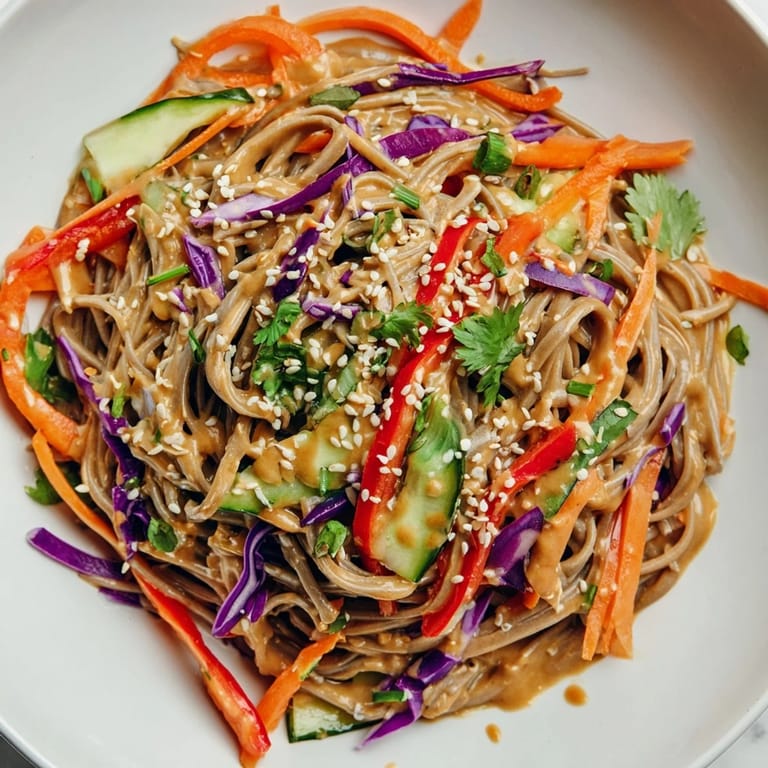
- In a large bowl, whisk the peanut butter, soy sauce, rice vinegar, sesame oil, maple syrup, ginger, and garlic together until they start coming together. Add water a tablespoon at a time, whisking as you go, until you have something smooth and pourable—it should coat the back of a spoon but still flow.
- Toss it all together:
- Add your cooled noodles and all the vegetables to the dressing and toss with your hands or two forks, making sure every strand gets coated and nothing settles at the bottom. This is the satisfying part where it all comes together.
- Plate and garnish:
- Divide among bowls and scatter sesame seeds and cilantro over the top—the crunch matters. Set lime wedges on the side so everyone can add a squeeze of brightness if they want it.
 Pin this
 There was a moment when my partner tasted this cold and sat there quiet for a moment, then asked if I'd made it fancy somehow. I hadn't—I'd just paid attention to how the ingredients worked together, and that attention made all the difference. That's when I understood that cooking doesn't have to be complicated to feel special.
Making It Your Own
The beauty of this salad is how it welcomes additions without falling apart. Some mornings I'll add a handful of edamame for protein and a slight earthiness, or grill some tofu and toss it in while it's still warm so it drinks in the dressing. Shredded chicken works too if you want something more substantial, and it never feels out of place.
Dressing Your Way
If peanut butter isn't your thing, tahini gives you a purer sesame flavor that's more delicate, almost creamy in a different way. I've also experimented with a bit of almond butter when that's what I had on hand, and it was lighter, almost subtle. The soy sauce and sesame oil are the constants that hold everything together, but everything else can shift to match what you're in the mood for.
Storage and Timing
This salad actually improves after a few hours in the fridge as the noodles absorb more of the dressing and the flavors deepen. For meal prep, you can assemble it the night before and it'll taste just as good the next day—maybe even better. If it's been sitting a while and feels dry, a light toss with a bit more sesame oil or a squeeze of fresh lime brings it right back.
- Prep vegetables the night before and keep them in separate containers so everything stays crisp until you're ready to toss.
- Cook the noodles a few hours ahead if that fits your day better; they're happy sitting in the fridge as long as they're rinsed well.
- Make the dressing fresh just before assembling so the garlic and ginger are bright and alive in the bowl.
 Pin this
 This is the kind of recipe that tastes like summer in a bowl, but works any time you want something that feels light and intentional. Make it once and you'll find yourself reaching for it again and again.
Recipe Questions
- → How do I cook soba noodles properly?
Boil soba noodles for 5–7 minutes until tender. Drain and rinse under cold water to stop cooking and remove excess starch.
- → Can I make the dressing nut-free?
Yes, substitute peanut butter with tahini to keep the dressing creamy without nuts.
- → What vegetables work well in this salad?
Carrots, cucumber, red bell pepper, spring onions, and shredded red cabbage add crunch and color.
- → How can I make this dish gluten-free?
Use 100% buckwheat soba noodles and replace soy sauce with tamari for a gluten-free option.
- → What are some suggested garnishes?
Toasted sesame seeds, fresh cilantro, thinly sliced red chili, and lime wedges add flavor and brightness.
- → Can this salad be prepared in advance?
Yes, it keeps well refrigerated up to 2 days. Refresh with a squeeze of lime before serving.