 Pin this
 The scent of fresh ginger warming in olive oil always sends me back to that cold January afternoon when I first created this soup out of leftover vegetables. Rain tapped against the kitchen window as I grated knobs of ginger, their sharp aroma clearing my stuffy sinuses and brightening the gray day. What began as a simple clean-out-the-fridge exercise turned into a recipe I've returned to countless times, especially when someone in the house feels under the weather.
I served this soup at my best friend's baby shower last winter, ladling steaming portions into mugs so guests could sip while mingling. Several people asked for the recipe before leaving, and one guest confessed she'd gone back for thirds, balancing her mug behind a potted plant so no one would notice. The mother-to-be texted me weeks later saying she'd made it three times since the shower, calling it her pregnancy comfort food.
Ingredients
- Fresh ginger: Buy more than you think you need and freeze the extra, then grate it while still frozen for even finer texture that disperses beautifully through the broth.
- Vegetable broth: I once used a mushroom-based broth instead of regular vegetable, and it added such wonderful depth that I now keep both versions in my pantry rotation.
- Toasted sesame oil: Just a few drops transform the soup from good to memorable, creating an aromatic finish that lingers pleasantly.
- Broccoli florets: Cut them smaller than you might think, about the size of a quarter, so they cook evenly with the other vegetables.
- Soy sauce or tamari: This invisible ingredient works magic, adding that elusive umami that makes people wonder what your secret is.
Tired of Takeout? 🥡
Get 10 meals you can make faster than delivery arrives. Seriously.
One email. No spam. Unsubscribe anytime.
Instructions
- Prepare your aromatics:
- Heat that olive oil until it shimmers slightly, then watch as the diced onion, carrots and celery begin to soften and release their sweet aromas. You'll know they're ready when the onions turn translucent but haven't started browning yet.
- Introduce the ginger magic:
- As garlic and ginger hit the pot, stand directly over it and breathe in deeply. This fragrant cloud is your signal that flavor foundations are developing properly.
- Layer in colorful vegetables:
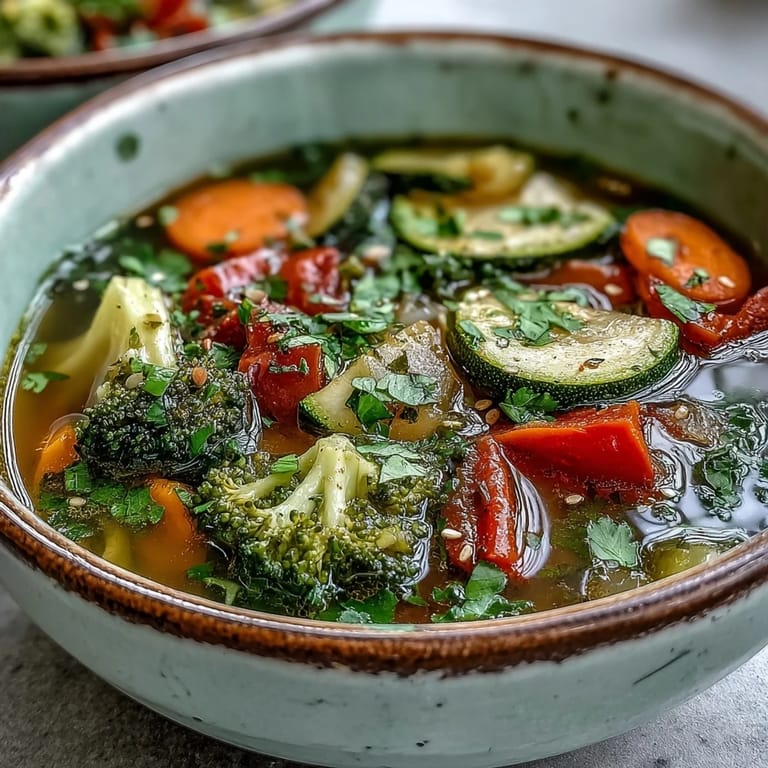
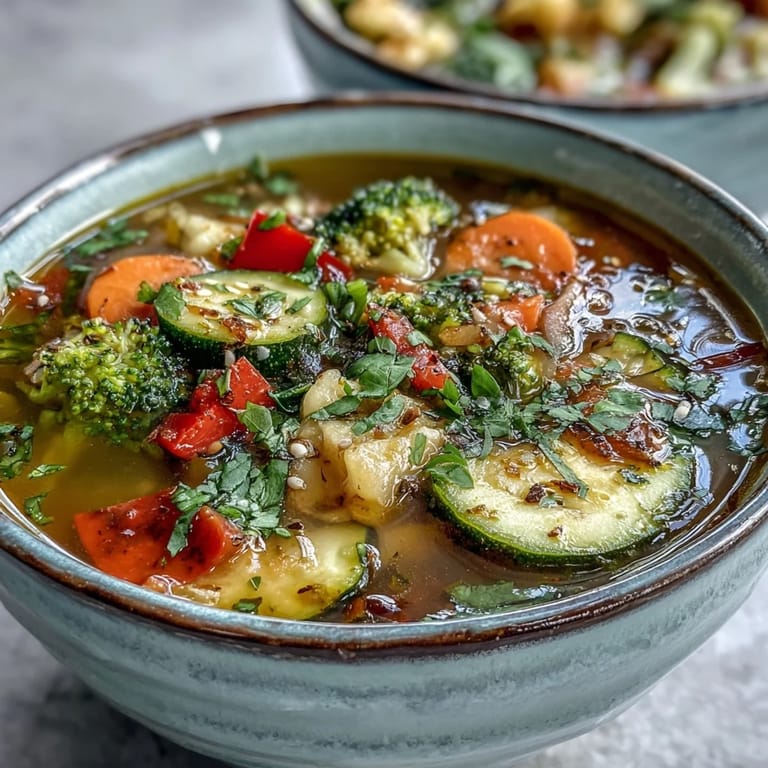
- The red pepper, zucchini and broccoli bring their distinct textures and flavors to the party. Give them a quick sauté just until their colors brighten, about three minutes.
- Create the simmering bath:
- Pour in your broth with a steady hand, listening for that satisfying sizzle as liquid meets hot pot. Bring it to a gentle boil where small bubbles rise consistently before reducing to a simmer.
- Season thoughtfully:
- Add salt, pepper and that splash of soy sauce now, but remember you can always adjust later. The soy sauce will deepen from slightly harsh to mellow and complex as it simmers.
- Monitor tenderness carefully:
- Test vegetables by pressing them against the side of the pot with your spoon. You want them yielding but still offering slight resistance, not falling apart.
- Finish with flair:
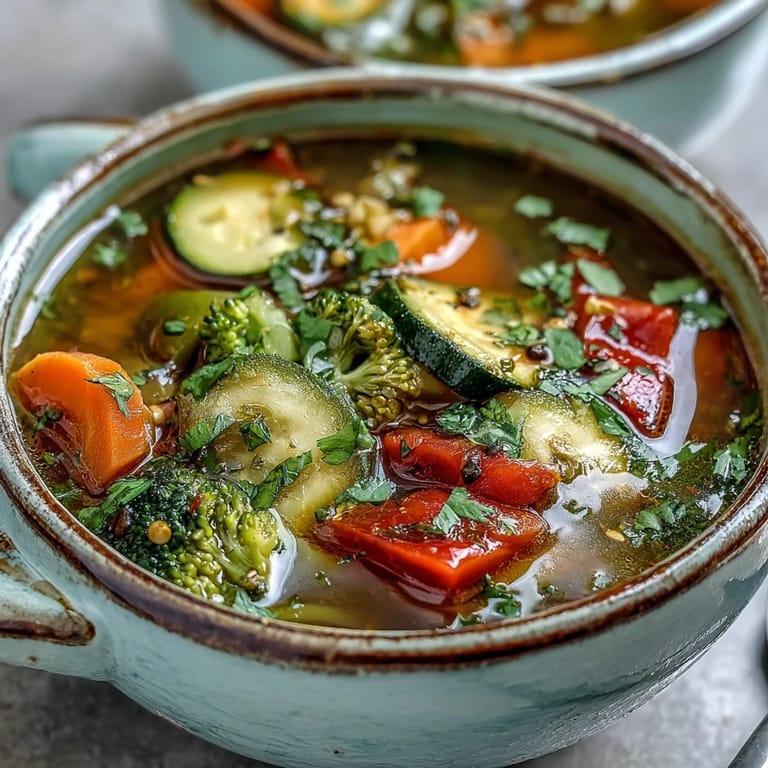
- That final drizzle of sesame oil creates aromatic ripples across the surface, while the scattered herbs add bright visual contrast. Serve immediately while the herbs are still vibrant.
 Pin this
 Last winter during a power outage, my neighbor and I huddled in my kitchen with headlamps, warming ourselves over steaming bowls of this ginger soup. We dunked crusty bread into the broth as we shared stories by candlelight, and even after the electricity returned hours later, we stayed at the table, bowls long empty but conversation flowing. Sometimes the best meals happen when nothing else is competing for attention.
Making It Your Own
When my vegetarian niece visits, I add cubed tofu during the last five minutes of cooking, which absorbs the ginger-infused broth beautifully. My brother prefers his with cooked rice stirred in just before serving, transforming it into a heartier meal that still retains the soup's essential character. The most surprising variation came from my elderly neighbor who stirs in a spoonful of peanut butter, creating a richer, slightly creamy version that somehow works wonderfully with the ginger and vegetables.
Storage and Reheating
This soup develops an even more pronounced ginger profile overnight, making it perfect for batch cooking. I've taken to keeping portions in my freezer, stored flat in ziplock bags that thaw quickly when needed. When reheating, I add a handful of fresh spinach that wilts instantly, bringing a fresh element to the preserved soup. The broccoli darkens slightly upon reheating, but this aesthetic change doesn't affect the flavor at all.
Seasonal Adaptations
Summer finds me substituting yellow squash for zucchini and adding corn cut fresh from the cob during the last few minutes of cooking. In autumn, I might add diced butternut squash, extending the cooking time until the orange cubes become tender. Winter versions often include sliced Brussels sprouts, which develop a wonderful sweetness against the zippy ginger.
- For spring, try adding asparagus tips and fresh peas in the last three minutes of cooking for bright green pops of sweetness.
- Consider adding a parmesan rind to the simmering broth for an unexpected depth that complements the ginger without overwhelming it.
- If serving for guests, provide small bowls of optional toppings like lemon wedges, chili oil, or toasted pumpkin seeds for a customizable experience.
 Pin this
 Whether served as a light lunch, first course, or remedy for whatever ails you, this ginger vegetable soup offers comfort in a bowl. I hope it brings as much warmth to your kitchen as it has to mine.
Recipe Questions
- → Can I make this ginger vegetable soup ahead of time?
Yes, this soup reheats beautifully. Store it in an airtight container in the refrigerator for up to 4 days. The flavors actually deepen and meld together overnight, making it an excellent option for meal prep. Reheat gently on the stove, adding a splash of water or broth if needed to adjust consistency.
- → What vegetables work best as substitutes?
Feel free to swap in snap peas, spinach, mushrooms, or butternut squash based on what you have available. Leafy greens like kale or chard can be added in the last few minutes of cooking. Root vegetables such as sweet potatoes or parsnips would also complement the ginger nicely, though they may require slightly longer simmering time.
- → How can I add more protein to this soup?
Stir in cooked lentils, chickpeas, or cubed tofu during the last 10 minutes of simmering. You could also add edamame or white beans. For a non-vegan option, shredded chicken or poached eggs work well. Quinoa is another excellent protein booster that adds pleasant texture.
- → Is this soup freezer-friendly?
Absolutely. Let it cool completely before transferring to freezer-safe containers. It will keep well for up to 3 months. Thaw overnight in the refrigerator before reheating. Note that vegetables may soften slightly after freezing, but the flavors remain excellent. Consider adding fresh herbs when serving.
- → Can I adjust the spice level?
The ginger provides gentle warmth without overwhelming heat. To increase spiciness, add red pepper flakes, sriracha, or fresh chili when sautéing the aromatics. For a milder version, reduce the ginger to 1 tablespoon. Always taste the finished broth before adjusting seasoning, as flavors concentrate during simmering.
- → What's the best way to serve this soup?
Ladle hot into bowls and finish with toasted sesame oil and fresh herbs like cilantro or parsley. Serve with crusty bread for dipping, over rice noodles for a heartier meal, or alongside a simple green salad. The sesame oil garnish adds a lovely nutty aroma that elevates each bowl.