 Pin this
 There's something almost magical about watching a humble head of cabbage transform into golden, caramelized steaks under the oven's heat. I discovered this dish by accident one autumn evening when I had nothing but a cabbage, some tahini, and a determination to prove that vegetables could be the main event, not an afterthought. The way the edges crisped up while the centers stayed tender felt like a small kitchen victory, and once I drizzled that silky tahini sauce over top, I realized I'd found something special.
My friend Sarah came over on a random Tuesday, and I threw this together without much fanfare, almost apologizing for such a simple dinner. She took one bite, closed her eyes, and asked for the recipe before she'd even finished her plate. That's when I knew this wasn't just easy—it was genuinely delicious enough to convert even the most devoted cabbage skeptics.
Ingredients
- 1 large green cabbage: Look for one that feels heavy and dense, with tightly packed leaves, as this will give you the best texture when roasted.
- 3 tbsp olive oil: This is your golden ticket to crispy, caramelized edges, so don't skimp or substitute.
- 1 tsp ground cumin: It adds warmth and earthiness that makes people ask what that incredible spice is.
- 1 tsp smoked paprika: The smokiness is what makes these steaks feel less like everyday cabbage and more like something from a proper restaurant kitchen.
- ½ tsp garlic powder: Just enough to whisper garlic without overwhelming the delicate sweetness of roasted cabbage.
- Salt and freshly ground black pepper: Always taste as you go because this seasoning is your foundation for everything else.
- ⅓ cup tahini: Choose a good quality tahini that's smooth and not too thick, as cheaper versions can taste bitter.
- 2 tbsp freshly squeezed lemon juice: Fresh is non-negotiable here—bottled won't give you that bright, alive flavor.
- 1 small garlic clove, finely minced: The lemon will balance it perfectly, creating a sauce that's bold but never harsh.
- 2–4 tbsp cold water: Add it gradually because tahini thins quickly, and you can always add more but you can't take it back.
- 2 tbsp chopped fresh parsley: It adds color and a fresh finish that prevents the whole dish from feeling heavy.
- 2 tbsp toasted sesame seeds, optional: Toast them yourself if you can—the aroma alone is worth the extra minute.
- Lemon wedges: For squeezing over at the end, giving everyone control over brightness and tang.
Tired of Takeout? 🥡
Get 10 meals you can make faster than delivery arrives. Seriously.
One email. No spam. Unsubscribe anytime.
Instructions
- Heat your oven and prep your workspace:
- Get your oven to 425°F and line a baking sheet with parchment paper so nothing sticks and you have less to clean up later. This one small step makes the whole process feel effortless.
- Slice your cabbage with confidence:
- Remove any bruised outer leaves, then slice straight down through the cabbage into 1-inch thick rounds—you'll get about 4 or 5 perfect steaks. Don't worry if they're slightly uneven; that's where the best caramelization happens.
- Season generously:
- Lay the steaks on your baking sheet, brush both sides with olive oil, then sprinkle the cumin, paprika, garlic powder, salt, and pepper all over. Be generous because these seasonings are what turn cabbage into something crave-worthy.
- Roast until golden:
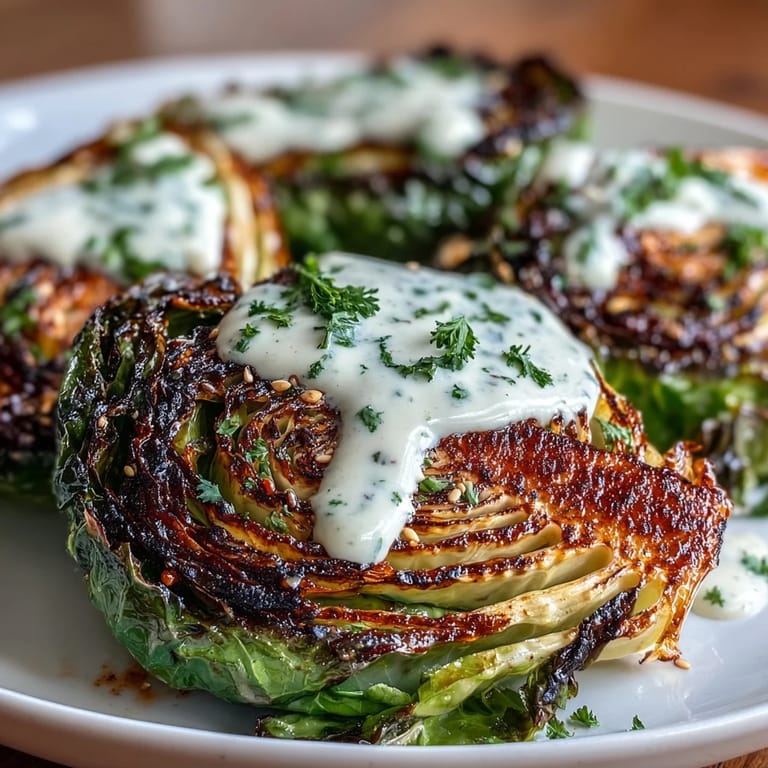
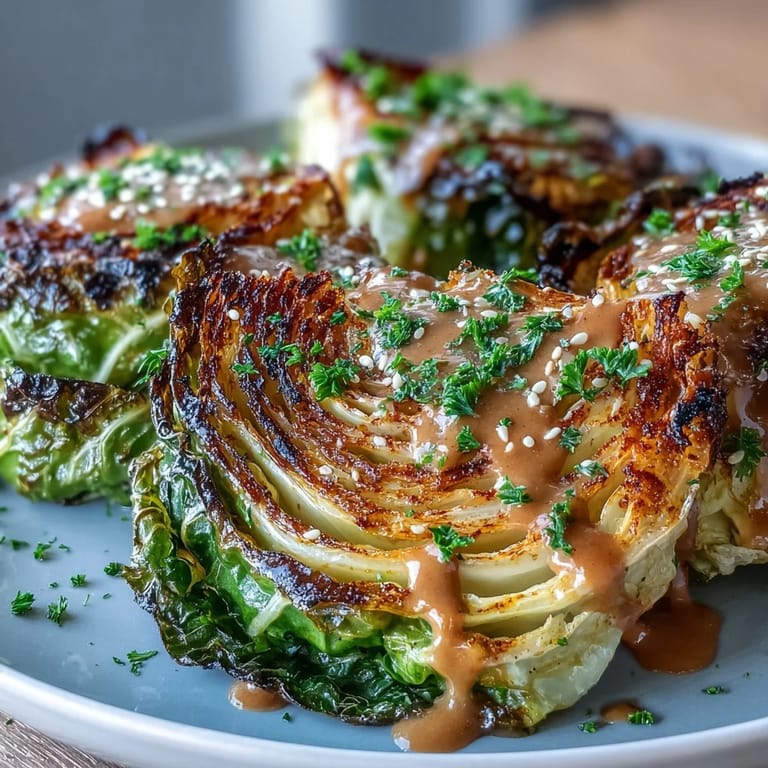
- Pop them in the oven for 25 to 30 minutes, flipping halfway through so both sides get that gorgeous browning. You'll know they're done when the edges are deeply caramelized and the centers are fork-tender.
- Make your tahini sauce while they cook:
- In a bowl, whisk tahini with lemon juice, minced garlic, and a pinch of salt until combined. Slowly add cold water, one tablespoon at a time, whisking constantly until you reach a pourable consistency that's smooth like peanut butter but thin enough to drizzle.
- Plate and finish:
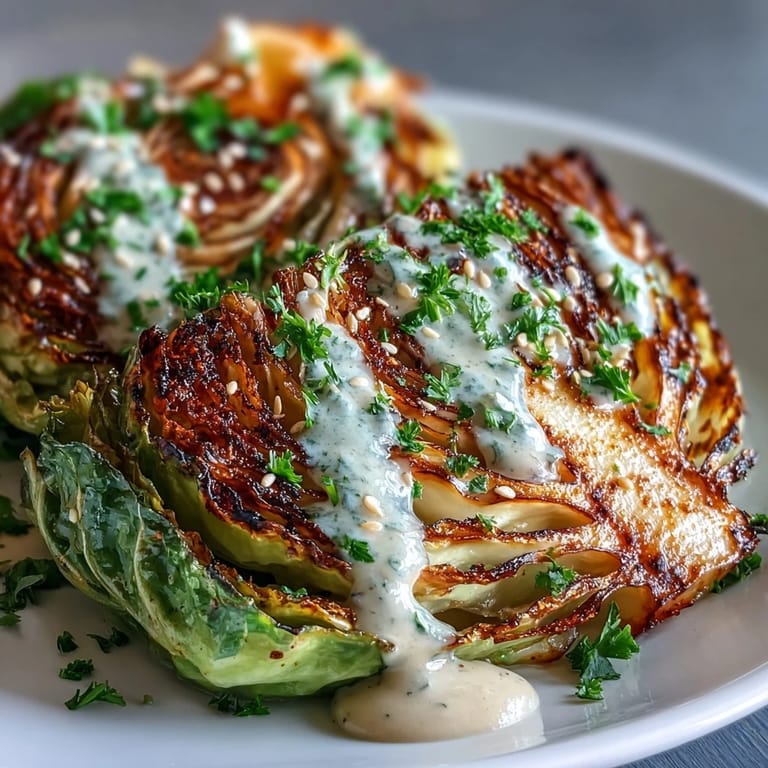
- Transfer the hot cabbage steaks to a platter, then drizzle the tahini sauce generously over the top. Scatter with parsley, sesame seeds if using, and serve with lemon wedges so everyone can adjust the brightness to their taste.
 Pin this
 The moment that really stuck with me was watching my normally meat-and-potatoes partner eat this without any hesitation, almost forgetting to save room for dessert. That's when I realized this wasn't about proving vegetables could be a main course—it was about making food so genuinely good that the category simply didn't matter.
Why These Flavors Work Together
Cabbage when roasted develops this natural sweetness that gets deeper and more complex the longer it cooks, almost nutty at the edges. The smoked paprika and cumin play beautifully with that sweetness, adding a savory Middle Eastern warmth that feels sophisticated without being fussy. The tahini sauce cuts through all of it with bright lemon and garlic, creating a balance between creamy, tangy, and umami that makes everything taste complete.
How to Know It's Done
The visual cue is the most reliable—your cabbage steaks should have deep golden-brown, almost charred edges while the inner leaves remain tender and slightly yielding to a fork. If you cut into one and it feels mushy throughout, it's gone a bit too far, but that's better than undercooked and tough. You want that contrast between crispy edges and soft centers, which is what makes this dish feel elegant despite being so straightforward.
Making It Your Own
Once you master the basic roasted cabbage, you can play with the flavor profile endlessly. I've tried adding zaatar for more herbaceous depth, a pinch of chili flakes for heat, or even swapping cilantro and mint in place of parsley depending on my mood. The tahini sauce is equally flexible—some nights I add pomegranate molasses for subtle sweetness and tang, other times I keep it simple and let the cabbage be the star.
- Toast your own sesame seeds in a dry pan for about two minutes until fragrant, as they taste infinitely better than pre-toasted.
- Make the tahini sauce up to a day ahead and store it in the fridge, bringing it back to room temperature before serving.
- Serve this as a vegetarian main with grains like quinoa or farro, or alongside grilled proteins if you're feeding mixed eaters.
 Pin this
 This dish taught me that sometimes the most satisfying meals come from respecting simple ingredients and letting them shine. It's become my go-to when I want to feel like I've cooked something special without any of the stress.
Recipe Questions
- → How do I cut cabbage into steaks?
Trim off the tough outer leaves, then slice the entire head crosswise into 1-inch thick rounds. Each round is a "steak" that holds together nicely during roasting while developing crispy edges.
- → Can I make this ahead?
The tahini sauce can be prepared up to 5 days in advance and stored in the refrigerator. The cabbage is best roasted fresh, but leftovers reheat well in a 350°F oven for 10-15 minutes.
- → What other vegetables work with this method?
Try cauliflower steaks, thick-sliced kohlrabi, or even portobello mushrooms using the same roasting technique. Adjust cooking time based on vegetable thickness.
- → My tahini sauce is too thick—what do I do?
Gradually whisk in cold water, one tablespoon at a time, until you reach a pourable consistency. The sauce may initially seize but will smooth out with continued whisking.
- → Can I use red cabbage instead?
Absolutely. Red cabbage works beautifully and creates a striking presentation. Note that it may take slightly longer to tenderize and will turn purple-blue when cooked.