 Pin this
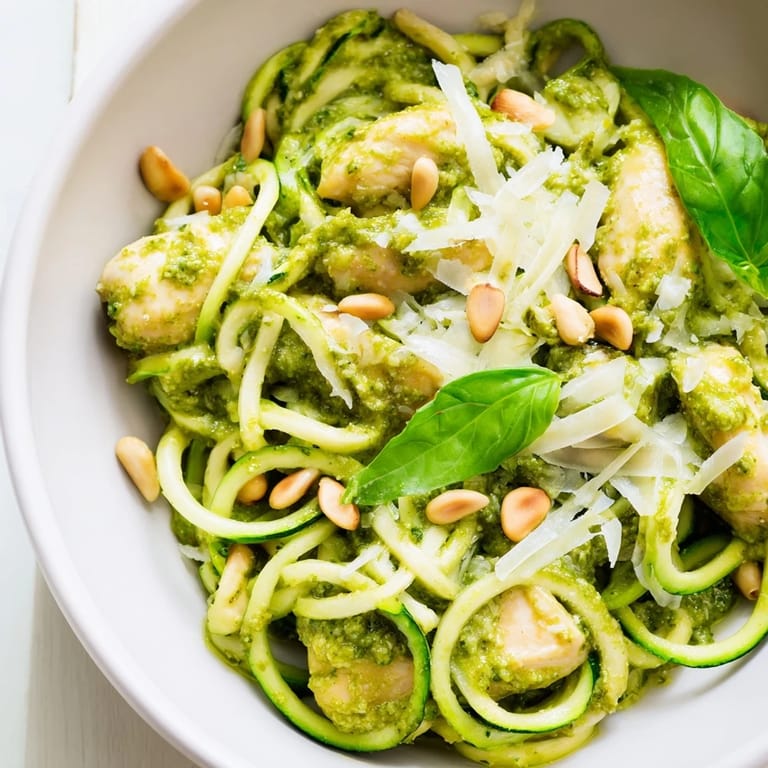
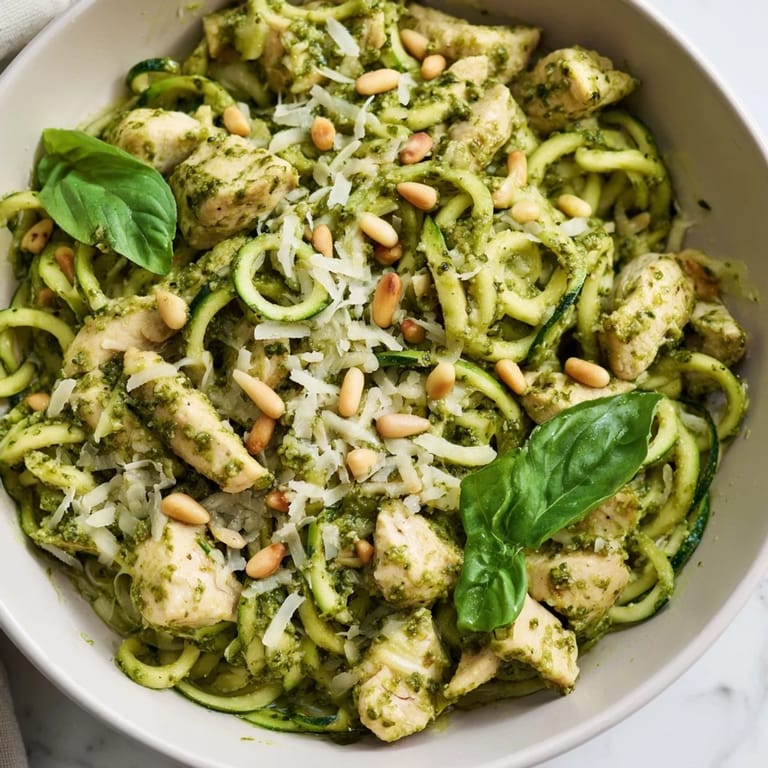
 The smell of basil hit me before I even opened the jar. I was standing at the counter on a Wednesday night, staring at a pile of zucchini from the farmers market that I'd bought with good intentions but no real plan. My spiralizer sat in the drawer, barely used, and I thought why not just try it. Twenty minutes later, I had this bowl in front of me, green and bright and tasting like summer itself.
I made this for my sister when she came over after a long shift at the hospital. She sat at my kitchen table, quiet and tired, and I just set the bowl in front of her without saying much. She took one bite and her shoulders visibly relaxed. Sometimes food does that, it gives people permission to exhale.
Ingredients
- Boneless, skinless chicken breasts (500 g, cut into bite sized pieces): Cutting them small means they cook fast and evenly, and every piece gets coated in pesto instead of just sitting beside it.
- Olive oil (2 tablespoons total): One for the chicken, one for the zucchini; dont skip either or things will stick and lose that silky finish.
- Salt, black pepper, and dried Italian herbs: Simple seasoning that lets the pesto do the talking without competing for attention.
- Zucchini (4 medium, spiralized): They turn into noodles in seconds and cook in minutes; just dont overdo it or theyll get mushy and watery.
- Basil pesto (120 g): The heart of this dish; whether you make it or buy it, use one that tastes vibrant and garlicky, not flat or oily.
- Lemon juice (from half a lemon): Brightens everything and cuts through the richness of the pesto in a way that feels necessary.
- Parmesan cheese (25 g, grated): Optional but worth it for that salty, nutty finish on top.
- Pine nuts (35 g, toasted): They add crunch and a buttery warmth that makes each bite more interesting.
- Fresh basil leaves: A handful torn over the top makes it look and taste like you care.
Tired of Takeout? 🥡
Get 10 meals you can make faster than delivery arrives. Seriously.
One email. No spam. Unsubscribe anytime.
Instructions
- Cook the chicken:
- Heat 1 tablespoon olive oil in a large skillet over medium high heat until it shimmers. Add the chicken pieces in a single layer, season with salt, pepper, and Italian herbs, and let them sear without moving them too much for 7 to 9 minutes until golden and cooked through.
- Sauté the zucchini noodles:
- In the same skillet, add another tablespoon of olive oil and toss in the spiralized zucchini with a pinch of salt. Sauté for just 2 to 3 minutes, tossing gently so they stay crisp and dont release too much water.
- Toss everything together:
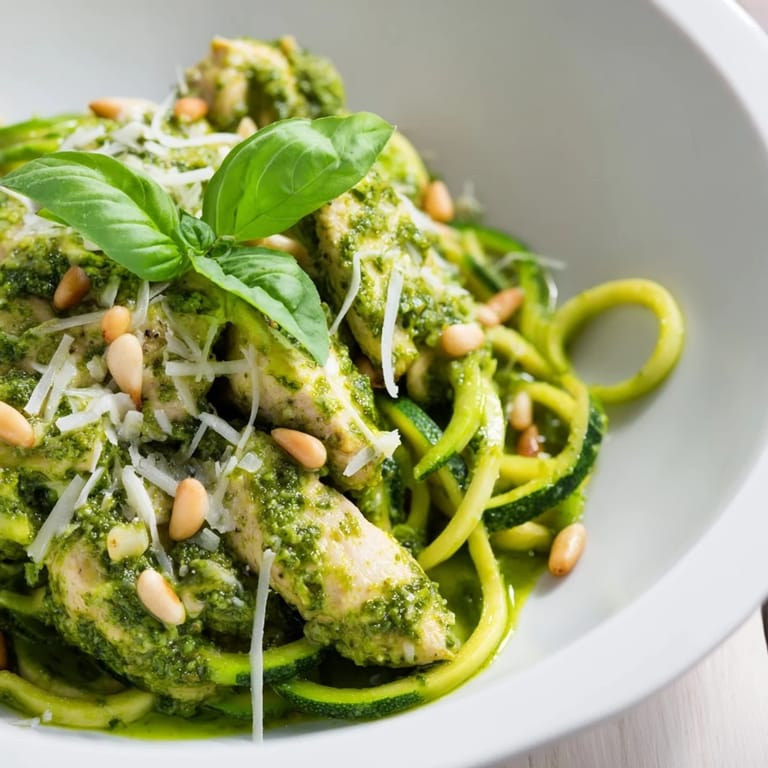
- Turn off the heat and return the chicken to the skillet. Add the pesto and lemon juice, then toss everything together until every piece is coated and glossy.
- Assemble the bowls:
- Divide the mixture among four bowls while its still warm. Top each with Parmesan, toasted pine nuts, and a few torn basil leaves if youre using them.
 Pin this
 This bowl became my go to when I wanted something that felt nourishing without any fuss. I started keeping pesto in the fridge and zucchini in the crisper drawer, and suddenly I had a meal I could count on. Its the kind of dish that reminds you cooking doesnt have to be complicated to feel like youre doing something good for yourself.
Making Your Own Pesto
If you have ten minutes and a blender, homemade pesto is worth it. I throw in two cups of fresh basil, a third cup of pine nuts, a third cup of Parmesan, one garlic clove, and half a cup of olive oil, then blend until smooth. The flavor is brighter and more alive than anything from a jar, and you can adjust the garlic or salt to your taste.
Swapping the Zucchini
Zucchini noodles are mild and let the pesto shine, but Ive also made this with spiralized carrots and sweet potatoes when I wanted something a little heartier. Carrots add sweetness and crunch, while sweet potatoes turn it into something more filling and slightly earthy. Both work beautifully and change the mood of the bowl without much extra effort.
Storing and Reheating
Leftovers keep in the fridge for up to two days, though the zucchini will soften as it sits. I reheat gently in a skillet over low heat, adding a splash of water or olive oil to bring back some moisture. If youre meal prepping, store the chicken and zucchini separately from the pesto and toss everything together just before eating.
- Let everything cool completely before storing to prevent condensation and sogginess.
- Use an airtight container to keep the pesto from drying out or losing its color.
- Reheat just until warm, not hot, so the pesto stays vibrant and doesnt separate.
 Pin this
 This bowl has a way of making ordinary nights feel a little special. Its light, its bright, and it tastes like youre taking care of yourself without overthinking it.
Recipe Questions
- → Can I prepare this dish ahead of time?
The chicken can be cooked and stored separately for up to 3 days. However, prepare the zucchini noodles fresh just before serving to maintain their crispness. Combine all components right before eating for the best texture and flavor.
- → What's the best way to spiralize zucchini?
Use a handheld spiralizer or a vegetable spiralizer attachment for consistent noodle-like strands. Alternatively, a julienne peeler works well for creating thin, ribbon-like pieces. Pat the zucchini dry before spiralizing to reduce excess moisture.
- → How do I make homemade basil pesto?
Blend 2 cups fresh basil leaves with 1/3 cup pine nuts, 1/3 cup grated Parmesan, 1 minced garlic clove, and 1/2 cup olive oil until smooth. Season with salt and pepper to taste. Store in an airtight container for up to a week.
- → What are good substitutes for zucchini noodles?
Spiralized carrots, sweet potatoes, or even regular pasta work wonderfully. For a heartier option, try spiralized beets or a mix of vegetables. Adjust cooking time based on your chosen vegetable's thickness and density.
- → Is this suitable for dairy-free diets?
Yes, use vegan pesto and omit the Parmesan cheese. Many store-bought vegan pestos are readily available, or make your own by substituting dairy-free alternatives. The dish remains equally delicious and nutritious.
- → How should I store leftovers?
Store the chicken and zucchini noodles separately in airtight containers for up to 3 days. Keep pesto and toppings separate as well. Reheat gently on the stovetop, adding a splash of olive oil to prevent drying out.