 Pin this
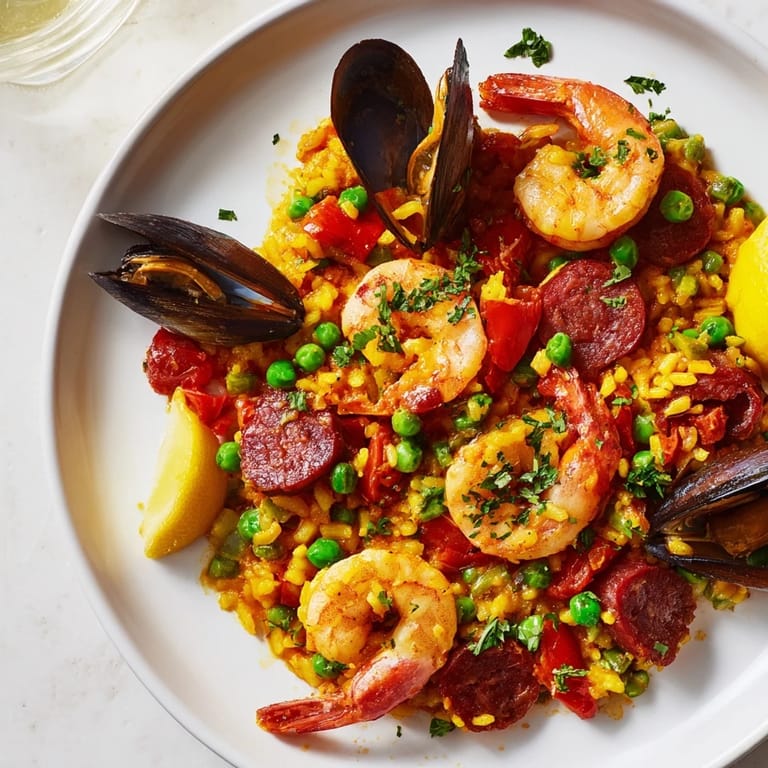
 The first time I made paella, I was standing in my friend Maria's kitchen in Barcelona, watching her mother work with an ease that made it all look effortless. She moved around that wide pan like she was conducting an orchestra, and I remember the exact moment the saffron-steeped broth hit the rice—the smell was so golden and warm it felt like the kitchen itself was glowing. Now, years later, whenever I make this dish, I'm transported back to that afternoon: the sound of the seafood sizzling as it nestled into the rice, the way everyone gathered around the table before we'd even finished plating. It's become my go-to recipe for nights when I want to cook something that feels both impressive and deeply comforting.
I cooked this for my partner's birthday dinner, and I'll never forget the moment they took that first bite and just closed their eyes. There's something about paella that makes people slow down, that turns a meal into an experience. The combination of smoky chorizo, tender seafood, and that saffron-kissed rice creates this perfect harmony where no single ingredient overshadows the others. That night, we forgot about dessert entirely and just kept going back for more, sharing the pan directly and talking until the kitchen got cold.
Ingredients
- Chorizo sausage (200 g): The smokiness is what gives paella its soul—don't skip this or substitute it with regular sausage, as the paprika and fat are essential to building flavor.
- Chicken thighs (250 g): Thighs stay juicy and flavorful where breasts dry out; cut them into bite-sized pieces so they cook evenly and distribute throughout the pan.
- Shrimp and mussels (250 g each): These are your final flourish and cook in just minutes, so buy them as fresh as possible and add them near the end.
- Short-grain paella or Arborio rice (400 g): The starch in these varieties creates that signature creamy texture while the grains stay intact—regular long-grain rice won't work the same way.
- Saffron threads (½ tsp): This is expensive for a reason; a tiny amount transforms the entire dish with color and a subtle floral warmth that no other ingredient can replicate.
- Stock (1 L): Keep it heated throughout cooking so it doesn't shock the rice and slow the cooking process; seafood stock adds extra depth but chicken works beautifully too.
- Bell peppers, onion, tomatoes, and garlic: These are your flavor foundation—don't rush chopping them fine, as they need to soften and meld with the oil before the rice goes in.
- Smoked paprika (1 tsp): Use the real Spanish stuff if you can find it; regular paprika tastes completely different and misses the whole point.
Tired of Takeout? 🥡
Get 10 meals you can make faster than delivery arrives. Seriously.
One email. No spam. Unsubscribe anytime.
Instructions
- Steep the saffron:
- Pour 3 tablespoons of hot stock over the saffron threads and let them sit for a few minutes—this releases their color and flavor into the liquid, turning it a deep golden amber.
- Brown the proteins:
- Heat oil in your paella pan over medium heat and add the chorizo and chicken, letting them develop color and release their fat into the pan; this builds the flavor foundation for everything that comes next.
- Build your soffritto:
- Add the onions and bell peppers and let them soften for about 5 minutes, stirring occasionally, until they're tender and starting to caramelize at the edges. Then add garlic and tomatoes and cook just until fragrant and combined.
- Toast the rice:
- Stir in the rice and paprika, making sure every grain gets coated in the oil and vegetables—this step keeps the rice from turning mushy and gives it a slightly nutty flavor.
- Add the stock and aromatics:
- Return the browned chicken and chorizo to the pan, pour in your saffron broth and remaining stock, add a bay leaf, and season with salt and pepper; stir gently to combine everything evenly.
- Let it simmer undisturbed:
- Bring everything to a boil, then lower the heat and let it simmer uncovered for about 15 minutes without stirring—this is how the socarrat (the crispy golden rice on the bottom) starts to form.
- Add the seafood:
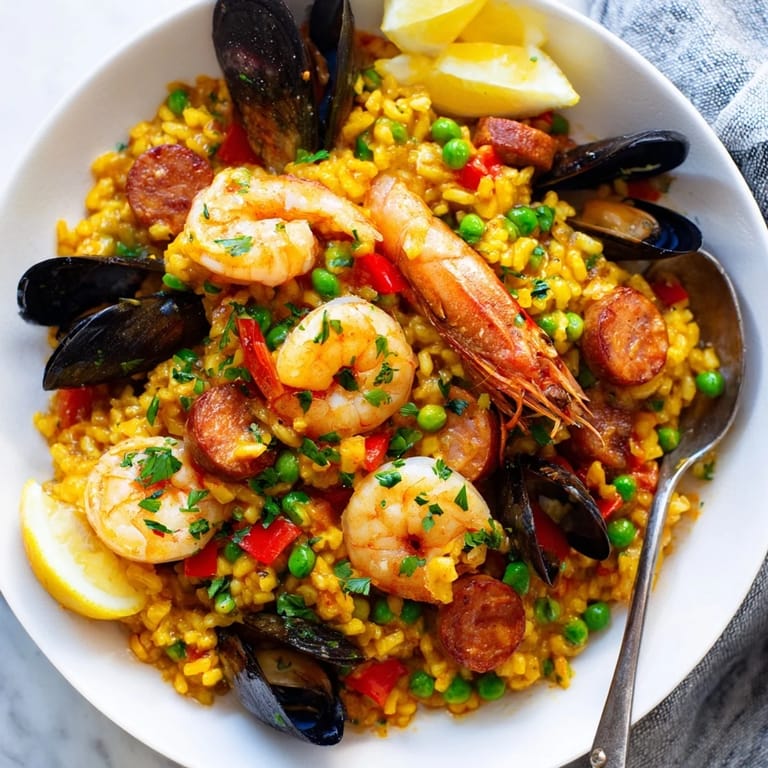
- Nestle the shrimp, mussels, and calamari into the rice and scatter the peas on top, then cover loosely with foil and cook for another 10-12 minutes until the seafood is just cooked through and the mussels have opened.
- Rest and finish:
- Remove from heat, keep it covered, and let it rest for 5 minutes—this lets the rice absorb any remaining liquid and the flavors settle. Discard any mussels that didn't open, then garnish with parsley and lemon wedges.
 Pin this
 There's a moment right before you uncover that paella that always feels like a small miracle. The steam rises, the smell hits you, and suddenly everyone who's been chatting in the other room appears in the kitchen doorway. This dish has a way of drawing people together, turning cooking from a solo task into something communal.
The Saffron Magic
Saffron isn't just about color—it's about creating a sensory experience that makes people pause. When you steep those threads in hot stock, you're essentially waking them up, letting them release their essence into the liquid. The warmth of the broth is crucial here; cold liquid won't extract the flavor nearly as effectively. I've learned to let the saffron sit a full 3-5 minutes so that subtle, almost floral note becomes noticeable without ever tasting medicinal or bitter.
Building Layers of Flavor
The magic of paella isn't in any single ingredient—it's in how you layer flavors starting from that very first step of browning the chorizo. That rendered fat becomes the canvas for everything that follows. The vegetables soften into that fat, the garlic blooms, the tomatoes add acidity and sweetness. By the time you add the rice, you've already built a foundation so flavorful that the rice just absorbs it like a sponge. Rush this part and you'll end up with something that tastes more like rice pilaf than paella.
Timing and the Perfect Finish
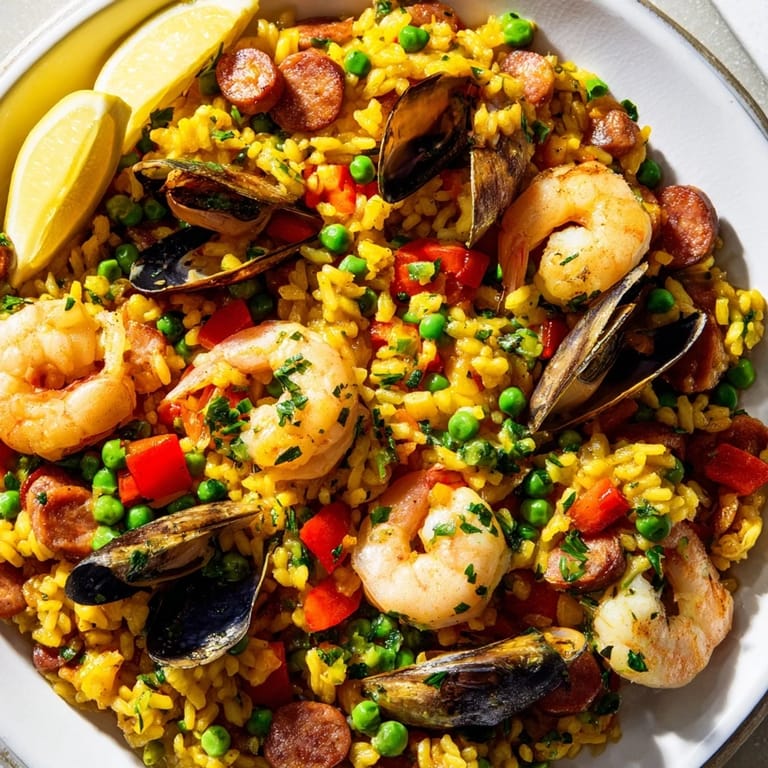
Paella has taught me that patience at the stove is an actual ingredient. You can't force it to cook faster by turning up the heat, and you can't rush it by stirring. The 15 minutes of undisturbed simmering is when the rice absorbs the stock and that gorgeous crispy bottom layer—the socarrat—develops. Listen for a gentle crackling sound near the end; that's your cue that things are progressing beautifully. The final 10-12 minutes with the seafood tucked in should be covered loosely with foil, just enough to steam the shellfish without making the rice soggy.
- A wooden spoon is your best friend here; it lets you gently nudge things around without breaking the rice grains or disturbing the socarrat you're building.
- If you don't hear or feel any resistance from the bottom of the pan, you're safe; if you start smelling something burning, lower the heat immediately.
- The rest period after cooking is non-negotiable—those 5 minutes let everything come together and allow the rice to fully absorb any remaining liquid.
 Pin this
 This recipe is my reminder that some of the most beautiful, memorable meals come from slowing down and cooking with intention. Paella asks you to be present, to pay attention, to let the pan do some of the work while you simply guide it along.
Recipe Questions
- → What type of rice is best for this dish?
Short-grain paella rice or Arborio rice works best as they absorb flavors well while maintaining texture.
- → How do you enhance the saffron flavor?
Steeping saffron threads in warm stock before adding intensifies the color and aroma throughout the dish.
- → Can other seafood be used?
Yes, clams or scallops can replace or supplement shrimp and mussels for variety and personal taste.
- → What gives the dish its smoky depth?
Smoked paprika and chorizo sausage provide a rich smoky flavor that complements the seafood and vegetables.
- → How should the dish be served?
It’s best enjoyed fresh, garnished with chopped parsley and a squeeze of lemon for brightness.
- → Is it possible to prepare a vegetarian version?
Omit meats and seafood, then add artichokes, green beans, or chickpeas for a plant-based alternative.