 Pin this
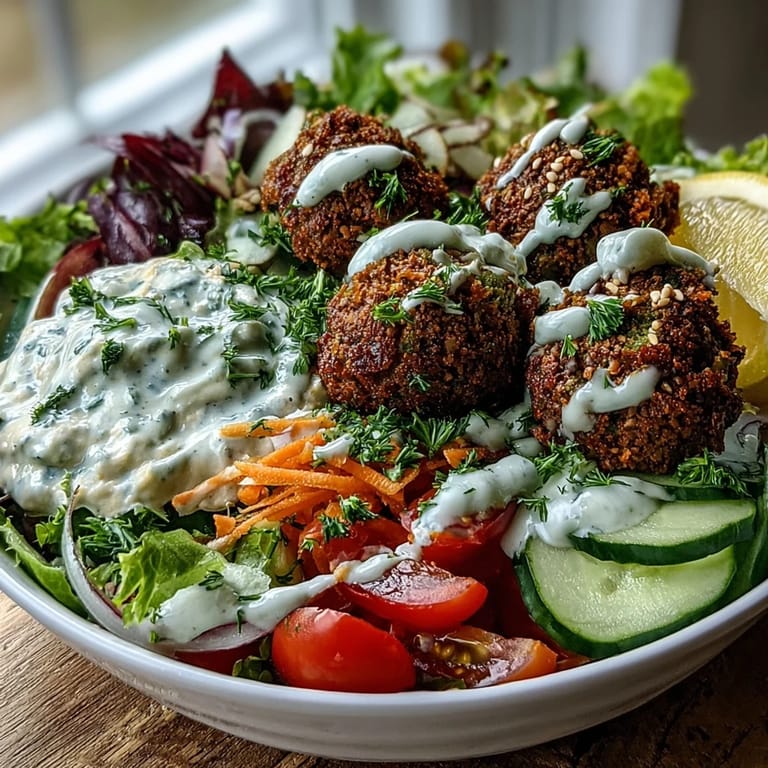
 My coworker Sarah brought a falafel bowl to lunch one Tuesday, and I spent the whole afternoon thinking about how she'd layered everything so carefully that each bite had something different. The crispy texture of the falafel against the creamy hummus, the way the lemon juice brightened everything—I realized I'd been making salads all wrong, approaching them like an afterthought instead of something worth building with intention. That bowl changed how I think about vegetables and plant-based eating entirely, turning what could be boring into something I genuinely crave.
I made this for my friend Marco who'd just turned vegetarian, and I was nervous about it being underwhelming in that well-meaning but slightly sad way some dietary accommodations can feel. But watching him take that first bite, then immediately ask for seconds—that's when I understood this isn't a compromise meal, it's genuinely craveable food that happens to be meat-free. He's made it three times since then and keeps texting me photos of his variations.
Ingredients
- Store-bought or homemade falafel (12 balls): The crispy exterior and herby interior are what make this bowl sing—if you're using store-bought, look for ones that are actually golden when you open the package, not pale.
- Hummus (1 cup): This is your creamy base layer, so choose one with actual depth of flavor or make your own if you have the time.
- Tzatziki (1 cup): The cool, garlicky contrast that prevents the whole bowl from feeling heavy—don't skip this even if dairy isn't usually your thing.
- Tahini sauce (1/4 cup): This is the silky glue that ties everything together, draping over the warm falafel like it belongs there.
- Mixed salad greens (4 cups): Use whatever's freshest at your market—arugula brings peppery notes, spinach is grounding, romaine gives you structure to build on.
- Cherry tomatoes (1 cup, halved): They should feel heavy and smell sweet when you press them slightly, a sign they'll actually have flavor.
- Cucumber (1/2 cup, sliced): The cooling, watery element that keeps things bright and prevents palate fatigue.
- Red onion (1/4 cup, thinly sliced): Sharp and a little spicy raw, it adds complexity that sweet onions simply can't deliver.
- Shredded carrots (1/4 cup): Sweet earthiness and a satisfying crunch that survives the assembly process.
- Fresh parsley (2 tablespoons, chopped): The final herbaceous note that makes it taste alive rather than assembled.
- Toasted sesame seeds (1 tablespoon): These add nutty depth and the kind of textural interest that catches you by surprise with each bite.
- Lemon wedges (for serving): Acidity on demand, because some bites need a squeeze and others don't.
Tired of Takeout? 🥡
Get 10 meals you can make faster than delivery arrives. Seriously.
One email. No spam. Unsubscribe anytime.
Instructions
- Warm your falafel gently:
- If you're using store-bought, follow the package instructions—usually a quick pan warming brings back that crispy exterior without drying them out. If homemade, you know your method, but aim for that golden-brown stage where the outside is set but the inside is still warm and slightly yielding.
- Create your creamy foundation:
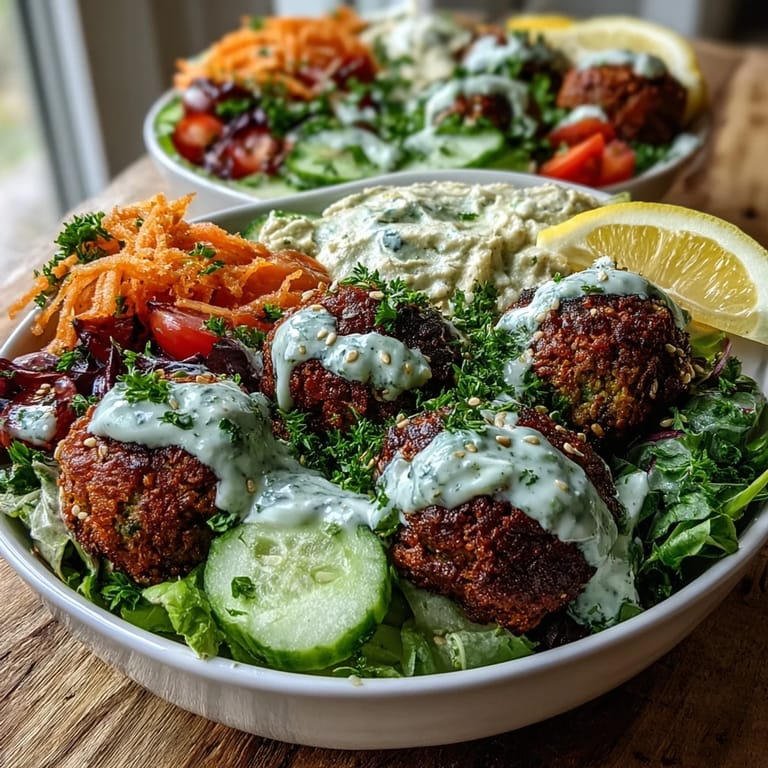
- Spread a generous scoop of hummus across the bottom of each bowl, then add a dollop of tzatziki beside or on top of it. These two create the cushion everything else rests on, so don't be shy with the amount.
- Build your vegetable landscape:
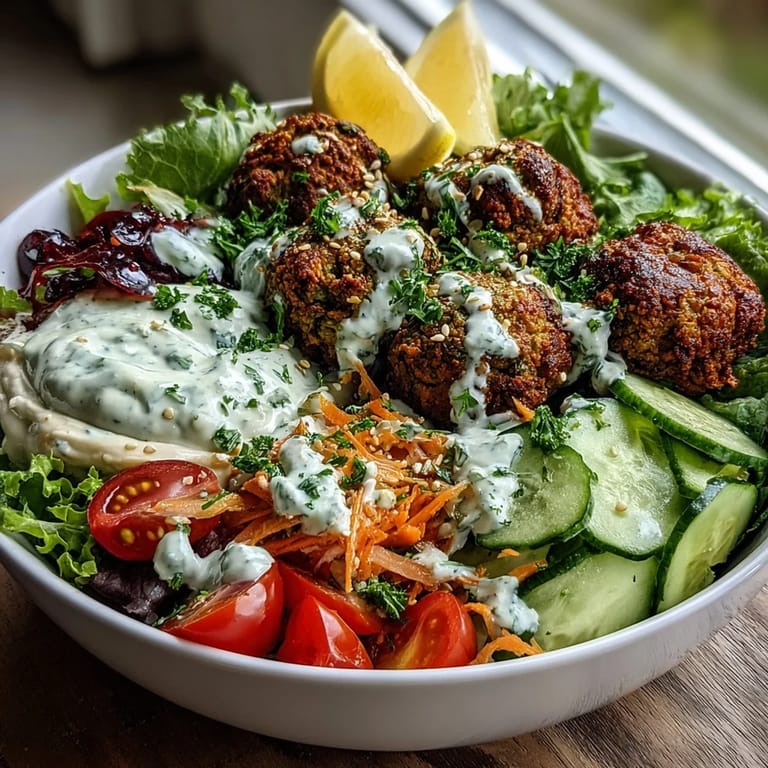
- Pile your mixed greens on top of the spreads, then arrange the tomatoes, cucumber, red onion, and carrots so you can actually see them—not because it has to be Instagram-perfect, but because you want every spoonful to have access to everything. This takes maybe two minutes and changes the eating experience entirely.
- Crown it with falafel:
- Place three warm falafel balls on top of each bowl, positioning them so they're visible and ready to be broken into with your fork or spoon. The warmth of the falafel will slightly soften the spreads beneath it, which is exactly what should happen.
- Drizzle with tahini sauce:
- Pour it over the falafel and let it cascade down into the crevices—this is the binding agent that makes it feel cohesive rather than like a collection of separate items.
- Finish with brightness:
- Scatter the fresh parsley and sesame seeds across the top, then place a lemon wedge on the side. These final touches aren't decoration, they're flavor infrastructure.
- Serve right away:
- The greens stay crisp, the falafel stays warm, and everything tastes the way it's supposed to when the temperature and texture contrasts are still present.
 Pin this
 My partner made this for me after a long day when I had literally nothing left in my emotional tank, and the act of eating something built with layers and intention, something that required thought but not complexity, somehow reset me. There's something about food that's both nourishing and beautiful that reminds you to slow down, even when your brain is running at 2 a.m. speed.
Building Flavor Through Layering
The magic of a falafel bowl lives in how each component adds something different to the experience—creamy, tangy, crispy, fresh, herbaceous, nutty, all in one bite. I learned this through mistakes, like when I'd pile everything into a container without thinking about the order, and by the time I ate it, the flavors felt blurred together. Now I understand that the sequence of construction isn't random; it's strategic. The spreads go down first because they're your flavor anchor, the greens rest on top to stay crisp, and the warm falafel goes last so it does its job of warming everything without making it soggy. This approach works because each component gets to be itself while also supporting what comes next.
Making It Your Own
This bowl is genuinely flexible without falling apart, which is the kind of recipe that lives in regular rotation in kitchens like mine where people have different preferences. Add cooked quinoa or brown rice if you want something more substantial—it absorbs the tahini sauce beautifully. Swap the raw vegetables for pickled versions if that's your mood, or add kalamata olives for a briny pop. The core structure is strong enough to handle these variations without losing its identity, and that's what makes it feel less like a recipe and more like a template for what you actually want to eat on any given day.
Pairing and Serving Suggestions
This bowl holds its own as a complete meal, but it also plays well with other things—a crisp white wine if you're eating dinner, mint tea if you want something warm and soothing, or just cold water if you're focused entirely on the flavors in front of you. The acidity of the wine cuts through the richness of the tahini, while mint tea echoes the herbs in the falafel and spreads. I've also served it alongside a simple grain salad or flatbread, though honestly it doesn't need backup.
- If you're making this for guests, prep everything except assembly ahead of time so you're not stressed when they arrive.
- Let people customize their own bowls if you're feeding a crowd—it turns the meal into something collaborative and ensures everyone gets what they actually want.
- Leftover components keep separately for days, so you can remake this bowl throughout the week without cooking twice.
 Pin this
 This is the kind of meal that feels both healthy and indulgent, which is rarer than it should be. Make it once and you'll understand why it's in constant rotation.
Recipe Questions
- → Can I make this bowl ahead of time?
Prepare all components in advance and store separately. Assemble bowls just before serving to keep vegetables crisp and falafel warm. The hummus, tzatziki, and tahini sauce can be made up to 3 days ahead.
- → What's the best way to warm store-bought falafel?
Oven heating yields the crispiest results. Bake at 375°F for 10-12 minutes until hot throughout and exterior is crunchy. Air frying works well too—5 minutes at 375°F gives excellent texture.
- → How can I add more protein?
Consider adding grilled chicken strips, roasted chickpeas, or a dollop of Greek yogurt alongside the tzatziki. Quinoa or brown rice also boosts protein while making the bowl more filling.
- → Is this bowl suitable for meal prep?
Absolutely. Portion ingredients into separate containers for up to 4 days. Keep falafel away from moisture-rich vegetables to maintain texture. Reheat falafel before assembling.
- → What other vegetables work well in this bowl?
Roasted eggplant, bell peppers, radishes, shredded cabbage, or pickled vegetables all complement the Mediterranean flavors beautifully. Kalamata olives and artichoke hearts add authentic tang.
- → Can I make this dairy-free?
Simply use a dairy-free tzatziki alternative made with coconut yogurt, or replace with additional hummus. The tahini sauce provides plenty of rich, creamy texture without dairy.