 Pin this
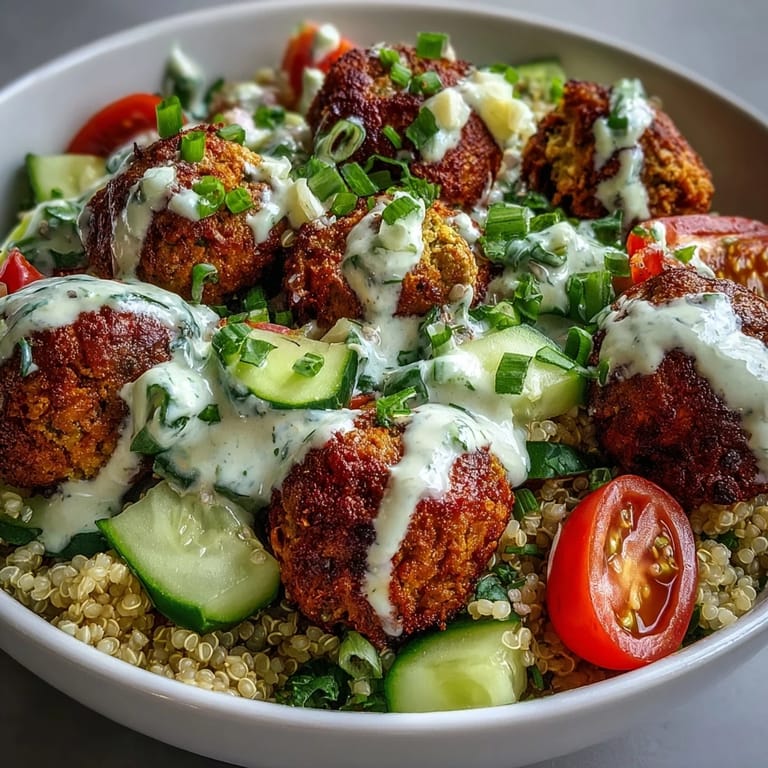
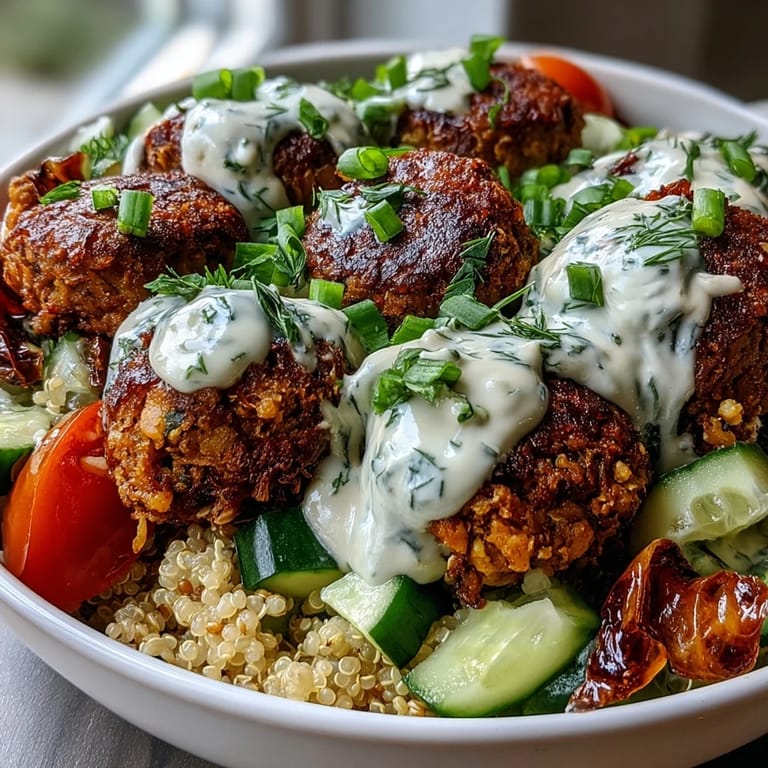
 My friend Zara showed up at my apartment one afternoon with a bag of fresh herbs and a mission to prove that healthy eating didn't have to taste like punishment. She dumped cilantro and parsley on my counter, and within minutes, the kitchen smelled like a Mediterranean market. That bowl we made together—crispy baked falafel on fluffy quinoa, bright vegetables scattered everywhere, all swimming in this ridiculously good garlic tahini sauce—became my go-to when I wanted something that felt both indulgent and nourishing.
I've made this bowl for my sister more times than I can count, usually when she's stressed about eating well during her busy weeks. She once told me that having something this satisfying in her fridge made her feel like she had her life slightly more together, and honestly, that stuck with me. Now whenever someone mentions they're trying to eat better, this is what I suggest, because it proves that wholesome food can also be exciting.
Ingredients
- Cooked chickpeas: Use canned and drained for convenience, but if you cook them yourself, they hold their shape better when pulsed in the food processor.
- Fresh parsley and cilantro: Don't skip these or use dried herbs; the brightness they bring is what makes the falafel taste alive rather than flat.
- Green onions: They appear twice in this recipe for good reason—they add a sharp bite that balances the earthiness of the chickpeas.
- Ground cumin and coriander: These are your flavor foundation; smell them before measuring to make sure they're aromatic and not stale.
- Chickpea flour: This binds the mixture without making it heavy, and it keeps the falafel gluten-free if that matters to you.
- Tahini: Buy the kind that's just sesame paste with maybe salt; avoid versions with added oils or sweeteners that throw off the balance.
- Quinoa: Rinse it thoroughly under cold water before cooking, or it'll taste slightly bitter and dusty.
Tired of Takeout? 🥡
Get 10 meals you can make faster than delivery arrives. Seriously.
One email. No spam. Unsubscribe anytime.
Instructions
- Get your oven ready:
- Preheat to 400°F and line a baking sheet with parchment paper so your falafel doesn't stick and your pan stays clean.
- Make the falafel mixture:
- Pulse the chickpeas and herbs in a food processor until the mixture looks rough and crumbly, not smooth like hummus—you want some texture. Stop and scrape the sides a few times so everything gets evenly chopped.
- Shape and brush:
- Wet your hands so the mixture doesn't stick, then roll or flatten the mixture into 12 pieces and place them on the sheet. Brush lightly with olive oil, which is the secret to getting them crispy without deep frying.
- Bake the falafel:
- Let them go for about 22 to 25 minutes, flipping halfway through, until they're golden brown and you can press one without it falling apart. They'll firm up a bit more as they cool.
- Start the quinoa:
- While falafel bakes, bring quinoa, water, and salt to a boil in a saucepan, then lower the heat, cover, and let it simmer for 15 minutes without peeking. Turn off the heat and let it sit covered for 5 minutes, then fluff with a fork—this resting time is crucial for getting that fluffy texture.
- Whisk the tahini sauce:
- Combine tahini, minced garlic, lemon juice, salt, and 2 tablespoons of water in a bowl and whisk until creamy. Add more water a little at a time if it's too thick; you want it to drizzle but not run off the bowl.
- Build your bowls:
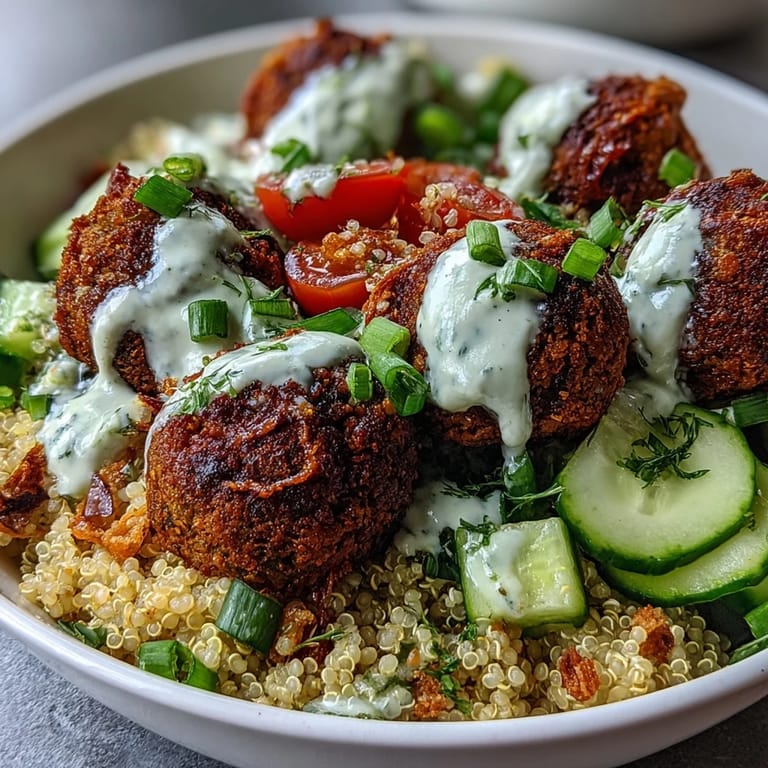
- Divide the cooked quinoa among four bowls, then top each with cucumber, cherry tomatoes, green onion, and three falafel pieces. Drizzle generously with the tahini sauce and serve right away while the falafel is still warm.
 Pin this
 I remember my mom tasting this for the first time and saying it felt like a restaurant-quality meal that I'd somehow managed to pull off at home. That moment made me realize this isn't just a salad you eat because it's good for you; it's the kind of food that makes you want to sit down and actually enjoy lunch instead of rushing through it.
Why Baking Instead of Frying Changes Everything
The first time I made falafel, I followed a traditional deep-fry recipe and spent an hour cleaning oil splatters off my stove. This baked version gives you nearly the same crispiness with about a tenth of the mess and way less oil in your body. You still get that golden exterior and tender inside, and honestly, once you drench it in tahini sauce, nobody can tell the difference.
The Tahini Sauce Is Your Secret Weapon
Tahini can seem intimidating if you've never worked with it, but this sauce is just four ingredients whisked together. The key is adding water slowly so you don't accidentally make it too thin, and tasting as you go so you can adjust the lemon juice or salt to your preference. This same sauce works on roasted vegetables, in wraps, or drizzled over rice, so once you nail it, you'll use it constantly.
Timing and Batch Cooking
The beauty of this bowl is that almost everything can be prepped ahead, which means you can have lunch ready in minutes on a busy day. I usually cook the quinoa and tahini sauce the night before, shape the falafel and refrigerate them, then just bake and chop vegetables when I'm ready to eat. These bowls actually taste better the next day as the flavors meld, and the falafel reheats perfectly in a 350°F oven for about 8 minutes.
- Make a double batch of falafel and freeze the unbaked balls on a sheet tray, then bake straight from frozen (just add a few extra minutes).
- The tahini sauce thickens slightly as it sits, so stir in a splash of water when you're ready to use it again.
- Keep the cucumber and tomatoes separate until assembly so they don't get watery or sad.
 Pin this
 This bowl has become my answer to so many situations—meal prep for the week, impressing someone at dinner, or just treating myself to something that feels special on a Tuesday night. It's the kind of recipe that sits at the sweet spot between healthy and delicious, and once you make it once, it'll keep calling you back.
Recipe Questions
- → Can I make the falafel ahead of time?
Yes, the baked falafel stores exceptionally well. Keep refrigerated in an airtight container for up to 3 days and reheat in a 350°F oven for 10 minutes to restore crispiness.
- → Is this bowl gluten-free?
Absolutely. Use chickpea flour instead of all-purpose flour in the falafel mixture. Double-check your tahini and canned chickpeas for any cross-contamination warnings.
- → What can I substitute for tahini?
If you have a sesame allergy, try cashew butter or almond butter thinned with lemon juice and water. The flavor profile will shift slightly but still provide creamy richness.
- → Can I air-fry the falafel instead?
Certainly. Air fry at 375°F for 12-15 minutes, shaking halfway through. They may cook faster than baking, so check for golden crispiness around the 10-minute mark.
- → How do I prevent quinoa from becoming mushy?
Rinse quinoa thoroughly before cooking to remove bitter saponins. Use the exact 2:1 water-to-quinoa ratio, and let it stand covered for 5 minutes off heat before fluffing with a fork.
- → What protein additions work well?
The chickpea-based falafel already provides 14g protein per serving. For extra protein, add roasted chickpeas, hemp seeds, or a dollop of Greek yogurt alongside the tahini.