 Pin this
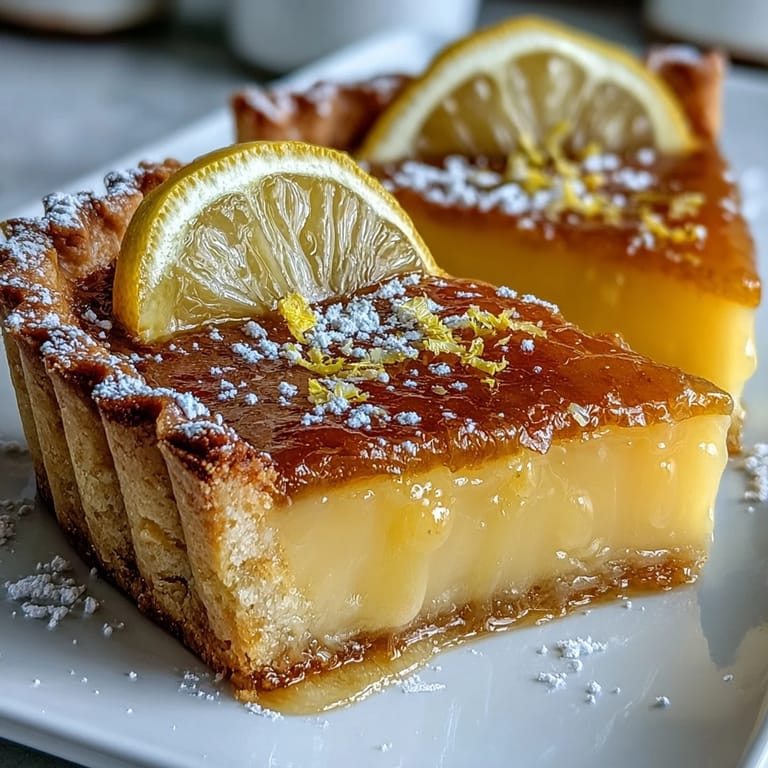
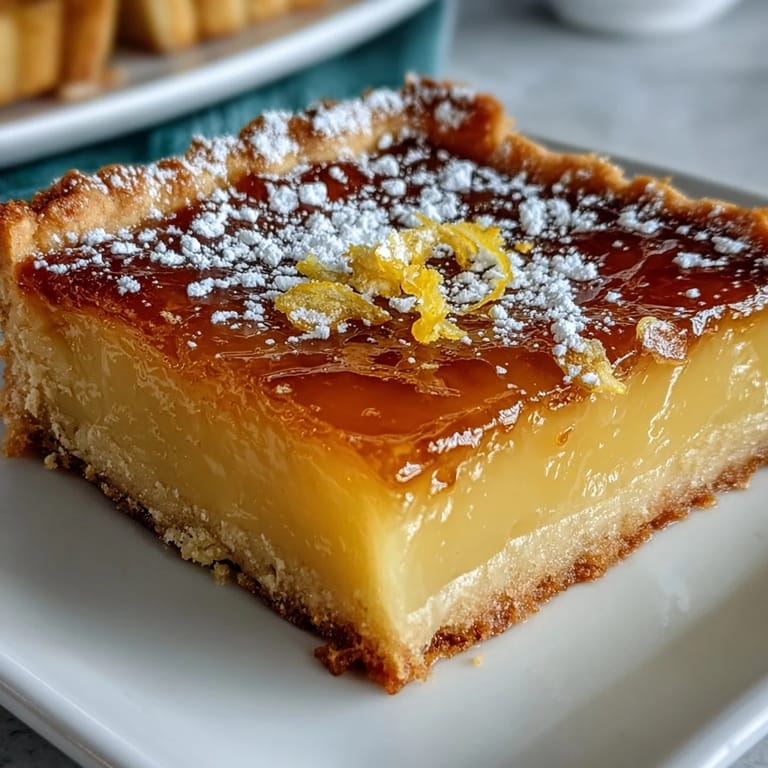
 There's something about the smell of lemon zest hitting a warm crust that stops you mid-conversation. I was testing desserts for a spring wedding when this tart practically made itself—golden pastry shattering under my fork, filling so silky it barely wobbled, bright enough to make you squint. It's the kind of dessert that looks like it took hours but feels effortless once you know the trick: cold butter, fresh lemons, and the patience to let it all come together.
I made this for my neighbor's daughter's graduation dinner, and watching her face when she tasted it was worth every minute. She'd been stressed about her future, and there it was—this bright, confident little tart saying everything would be okay. Sometimes food does that, especially when it's made with intention and served still cool from the fridge.
Ingredients
- All-purpose flour: The foundation of your crust—use good quality and don't sift unless your flour is visibly lumpy, since overworking it makes pastry tough.
- Unsalted butter, cold and cubed: Cold butter creates those delicate layers; if it warms up, your crust suffers, so keep it in the freezer until the last moment.
- Powdered sugar: This dissolves into the dough faster than granulated, giving you a tender, slightly sweeter crust that browns beautifully.
- Fine sea salt: A pinch balances sweetness and makes every flavor pop—don't skip it.
- Egg yolk: Binds the dough and adds richness; the yolk matters more than the white here.
- Ice water: Temperature matters; warm water activates gluten and ruins your texture, so keep it genuinely cold.
- Eggs and egg yolks: They're what makes the filling set into that custard-like dream—room temperature ones blend smoother than cold ones.
- Granulated sugar: Sweetens the filling without grittiness; it dissolves completely into the lemon juice.
- Freshly squeezed lemon juice: Bottled juice tastes flat and chemical by comparison; use fresh or don't bother, honestly.
- Lemon zest: This brings brightness that juice alone can't; the oils in the peel are the magic ingredient.
- Melted butter, cooled slightly: It has to cool or it'll scramble your eggs when you whisk them together—learned that one the hard way.
Tired of Takeout? 🥡
Get 10 meals you can make faster than delivery arrives. Seriously.
One email. No spam. Unsubscribe anytime.
Instructions
- Prep your workspace and oven:
- Heat your oven to 350°F and gather everything within arm's reach—this is one of those recipes where you don't want to be hunting for ice water mid-pulse.
- Build the crust:
- Pulse your flour, powdered sugar, and salt together until combined, then add cold butter and pulse until it looks like coarse sand. This texture is crucial; if you see pea-sized butter chunks, you're on the right track. Add your egg yolk and 2 tablespoons of ice water, pulsing gently until the dough just comes together—stop before it looks fully mixed, because it'll continue coming together as you handle it.
- Chill the dough:
- Form it into a flat disk, wrap it, and pop it in the fridge for 30 minutes if you have time. This rest lets the flour hydrate and the butter firm up again, which means your crust will roll out evenly and bake up crisp.
- Shape the crust:
- Roll the dough out between two sheets of parchment paper so it doesn't stick and tear, then lay it into your tart pan and press it gently up the sides. Trim the overhang with a knife and prick the base with a fork so it doesn't puff up.
- Blind bake the crust:
- Line it with parchment and fill with pie weights or dried beans, then bake for 15 minutes. Remove the weights and paper, bake another 10 minutes until the edges just start to color, then let it cool slightly while you make the filling.
- Whisk the filling:
- In a big bowl, whisk together your eggs, egg yolks, sugar, fresh lemon juice, lemon zest, cooled melted butter, and a pinch of salt until everything is smooth and pale. This should take about 2 minutes of steady whisking; you're not trying to aerate it, just combine it until there are no streaks.
- Fill and bake:
- Pour the filling into your warm crust and bake for 20 to 25 minutes—the center should jiggle slightly when you shake the pan, not slosh around like a custard. It'll continue cooking as it cools, so you want to pull it out when it still looks a touch underdone.
- Cool completely:
- Let it rest on a wire rack until it reaches room temperature, then chill it in the fridge for at least 2 hours. This is non-negotiable; a warm tart falls apart when you slice it, but a chilled one cuts like a dream.
- Finish and serve:
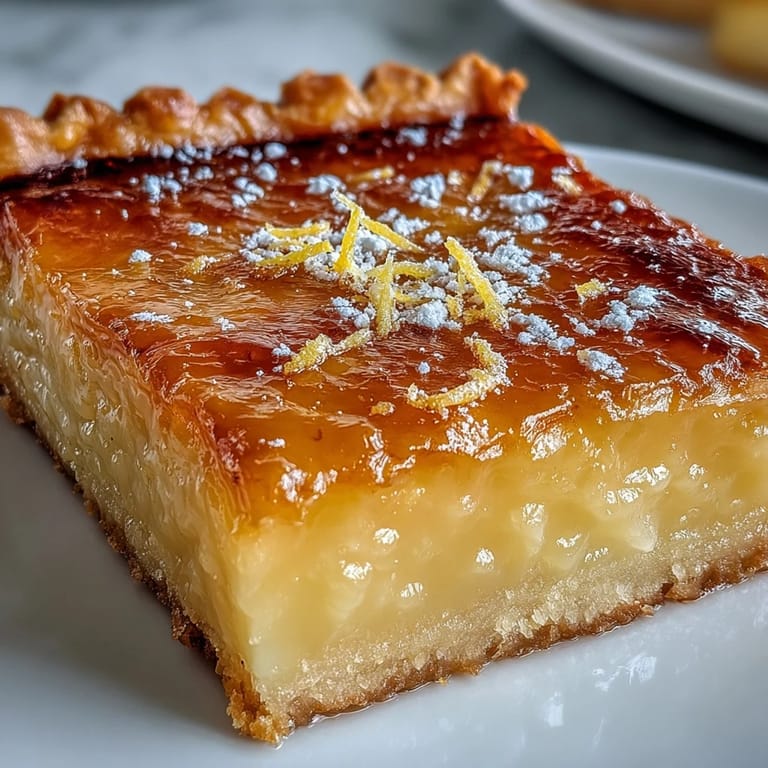
- Dust lightly with powdered sugar just before serving, add whatever garnish speaks to you, and slice with a warm, wet knife for clean edges.
 Pin this
 My mother-in-law took one bite and asked for the recipe, which meant more to me than any review ever could. That's when I knew this tart wasn't just pretty—it was the kind of thing people remember.
Why This Tart Feels Special
There's a French elegance to this dessert that has nothing to do with difficulty and everything to do with intention. The simplicity of the ingredient list—butter, lemon, eggs—means every single element has to be excellent. You can't hide behind chocolate or spices; the lemon just says what it is, bright and honest and unapologetic.
Variations Worth Trying
Once you've made this classic version, you're ready to play. Swap half the lemon juice for fresh blood orange juice in late winter when they're in season, or add a teaspoon of vanilla to the filling for something subtly richer. I've even done a lime version for summer dinners, which was sharper and more tropical than the original.
Serving and Pairing Ideas
Serve this tart slightly chilled with a dollop of whipped cream or crème fraîche on the side, letting people add as much as they want. A glass of chilled Sauternes or even a crisp sparkling wine turns a simple dessert into something approaching the sacred. My favorite moment is always when someone cuts into that perfect golden crust and discovers how tender everything underneath is.
- A light dust of powdered sugar moments before serving keeps the garnish bright and visible.
- Fresh mint or paper-thin lemon wheels add color and signal that this is a spring or summer dessert, not a heavy winter one.
- If you're serving it at room temperature instead of chilled, pull it out of the fridge 15 minutes before slicing so the flavors open up.
 Pin this
 This tart has become my answer when someone asks for an elegant dessert that won't keep them in the kitchen all day. It's proof that sometimes the most memorable things are the ones you take time to do right, not the ones you rush.
Recipe Questions
- → How should I prepare the crust for a crisp texture?
Pulse cold butter with flour and powdered sugar until coarse crumbs form, then chill dough before baking to ensure a crisp, flaky crust.
- → What is the best way to achieve a smooth lemon filling?
Whisk eggs, sugar, lemon juice, zest, and melted butter thoroughly until smooth before pouring into the warm crust.
- → Can I substitute lemon juice with other citrus fruits?
Yes, variations like blood orange or lime juice can be used for a different but equally refreshing taste.
- → How long should the tart cool before serving?
After baking, allow the tart to cool completely on a wire rack and chill in the refrigerator for at least 2 hours to set properly.
- → What garnishes complement the tart's flavor?
Light dusting of powdered sugar, thin lemon slices, fresh berries, or mint leaves enhance its bright flavors.
- → What tools ensure best results for this tart?
Using a food processor for the crust dough, a whisk for the filling, and a tart pan with removable bottom helps achieve perfect texture and shape.