 Pin this
 The first time I made jambalaya, I was standing in my kitchen on a rainy Tuesday, half-listening to a friend describe her New Orleans trip while I chopped vegetables with more enthusiasm than skill. She'd raved about this one-skillet dish that somehow tasted like it had been simmering for hours, and I thought, why not try it tonight? What started as casual curiosity became something I now reach for whenever I want to feel like I'm cooking something adventurous without the actual adventure of multiple pots.
I remember serving this to my neighbor one evening after she'd helped me move boxes into my new place. She took one bite and actually closed her eyes, and I felt oddly proud of something I'd only made three times before. Since then, whenever someone mentions they're tired of boring dinners, this is the recipe I text them, because watching someone discover how good simple ingredients can taste together never gets old.
Ingredients
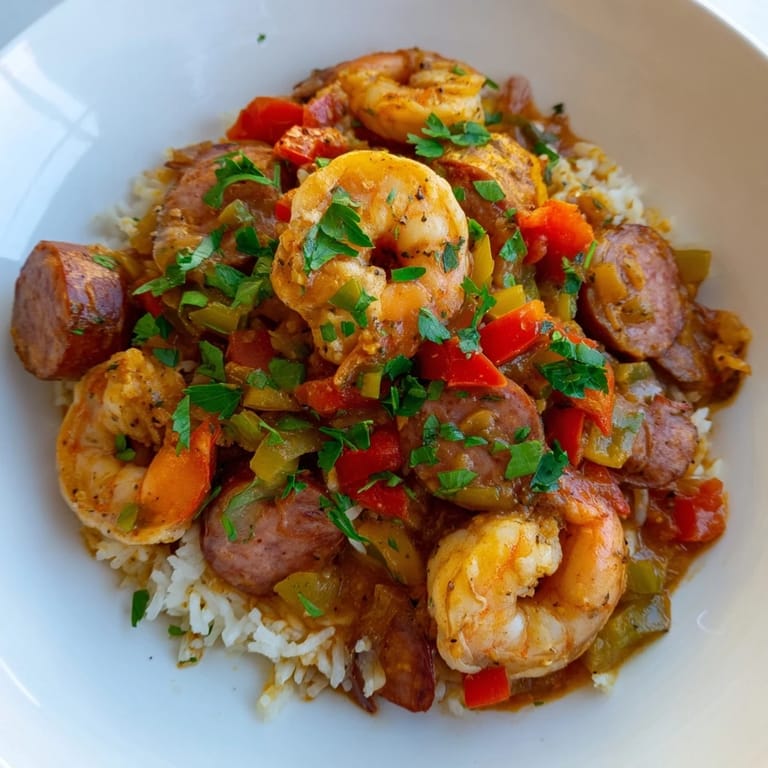
- Andouille or smoked sausage (225 g): This is where half your flavor comes from—don't skip it or substitute with regular sausage, the smokiness is essential.
- Large shrimp (225 g): Buy them frozen if fresh isn't available; they thaw quickly and cook in minutes, making them perfect for the final step.
- Yellow onion, red and green bell peppers, celery (diced): This trio is the classic Creole base, and the mix of colors makes the finished dish look as good as it tastes.
- Garlic (3 cloves, minced): Add it after the softer vegetables so it doesn't burn and turn bitter in the pan.
- Long-grain white rice (200 g): Measure carefully here—too much and you'll end up with mush, too little and it'll be dry.
- Chicken broth and canned diced tomatoes: The tomato juice that comes in the can is your friend; don't drain it away.
- Smoked paprika, thyme, oregano, cayenne (1 tsp, 1/2 tsp each): These spices bloom when you toast them with the rice, so don't skip that step or you'll lose the whole character of the dish.
- Olive oil (2 tbsp): Use it split between browning the sausage and sautéing the vegetables so everything gets properly cooked.
- Fresh parsley (2 tbsp): Add this at the very end as a garnish; it brightens everything and looks lovely too.
Tired of Takeout? 🥡
Get 10 meals you can make faster than delivery arrives. Seriously.
One email. No spam. Unsubscribe anytime.
Instructions
- Brown the sausage first:
- Heat one tablespoon of oil in your skillet over medium-high heat and get those sausage slices golden and crispy on the edges, about 3–4 minutes. You're building flavor here, so don't rush it or stir too much; let them sit long enough to get some color.
- Soften the vegetables:
- Pour in the remaining oil and add your onion, peppers, and celery, cooking until they start to soften and the onion turns translucent, roughly 4–5 minutes. Stir in the garlic for just one more minute so it releases its aroma without burning.
- Toast the rice and spices:
- Add the rice to the pan with all your spices and stir constantly for about a minute—you want every grain coated and lightly toasted, which makes a real difference in the final texture and flavor.
- Combine everything:
- Return the sausage, pour in the tomatoes with their juice and the chicken broth, stir it all together, and let it come to a gentle simmer. This is where it starts to smell like something special.
- Let it simmer covered:
- Reduce the heat to low, cover the skillet, and leave it alone for about 20 minutes—resist the urge to lift the lid constantly. The rice will absorb the liquid and become tender, and the flavors will meld together.
- Add the shrimp:
- Arrange your shrimp on top of the rice mixture, cover again, and cook for 5–7 minutes until they turn pink and opaque. They cook quickly, so don't walk away or you'll end up with rubbery shrimp.
- Finish with a gentle fluff:
- Use a fork to gently fluff the rice from the bottom up, being careful not to crush the shrimp, then scatter the fresh parsley over the top and serve immediately while it's still steaming.
 Pin this
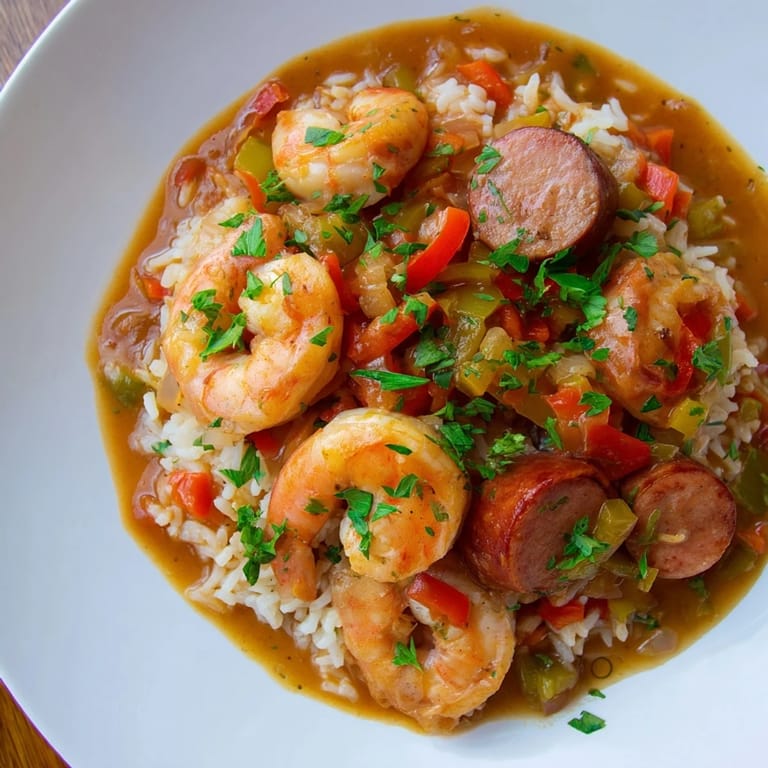
 There's a moment, maybe halfway through cooking, when the house fills with this warm, complex smell of sausage and spices and tomatoes, and everyone in the kitchen suddenly stops whatever they're doing and just inhales. That's when I know the dish is working, when the technique fades away and you're just waiting for rice to finish so you can eat.
The Magic of the One-Skillet Meal
There's something honestly freeing about cooking in one skillet—no juggling multiple burners, no orchestrating which pan gets rinsed first. I've found that the fewer vessels you use, the more you actually pay attention to what's happening, watching how the sausage renders its fat, noticing when the vegetables reach that perfect soft-but-still-structured point. It forces you to be present, which somehow makes the food taste better too.
Tailoring the Heat Level
Jambalaya invites you to adjust the spice level to match your mood and your guests' preferences. I usually go easy on the cayenne if there are kids at the table, but when it's just friends who like it hot, I bump it up or serve a bottle of hot sauce on the side and let everyone dial in their own heat. The beauty is that even at a lower spice level, the smoked paprika and thyme give you plenty of flavor complexity.
What to Serve Alongside
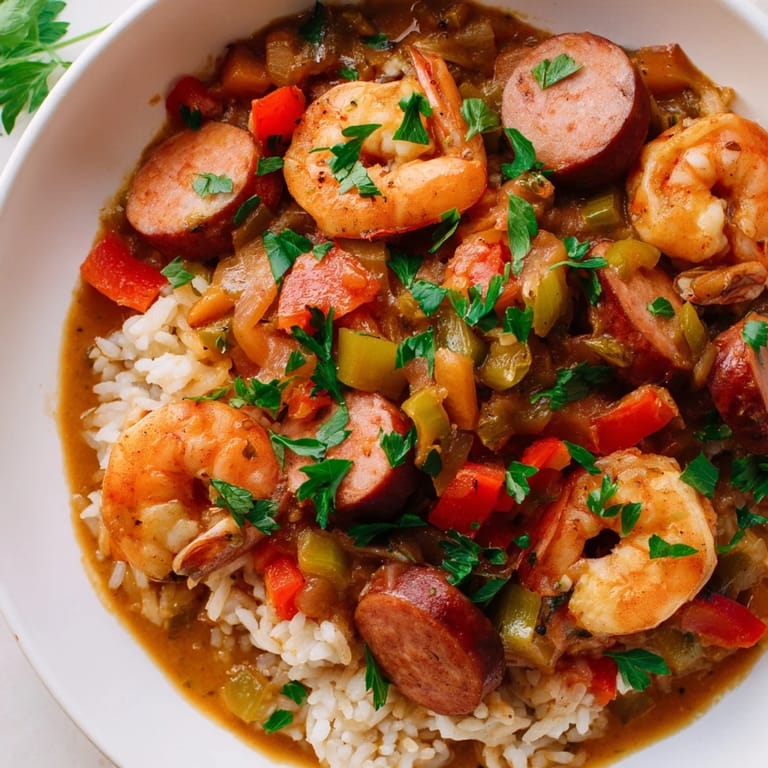
This dish is complete on its own, but a slice of crusty bread nearby makes every meal feel a little more intentional, something to soak up the last of that wonderful tomato-and-spice broth at the bottom of the pan. A crisp white wine like Sauvignon Blanc cuts through the richness of the sausage and complements the shrimp beautifully, or you can keep it simple with cold water and let the jambalaya be the star.
- Keep a good crusty bread on hand to make the most of every bit of that flavorful liquid.
- A simple green salad on the side adds freshness and keeps the meal from feeling too heavy.
- Leftovers stay delicious for a day or two and actually taste even better the next day as the flavors deepen.
 Pin this
 This jambalaya has become my go-to when I want to cook something that feels both comforting and a little bit adventurous, something that fills the kitchen with warmth and gets people talking. Make it once and it becomes part of your rotation, the kind of meal you find yourself craving on ordinary days.
Recipe Questions
- → What type of sausage is best for this dish?
Andouille or smoked sausage adds a smoky depth that complements the spices well, but you can substitute with other smoked sausages if preferred.
- → Can I use a different protein instead of shrimp?
Yes, chicken can be used as an alternative or added alongside the shrimp for variation.
- → How do I adjust the spiciness level?
Modify the cayenne pepper quantity or serve with hot sauce to increase heat according to your taste.
- → Is it important to brown the sausage first?
Browning the sausage releases flavorful oils and enhances the dish’s overall taste and texture.
- → What type of rice works best here?
Long-grain white rice absorbs the sauce well while maintaining a fluffy texture suitable for this skillet meal.
- → Can I prepare this dish ahead of time?
It can be prepared in advance and gently reheated, though the shrimp is best added fresh to avoid overcooking.