 Pin this
 I discovered this curry on a rainy afternoon when a friend arrived unannounced with a bag of fresh vegetables from the farmers market. We had maybe forty minutes before she needed to leave, and I remembered reading about coconut curry somewhere. Turns out, it came together faster than we expected, filling the kitchen with this golden, spiced warmth that made us both stop chopping just to breathe it in.
The first time I made this for my family dinner, my sister asked for the recipe before she'd even finished her first bite. She was expecting something complicated, but when I told her it was essentially onions, spices, and coconut milk, she laughed and said I'd just unlocked her secret to weeknight cooking that doesn't feel like settling.
Ingredients
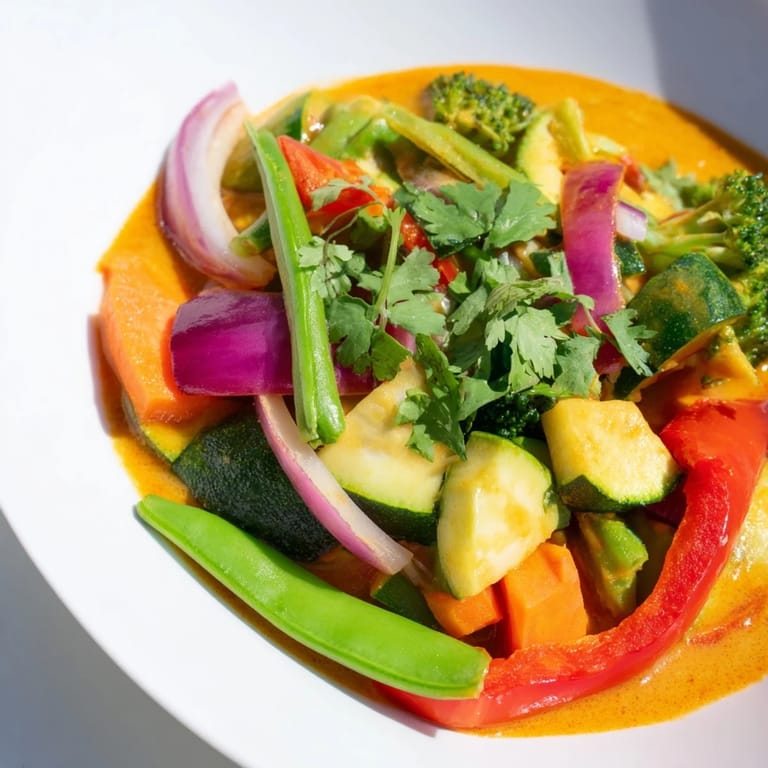
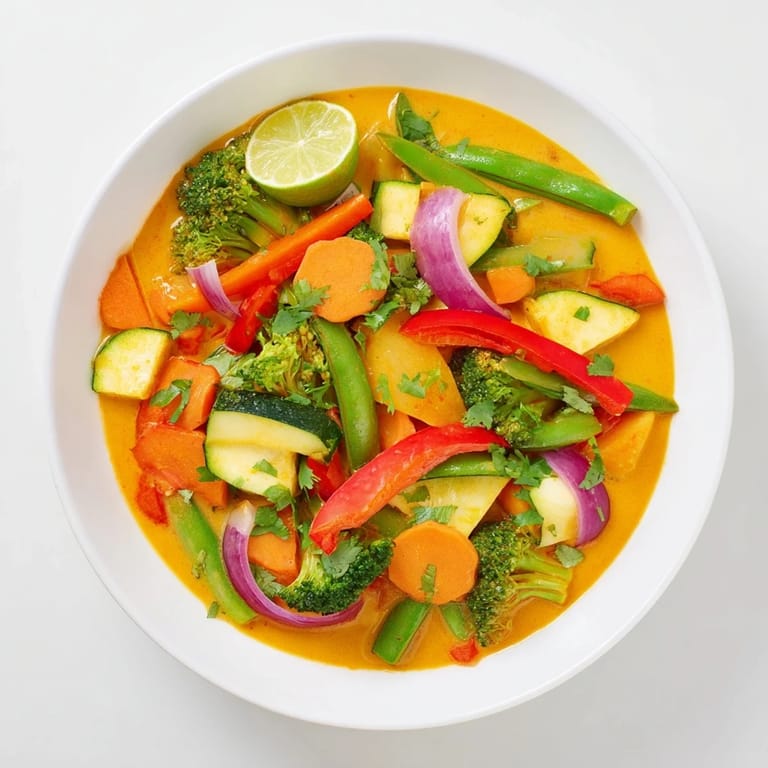
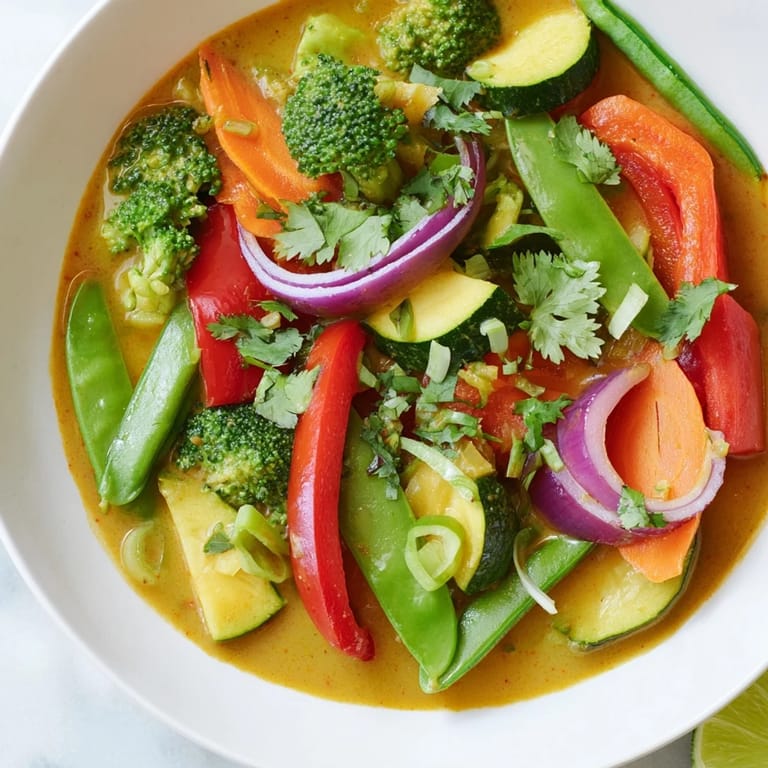
- Red bell pepper: Slice it fairly thick so it holds its shape and sweetness through the simmer.
- Carrot: Cut on the bias if you want them to look restaurant-worthy, though bias or straight, they taste just as good.
- Zucchini: Dice it roughly—uniform isn't as important as you think, and it gives the curry a nice texture variety.
- Broccoli florets: Don't skip this; the florets soak up the sauce beautifully and add an earthy note.
- Snap peas: These go in at the end to keep their snap and brightness.
- Red onion: Slice thin and let it soften first—it becomes sweet and acts as the flavor base.
- Coconut oil: Use refined if you don't want coconut flavor, virgin if you do.
- Garlic and ginger: Fresh makes all the difference here; don't even think about the jar versions.
- Red curry paste: Check the label because some brands sneak in fish sauce, and you want the vegan stuff if that matters to you.
- Turmeric, cumin, and coriander: These three are the soul of the dish—measure them properly, not a guess.
- Full-fat coconut milk: Skim is a betrayal; the richness is the whole point.
- Vegetable broth: It dilutes the coconut without watering down flavor.
- Soy sauce or tamari: A tablespoon adds umami depth that makes people ask what your secret ingredient is.
- Lime juice: Fresh lime is non-negotiable—it brightens everything and wakes up the spices.
- Cilantro and lime wedges: These aren't garnish afterthoughts; they're essential finishes.
Tired of Takeout? 🥡
Get 10 meals you can make faster than delivery arrives. Seriously.
One email. No spam. Unsubscribe anytime.
Instructions
- Build Your Base:
- Heat the coconut oil in a large skillet over medium heat and add the sliced red onion. Let it sauté for two to three minutes, watching as it softens and becomes slightly translucent—this is when you know it's ready for what comes next.
- Wake Up the Spices:
- Stir in the minced garlic and grated ginger, cooking for about a minute until the smell hits you properly. Then add the curry paste, turmeric, cumin, and coriander, stirring constantly for one minute so the spices release their oils and the mixture becomes fragrant and slightly darker.
- Sauté the Vegetables:
- Add the bell pepper, carrot, zucchini, and broccoli all at once, stirring everything together. Let them cook for three to four minutes, getting slightly softer around the edges but still holding their shape and color.
- Add the Sauce:
- Pour in the full can of coconut milk and the vegetable broth, stirring gently. Bring it to a gentle simmer—not a rapid boil, which can make the vegetables too soft.
- Finish Cooking:
- Add the snap peas and soy sauce, cover the skillet, and let everything simmer for ten to twelve minutes. The vegetables should be tender enough to cut easily with a spoon but still have a bit of color and life to them.
- Balance and Serve:
- Remove from heat and stir in fresh lime juice, then taste and adjust salt and pepper. Serve hot with a handful of fresh cilantro and lime wedges on the side.
 Pin this
 Last winter, I made this for someone going through a rough patch, and they told me it was the first thing in weeks that actually felt like comfort. That's when I realized this curry isn't just about vegetables and spices—it's about something warm and intentional you can put on a table in less than an hour.
Why This Curry Works Every Time
The beauty of this recipe is that it's forgiving without being boring. The vegetables don't have to be perfectly cut or uniformly sized, the spice amounts can shift based on what you like, and you can swap out vegetables depending on what's in your crisper drawer. I've made it with cauliflower instead of broccoli, added mushrooms, left out the snap peas entirely—and every version has been genuinely good. The real magic is in the layering: you build flavor gradually with the spices, let the vegetables cook just long enough to soften without collapsing, and finish with lime to brighten everything. It's the kind of dish where the technique is simple enough to teach someone in five minutes but sophisticated enough that people think you've been cooking for hours.
Serving and Pairing Ideas
Serve this curry however makes you happy—over jasmine rice, with naan bread on the side, or even with quinoa if you're in a grain mood. A squeeze of extra lime juice right before eating keeps it from ever tasting heavy, and a cold drink alongside cuts through the coconut richness in the best way. I've also made this without rice and just eaten it in bowls with a spoon, focusing entirely on the vegetables and sauce, which works surprisingly well if you're looking for something lighter.
Making It Your Own
This is one of those recipes that invites creativity without punishing you for it. Add chickpeas or cubed tofu during the last few minutes of cooking if you want more protein. Throw in fresh spinach right before serving—it wilts in seconds and adds iron and color. If you have access to fresh curry leaves or a piece of fresh turmeric root, either would be a stunning addition. The core technique stays the same, and the result is always a fragrant, comforting, deeply satisfying meal.
- For extra richness, drizzle a spoonful of coconut milk on top of each serving as a final touch.
- If you're cooking for someone with a low spice tolerance, use less curry paste and add hot sauce or extra curry paste on the side so they can adjust their own heat.
- This curry actually tastes better the next day when the flavors have had time to meld together, so don't hesitate to make it ahead.
 Pin this
 This curry has become my answer to the question of what to cook when you need something that tastes like you care but doesn't demand hours in the kitchen. It's proof that simple ingredients, respect for timing, and a little bit of brightness at the end can turn an ordinary evening into something memorable.
Recipe Questions
- → Can I substitute vegetables in this dish?
Yes, you can swap or add vegetables like cauliflower, green beans, or mushrooms to suit your preferences or availability.
- → How can I add protein to this curry?
Incorporate chickpeas or tofu during the simmering step to boost protein while keeping the dish vegan and hearty.
- → What type of curry paste is recommended?
Opt for red curry paste labeled vegan and gluten-free to maintain the dish’s dietary qualities and authentic flavor.
- → Is this dish spicy? How can I adjust heat?
The heat level depends on the curry paste used. Adjust the amount or choose milder paste to control spice intensity.
- → What can I serve alongside this coconut curry?
Pair with steamed jasmine rice, quinoa, or naan bread for a complete and satisfying meal.
- → Are there allergen considerations to keep in mind?
This dish contains soy from tamari or soy sauce and coconut from the milk. Use alternatives if allergies apply and verify curry paste ingredients carefully.