 Pin this
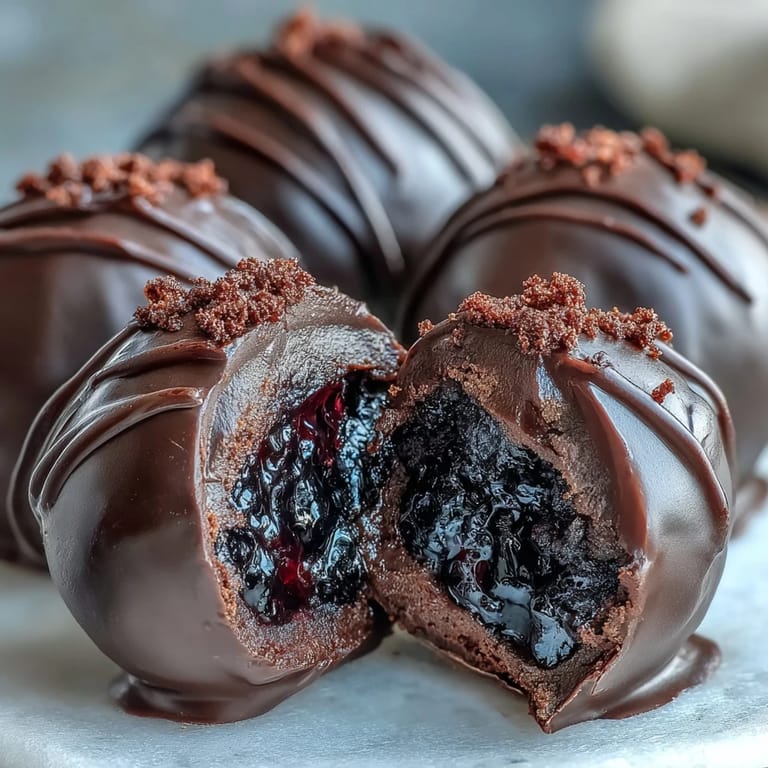
 There's something almost magical about watching dark chocolate transform into silk in a double boiler, but it was the moment I added black currant purée to the ganache that everything clicked. The tartness cut through the cocoa richness in a way that felt both unexpected and inevitable, like discovering a flavor combination you've been craving without knowing it. My kitchen smelled like a European chocolaterie that afternoon, and I couldn't stop myself from tasting the ganache straight from the bowl before it even set. These truffles became my answer to the question of what to make when I wanted to impress someone without spending all day in the kitchen.
I made these for my friend Claire who mentioned in passing that she loved black currant anything, and watching her close her eyes after one bite told me everything I needed to know. She kept reaching for another, saying the tartness reminded her of a candy from her childhood, and suddenly these little truffles meant something more than just chocolate. That's when I realized this recipe was worth perfecting.
Ingredients
- Dark chocolate (70% cocoa): The quality here matters more than you'd think because the cocoa percentage directly influences how the black currant's tartness plays against it, so don't reach for the cheapest bar.
- Heavy cream: This is your ganache's backbone, creating that velvety texture that melts on your tongue, and using cold cream from the back of the fridge helps it emulsify more smoothly.
- Unsalted butter (room temperature): Room temperature is the key detail because cold butter won't integrate properly and you'll end up with a grainy texture instead of glossy perfection.
- Black currant purée: Strain it well to remove seeds that can get caught between your teeth, and if you can't find it, frozen black currants blended smooth work beautifully.
- Black currant liqueur: Optional but it adds a floral depth that makes people ask what's in these, so I nearly always include it.
- Dark chocolate for coating: Use the same percentage as your ganache or go slightly higher if you like a snappier shell that cracks satisfyingly when you bite into it.
- Freeze-dried black currants: These add texture and visual appeal, but the cocoa powder dusting alone creates an elegant look if you're keeping things simple.
Tired of Takeout? 🥡
Get 10 meals you can make faster than delivery arrives. Seriously.
One email. No spam. Unsubscribe anytime.
Instructions
- Heat the cream until it's just beginning to steam:
- Watch it carefully because cream goes from simmering to boiling faster than you'd expect, and you want that gentle heat without the aggressive bubbles. The cream should smell warm and rich, not burnt or scalded.
- Combine with chocolate and let it sit for a breath:
- That minute of stillness lets the heat do the work of softening the chocolate before you stir, which means less overworking and a silkier result. Stir gently until you see no flecks of solid chocolate.
- Add the butter, black currant purée, and liqueur:
- Fold these in slowly because the ganache can break if you're too aggressive, and you're looking for that glossy, unified moment when everything comes together. The color should shift from dark brown to a deep burgundy.
- Chill the ganache until it's firm but still scoopable:
- One to two hours in the refrigerator is usually right, but if you're in a hurry, an hour in the coldest part of your fridge works too. You want it firm enough to hold a ball shape but not so hard it cracks when you roll it.
- Scoop and roll with confidence:
- Use a small melon baller or just a teaspoon, and if your hands get sticky, dip them in cold water between rolls. The ganache will warm slightly from your hands, which actually helps it form smooth balls.
- Freeze before coating for at least 20 minutes:
- This step prevents the ganache from leaking out of its chocolate shell when you dip it, so don't skip it even if you're impatient. A firmer center means a better final texture.
- Melt the coating chocolate slowly over gentle heat:
- A double boiler keeps the temperature controlled and prevents the chocolate from seizing, which would make it thick and dull. Let it cool for a minute or two before dipping so it coats smoothly without running off completely.
- Dip with a fork or dipping tool, letting excess drip off:
- Don't overthink this moment because the chocolate wants to coat the truffle evenly, and if you twist the fork gently, the excess will spiral off naturally. Place each one back on parchment and move on to the next.
- Garnish while the coating is still wet if you're using toppings:
- The freeze-dried currants or cocoa powder will stick beautifully to the warm chocolate, creating texture and visual interest. A light hand looks more intentional than a heavy dusting.
- Let them set at room temperature or speed things up in the cold:
- Room temperature takes about 30 minutes and results in a snappier chocolate shell, while the refrigerator takes about 15 minutes if you're in a hurry. Either way, you'll know they're ready when the chocolate feels firm to the touch.
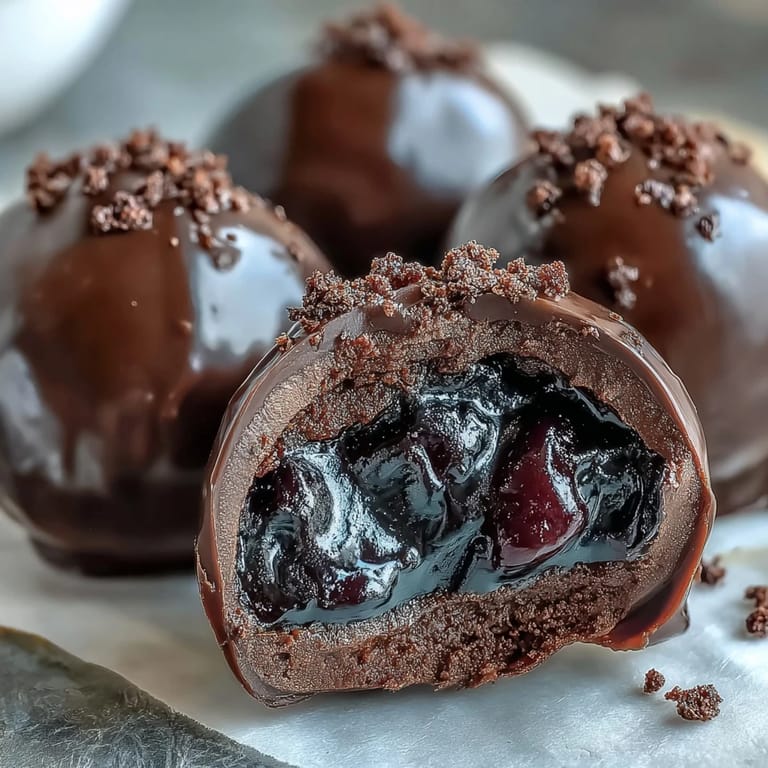 Pin this
 There was a moment while setting these on a pretty plate when my daughter asked if she could have just one more, and I realized these weren't just candy anymore but the kind of thing that creates tiny moments of pure joy. That's what makes a recipe worth keeping.
Choosing the Right Chocolate
The percentage of cocoa you choose changes the entire personality of these truffles, and I've learned that 70% offers the most balance between bitterness and the fruit's tartness. Going higher to 85% creates an almost austere elegance that only works if you love dark chocolate without apology, while dropping to 60% softens the whole experience into something more dessert-like and sweet. I always taste my chocolate before committing to it, which sounds fussy but prevents disappointments.
The Double Boiler Moment
My grandmother always said the double boiler was the only way to melt chocolate, and years of kitchen experiments proved her right because direct heat causes seizing and separation. The key is that the water underneath should simmer gently, not boil aggressively, and the bottom of the bowl shouldn't touch the water at all. Once you see the steam rising and smell that chocolate warming, you know you're doing it right.
Storage and Serving Secrets
These truffles are best enjoyed within a week because the ganache stays creamy and the chocolate shell remains snappy, and I've found that taking them out of the refrigerator 10 minutes before eating lets the flavors open up more beautifully. They're perfect with strong tea, black currant tea especially, or alongside a glass of ruby port that echoes their fruitiness.
- Store them in an airtight container in the coldest part of your refrigerator to maintain that clean chocolate snap.
- If you're gifting them, layer parchment between each truffle so they don't stick together or crack during transport.
- These freeze beautifully for up to three months, so you can make them in advance for unexpected guests without stress.
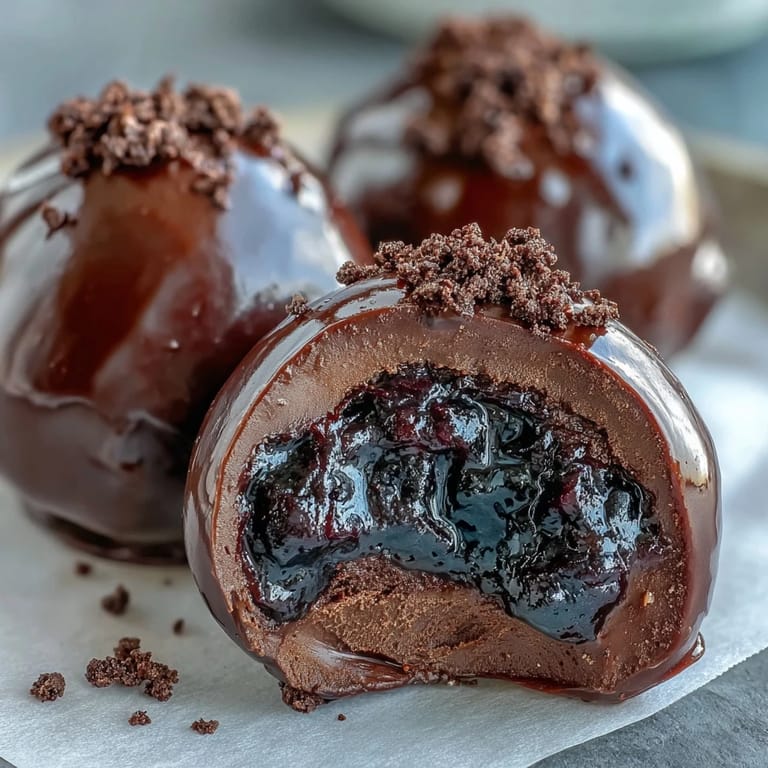 Pin this
 These truffles remind me why I love cooking for people, because something as simple as chocolate and fruit can create a moment of connection that tastes like thoughtfulness. Make them for someone who deserves a little magic.
Recipe Questions
- → What makes black currant truffles unique?
The combination of tart black currant purée with intense dark chocolate creates a sophisticated flavor profile that balances sweetness with fruity acidity. This European-inspired pairing offers more complexity than traditional chocolate truffles.
- → How long do these need to chill?
The ganache requires 1–2 hours of refrigeration until firm enough to shape. After rolling, freeze the balls for 20 minutes before coating. Finished truffles need 30 minutes at room temperature to set, though refrigeration speeds this process.
- → Can I make these dairy-free?
Yes, substitute heavy cream with full-fat coconut cream and use vegan dark chocolate. The texture remains silky, though the coconut flavor may subtly enhance the fruit notes. Ensure all chocolate is certified dairy-free.
- → Why strain the black currant purée?
Straining removes seeds and pulp, ensuring a perfectly smooth ganache texture. This step is crucial for achieving the velvety consistency expected in professional-quality truffles. Use a fine-mesh sieve for best results.
- → What's the best way to melt chocolate for coating?
Use a double boiler method with simmering water beneath a heatproof bowl, stirring constantly until smooth. Avoid direct heat which can scorch the chocolate. Let the melted chocolate cool slightly before dipping to prevent cracking.
- → How should I store finished truffles?
Keep in an airtight container in the refrigerator for up to one week. The cold storage maintains the ganache texture and prevents the chocolate coating from becoming soft. Bring to room temperature 10 minutes before serving for optimal flavor.