 Pin this
 The first time I made acorn squash soup was on a blustery October afternoon when the maple outside my kitchen window was ablaze with color. I had picked up a few squashes from the farmers market on a whim, drawn to their ribbed exteriors and deep green skin. As they roasted, my kitchen filled with a warm, nutty aroma that seemed to chase away the chill creeping in through the windowpanes. What emerged was a velvety soup that tasted like autumn in a bowl.
Last Thanksgiving, when my sister announced she was bringing her new vegetarian boyfriend to dinner, I panicked momentarily before remembering this soup. I served it as a first course in little teacups, garnished with toasted pumpkin seeds. His eyes lit up at the first spoonful, and by the end of the meal, hed asked for the recipe three times. Sometimes the simplest dishes create the strongest connections.
Ingredients
- Acorn squash: Choose squash that feels heavy for its size with a matte, not glossy, exterior, which I learned signals optimal ripeness and flavor.
- Yellow onion: The slow caramelization of these humble onions creates that background sweetness that makes people ask what your secret ingredient is.
- Heavy cream or coconut milk: After experimenting with both, I find coconut milk adds a subtle tropical note that transforms this from good to unforgettable.
- Ground nutmeg: Try to grate this fresh if possible, as I discovered the difference is like comparing a whisper to a shout in flavor impact.
- Vegetable broth: This is where I splurge on quality, since a soup is only as good as its foundation.
Tired of Takeout? 🥡
Get 10 meals you can make faster than delivery arrives. Seriously.
One email. No spam. Unsubscribe anytime.
Instructions
- Roast the squash:
- Preheat your oven to 400°F and brush those halved squash beauties with olive oil before placing them cut-side down on a parchment-lined baking sheet. The kitchen will start to smell amazing about 20 minutes in, but resist checking until the full 30-35 minutes have passed.
- Build the flavor base:
- While the squash roasts, transform your onions, carrots, and garlic in olive oil until theyre soft and just starting to take on color. This gentle sautéing releases natural sugars that will give your soup depth.
- Marry the ingredients:
- Once youve scooped out that tender squash flesh, add it to your pot along with broth, water, and all those warming spices. Let everything simmer together for a bit, getting friendly in the pot.
- Blend to perfection:
- Heres the transformative moment, when chunky vegetables become silky soup. I prefer an immersion blender to avoid transferring hot liquid, but either method works beautifully.
- Add richness:
- Stir in your cream or coconut milk off the heat, watching as the color lightens to a gorgeous golden hue. This is when I taste and adjust seasonings, usually adding just a touch more salt to make everything pop.
- Garnish with intention:
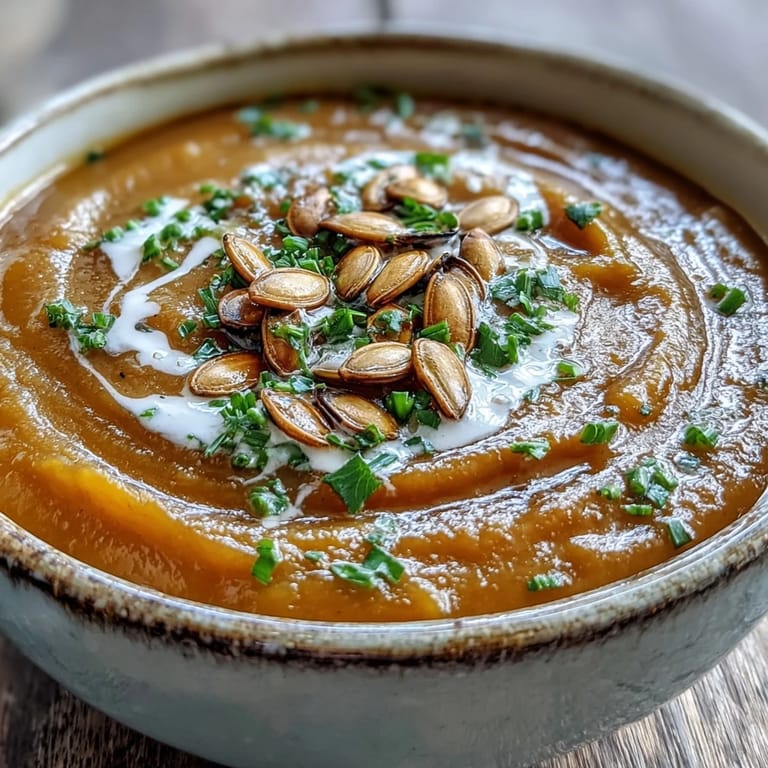
- Ladle into bowls and top with those toasted pumpkin seeds for crunch, fresh chives for color, and maybe an artistic swirl of cream if youre feeling fancy. Each element adds both visual appeal and textural contrast.
 Pin this
 One rainy Sunday afternoon, I made this soup for an impromptu gathering of neighbors after a storm knocked out power on our block. We ate by candlelight, passing around crusty bread to dip into steaming bowls. What started as a practical solution to use up ingredients before they spoiled turned into one of those unexpected moments of community that lingers in memory long after the meal is done.
Seasonal Variations
In summer, I sometimes serve this soup chilled with a squeeze of lime and a dollop of crème fraîche, transforming it from cozy comfort to refreshing starter. Fall calls for the classic warm version with extra cinnamon and maybe a drizzle of maple syrup. Winter demands a heartier approach, so I might add a handful of wild rice or farro for texture and staying power. Spring inspires me to brighten things up with fresh herbs like thyme or sage from the garden.
Make-Ahead Tips
This soup actually improves with time, developing deeper flavor after a day in the refrigerator. I often make a double batch on Sunday afternoons, portioning some into freezer containers for future quick meals. Just remember to leave the cream or coconut milk out if youre freezing it, adding it fresh when you reheat. The base freezes beautifully for up to three months, making it perfect for meal prep or unexpected guests.
Serving Suggestions
While delicious on its own, this soup reaches new heights when paired thoughtfully. My personal favorite combination is a small bowl alongside a grilled cheese sandwich made with sharp cheddar and thinly sliced apples on sourdough bread. The contrast between the creamy soup and the crispy, tangy sandwich creates a lunch that feels both sophisticated and comforting.
- For an elegant dinner party starter, serve in espresso cups with a spiced pepita on top as an amuse-bouche.
- Create a soup and salad lunch by pairing with a kale salad dressed with apple cider vinaigrette and dried cranberries.
- Turn it into a main course by floating a small island of herbed quinoa in the center of each bowl.
 Pin this
 Every time I make this soup, I think about how something so simple can bring such profound satisfaction. Perhaps the magic lies in transforming humble ingredients into something that nourishes both body and soul.
Recipe Questions
- → Can I make this soup ahead of time?
Absolutely. This soup actually tastes better the next day as flavors have time to meld. Prepare up to 3 days in advance and store in an airtight container in the refrigerator. Reheat gently over low heat, adding a splash of broth or cream if needed to restore consistency.
- → Is butternut squash a suitable substitute?
Yes, butternut squash works beautifully as an alternative. It offers similar sweetness and texture when roasted. Simply use the same weight and follow identical preparation steps. The cooking time may vary slightly depending on squash size.
- → How can I make this dairy-free?
Substitute coconut milk for heavy cream to create a completely dairy-free version. Full-fat coconut milk provides rich, creamy texture that complements the squash beautifully. The soup remains naturally gluten-free when using certified gluten-free vegetable broth.
- → What's the best way to achieve the smoothest texture?
An immersion blender works wonderfully for convenience, but a high-speed countertop blender yields the silkiest results. If using a standard blender, work in batches and allow steam to escape to prevent pressure buildup. For extra refinement, pass the pureed soup through a fine-mesh sieve.
- → Can I freeze this soup?
This soup freezes exceptionally well for up to 3 months. Cool completely before transferring to freezer-safe containers, leaving space for expansion. Thaw overnight in the refrigerator and reheat gently, stirring in fresh cream after reheating to maintain texture.
- → What toppings work best with this soup?
Toasted pumpkin seeds add crunch and nutty flavor, while fresh chives provide a bright, oniony note. A drizzle of cream creates beautiful contrast. Crispy bacon bits, roasted chickpeas, or a sprinkle of grated Parmesan also make excellent additions for extra texture and flavor depth.