 Pin this
 The kitchen windows fogged with steam as my minestrone bubbled on a rainy autumn afternoon. I discovered this recipe during my travels through northern Italy, where each nonna had her own version depending on what vegetables were fresh at the market. Back home, I started experimenting with seasonal variations, transforming this humble soup into a year-round comfort that evolves with each visit to the farmers' market. The beauty of minestrone lies in its adaptability—a forgiving canvas for whatever produce is at its peak.
Last winter, when my power went out during a snowstorm, I managed to make this soup on our gas stove by candlelight. The warm, aromatic steam filled our chilly home as neighbors gathered around our table, grateful for hot bowls that warmed hands and hearts alike. Everyone contributed something—crusty bread, a wedge of cheese, a bottle of wine—transforming an inconvenience into an impromptu dinner party that nobody wanted to end.
Ingredients
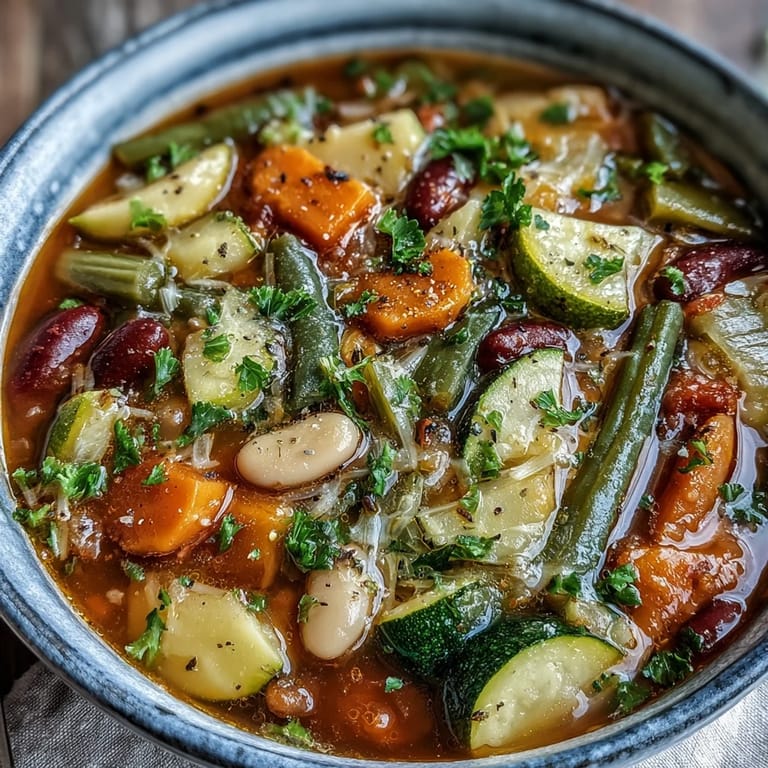
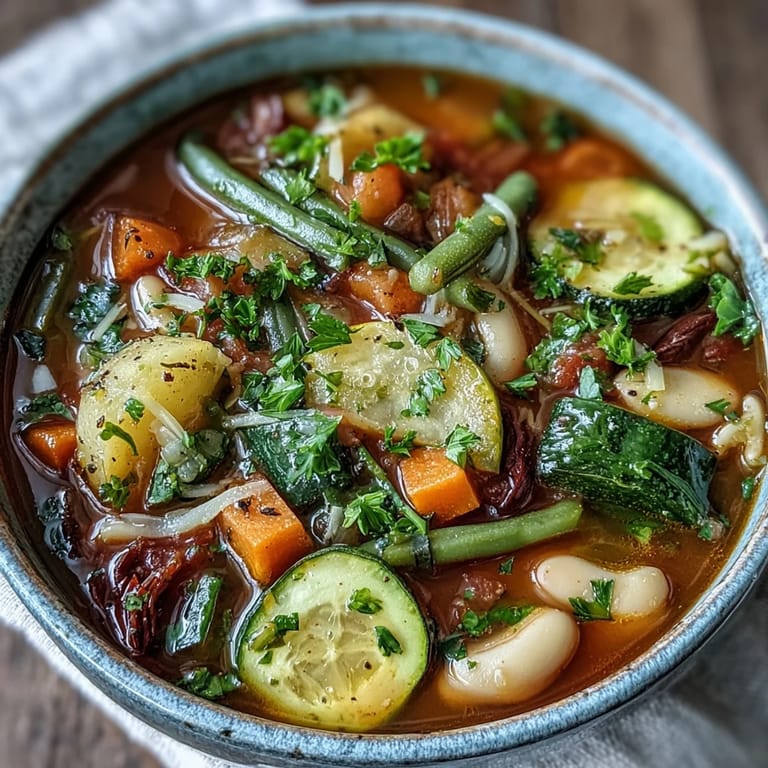
- Seasonal vegetables: The classic trio of onion, carrot, and celery creates the flavor foundation, but summer versions shine with zucchini and green beans while winter iterations become heartier with butternut squash and leafy greens.
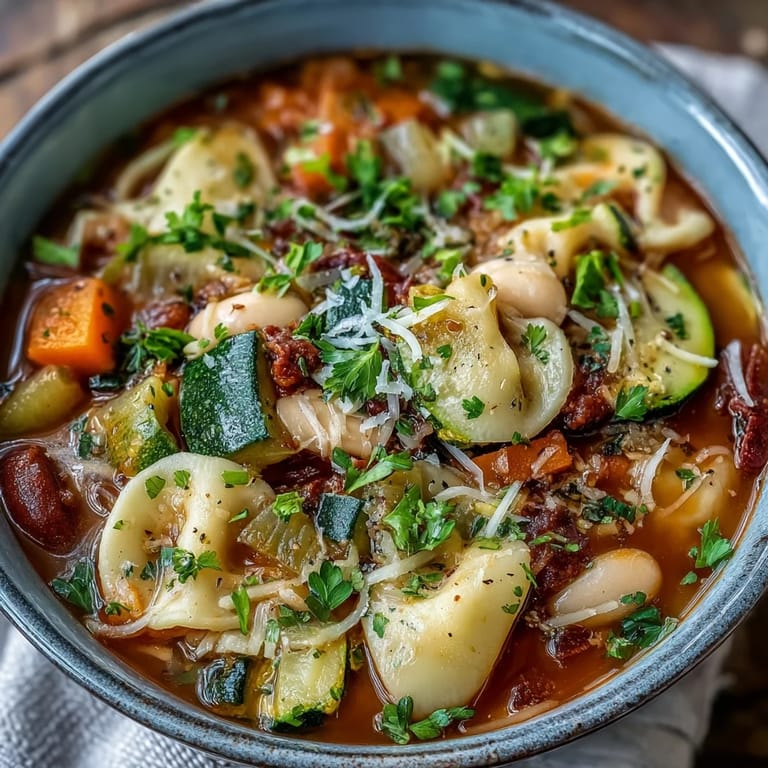
- Small pasta: I prefer ditalini or tiny shells that catch broth in their crevices, creating perfect little flavor bombs in each spoonful.
- Cannellini beans: These creamy white beans provide satisfying protein and become almost buttery when they simmer in the broth, adding body without heaviness.
- Parmesan rind: My grandmother's secret weapon that infuses the broth with umami richness as it slowly melts into the soup—just remember to fish it out before serving.
Tired of Takeout? 🥡
Get 10 meals you can make faster than delivery arrives. Seriously.
One email. No spam. Unsubscribe anytime.
Instructions
- Create your flavor base:
- Heat olive oil until it shimmers, then add your diced onion, carrot, and celery. Listen for that gentle sizzle as the vegetables begin to soften and release their aromatic magic.
- Build the vegetable layers:
- Once your base vegetables have softened, introduce the garlic, zucchini or squash, and green beans or leafy greens. The kitchen should fill with an earthy fragrance as the vegetables mingle and begin their transformation.
- Add tomatoes and broth:
- Stir in those vibrant diced tomatoes along with the potato and bay leaf, letting them warm before pouring in the vegetable broth. The color deepens to a beautiful golden-red as everything comes together.
- Simmer patiently:
- Bring everything to a gentle boil before reducing the heat to maintain a bubbling simmer for about 15 minutes. Your kitchen will fill with steam carrying the promise of comfort.
- Introduce beans and pasta:
- Add your beans and pasta, uncovering the pot to allow the broth to reduce slightly as the pasta cooks to al dente. Watch carefully during this stage—the pasta can quickly overcook if left unattended.
- Season and finish:
- Remove that bay leaf before stirring in the herbs and adjusting salt and pepper. The dried herbs bloom in the hot broth, releasing their essential oils and filling your kitchen with Mediterranean aromas.
- Serve with flourish:
- Ladle into warmed bowls and sprinkle with fresh parsley and grated Parmesan if desired. A drizzle of your best olive oil creates glistening pools of flavor on the surface.
 Pin this
 My daughter went through a picky phase where vegetables were the enemy, but this soup somehow became the exception. She would fish out the pasta first, then gradually explore the vegetables, eventually declaring the carrots acceptable, then the beans, and finally—miracle of miracles—the zucchini. Now in college, she calls home for the recipe whenever she feels under the weather, telling me the smell alone makes her feel better before she takes the first spoonful.
Seasonal Adaptations
Spring minestrone brightens with fresh peas, tender young leeks, and asparagus tips added during the final minutes of cooking. Summer versions feature sweet corn sliced directly from the cob, multicolored cherry tomatoes that burst in the mouth, and fragrant basil stirred in right before serving. Autumn transitions to heartier fare with chunks of pumpkin or winter squash that partially dissolve, naturally thickening the broth. Winter versions welcome hearty cabbage, sturdy kale stripped from its stems, or even Brussels sprouts sliced into thin disks that melt into the background.
Making It Ahead
Minestrone actually improves with an overnight rest in the refrigerator as the flavors meld and deepen. When making ahead, I stop short of adding the pasta, instead cooking and storing it separately in a bit of olive oil to prevent sticking. The next day, I gently reheat the soup, adding the pasta only for the final moments along with a handful of fresh herbs that restore brightness. This method preserves the texture while building those complex layers of flavor that make people wonder what your secret ingredient might be.
Serving Suggestions
While minestrone is certainly a complete meal on its own, certain accompaniments elevate it from satisfying to sublime. A rustic loaf of crusty bread with a chewy interior makes the perfect vehicle for sopping up those last precious spoonfuls from the bowl. A simple green salad dressed with lemon and olive oil provides brightness that cuts through the soup's richness.
- For a casual gathering, serve minestrone in mugs that guests can cradle in their hands while mingling.
- Create a topping bar with fresh herbs, toasted pine nuts, extra virgin olive oil, and cheese options so everyone can customize their bowl.
- Make mini grilled cheese sandwiches using fontina and thin slices of sourdough for the perfect dunking companion.
 Pin this
 This soup has traveled with me through seasons and celebrations, adjusting to what's available and what's needed. Whether ladled into fancy bowls for dinner guests or poured into a thermos for a hike, minestrone reminds us that good cooking isn't about rigid rules but about harmony and balance.
Recipe Questions
- → What vegetables work best in minestrone?
Classic minestrone includes onions, carrots, celery, zucchini, and green beans. For winter variations, try butternut squash, kale, or savoy cabbage. Spring adaptations work beautifully with peas, leeks, or fresh spinach.
- → Can I make minestrone gluten-free?
Absolutely. Simply substitute regular pasta with gluten-free alternatives like rice pasta, corn pasta, or chickpea pasta. The cooking time may vary slightly, so check for tenderness after 8-10 minutes.
- → How should I store leftover minestrone?
Cool completely and refrigerate in an airtight container for up to 4 days. Note that the pasta will absorb liquid—add extra broth when reheating. For longer storage, freeze without pasta for up to 3 months, then cook fresh pasta when serving.
- → What type of pasta is traditionally used?
Small pasta shapes like ditalini, elbow macaroni, or small shells are ideal. Their size allows them to cook evenly and be easily scooped up with a spoon. If unavailable, broken spaghetti or vermicelli works in a pinch.
- → Can I make minestrone in a slow cooker?
Sauté onions, carrots, celery, and garlic first, then transfer to your slow cooker with all vegetables, tomatoes, broth, beans, and herbs. Cook on low for 6-7 hours or high for 3-4 hours. Add pasta during the last 30 minutes of cooking.
- → What can I serve with minestrone?
Crusty bread or garlic bread is perfect for soaking up the flavorful broth. A simple green salad with balsamic vinaigrette complements the heartiness. For a complete Italian meal, follow with a light dessert like biscotti or fresh fruit.