 Pin this
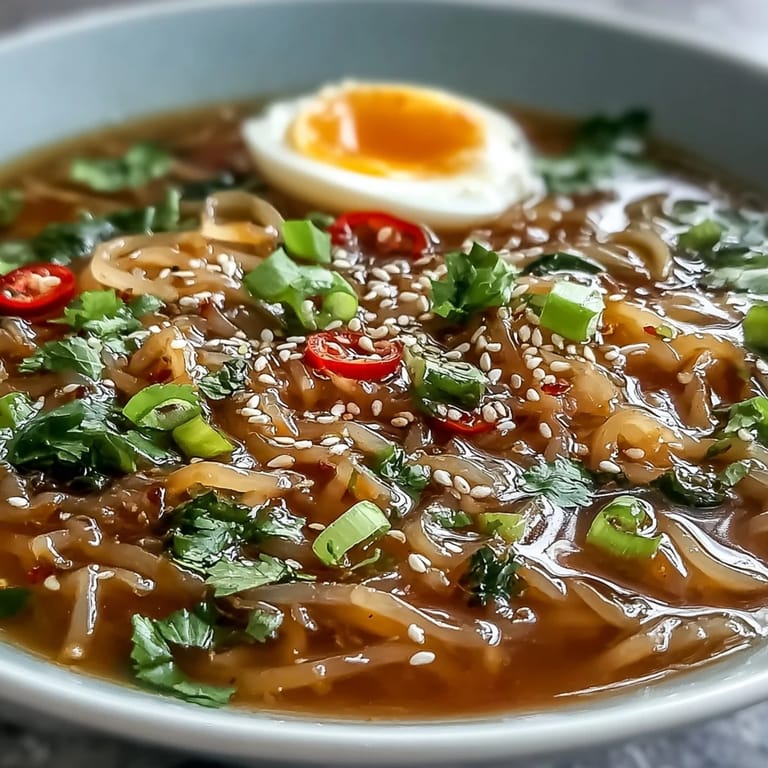
 My kitchen got quiet one winter afternoon when a friend mentioned she'd given up pasta entirely. I remember standing there, uncertain how to feed her something warm and satisfying, when shirataki noodles caught my eye at the market. That first bowl changed everything, because suddenly a simple broth became the star instead of a supporting role. The noodles themselves are almost invisible—just a vehicle for this deeply comforting, golden-brown liquid that tastes like it's been simmering for hours when it's really just taken twenty minutes of your time.
I made this for my partner on a particularly draining Tuesday, and watching him close his eyes after that first spoonful reminded me why I keep bones in my freezer. He asked for seconds without a word, which in our house is basically a marriage proposal. That's when I realized this wasn't just about the macros or the carb count, but about creating something that tastes like someone cares.
Ingredients
- Bone broth (4 cups): This is everything, so don't phone it in with the weak grocery store stuff if you can help it; homemade or a quality brand with no sneaky sugar will carry the entire dish.
- Fresh ginger (1 thumb-sized piece, sliced): Slicing rather than mincing lets you fish it out later, and the flavor blooms gorgeously as the broth simmers.
- Garlic (2 cloves, smashed): Smashing releases the oils without overwhelming the broth, and you'll pull these out at the end anyway.
- Soy sauce or tamari (2 tablespoons): Tamari keeps this gluten-free if that matters to you; regular soy sauce works beautifully if it doesn't.
- Rice vinegar (1 tablespoon): This tiny amount brightens everything without making it taste sour, trust me on this.
- Sesame oil (1 teaspoon): A little goes so far here, so don't be tempted to pour it like olive oil or you'll overpower the whole thing.
- Shirataki noodles (400 g, drained and rinsed): They come packed in liquid that smells like the ocean, which is normal and why rinsing is non-negotiable.
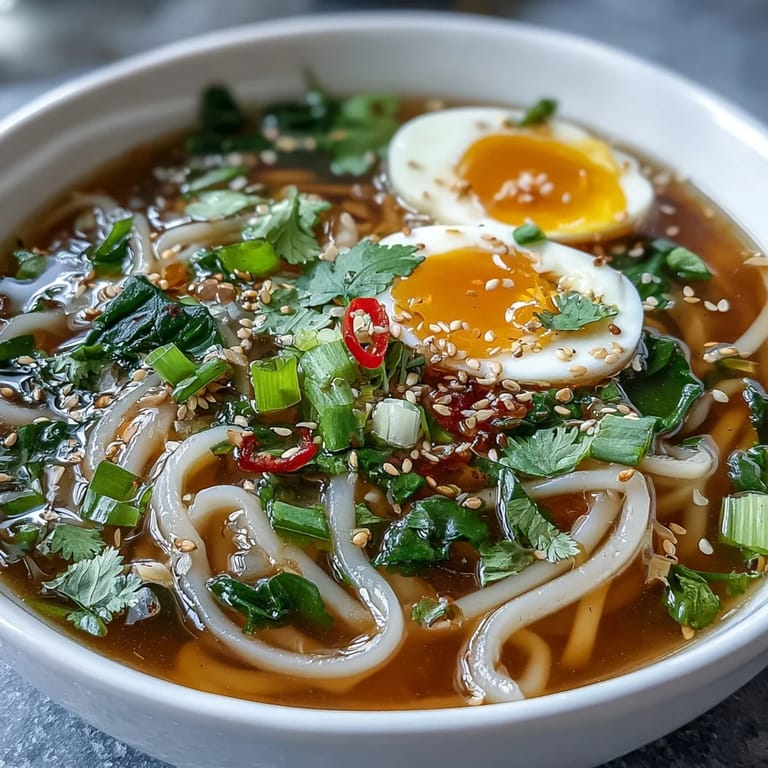
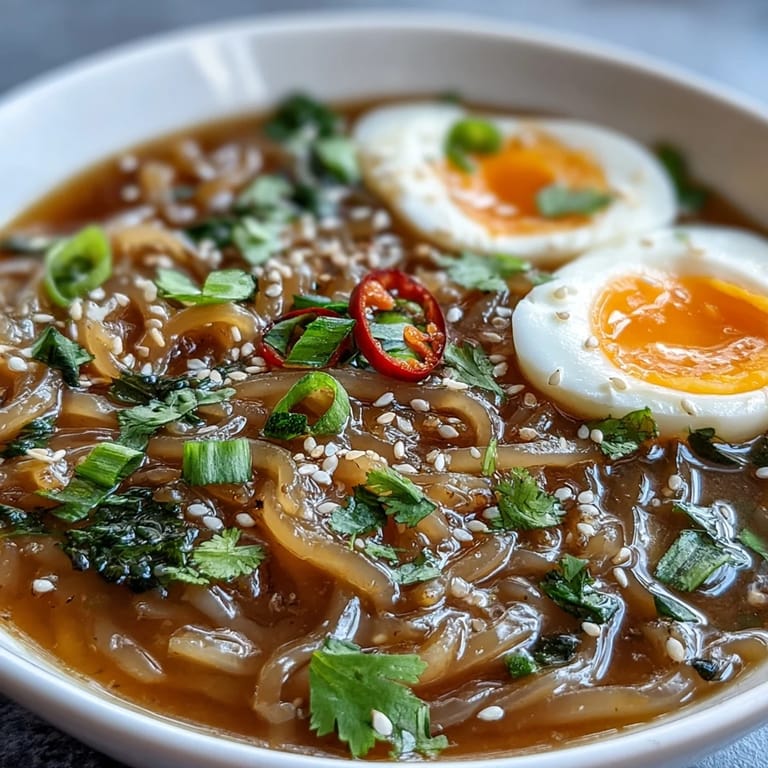
- Soft-boiled eggs (2, optional): A halved egg sinking into the warm broth becomes this gorgeous, runny treasure at the bottom of the bowl.
- Spring onion, red chili, fresh herbs, sesame seeds (for topping): These are your chance to add color and personality, so don't skip them just because they're optional.
Tired of Takeout? 🥡
Get 10 meals you can make faster than delivery arrives. Seriously.
One email. No spam. Unsubscribe anytime.
Instructions
- Build your flavor foundation:
- Combine the bone broth with ginger, garlic, soy sauce, rice vinegar, and sesame oil in a medium pot. You'll hear the sizzle when things hit the heat, and that's your signal the broth is ready to wake up.
- Let the broth dream for a moment:
- Bring it to a gentle boil over medium heat, then reduce to a simmer for 10 minutes. The house will smell incredible, and you'll see the flavors actually deepen—ginger will turn golden, garlic will mellow, and everything becomes this cohesive, warm whole.
- Rescue the noodles from their packaging:
- Drain the shirataki noodles and rinse them thoroughly under cold water, working them gently with your fingers to separate them. Then place them in a sieve and pour boiling water over them to eliminate that fishy smell—this step is honestly what made me a convert.
- Introduce noodles to broth:
- Add the prepared noodles to the simmering broth and let them heat through for 2 to 3 minutes, stirring occasionally so they distribute evenly. They'll soften slightly and start absorbing the flavors around them.
- Fish out the flavor bits:
- Remove the ginger and garlic slices with a spoon or small slotted utensil—they've done their job and now they'd just get in your teeth.
- Pour into bowls:
- Divide the noodles and broth evenly between two bowls, making sure each gets its fair share of those silky strands.
- Crown your creation:
- Top each bowl with a halved soft-boiled egg, a scatter of spring onion, some red chili slices if you want heat, fresh coriander or parsley, and a small pinch of toasted sesame seeds for that nutty crunch.
 Pin this
 There's something about a bowl of broth that photographs terribly but tastes like pure comfort, and that's become my favorite kind of cooking. When my friend texted me a photo of her own version weeks later, I knew I'd accidentally solved something bigger than just a recipe.
The Secret to Shirataki Noodles
Most people give up on shirataki because they haven't been properly prepared, and I spent longer than I'd like to admit thinking I was just bad at cooking them. The rinsing, the hot water bath, even the way they're stored matters more than any fancy cooking technique. Once you understand that these noodles are like a blank canvas waiting for broth and flavor, everything changes.
Bone Broth Beyond the Bowl
If you're not keeping bone broth stocked in your freezer by now, this recipe might be your gateway to that habit. A good broth is liquid gold in the kitchen, showing up in gravies, risottos, and sipped straight from a mug on mornings when you need something restorative. This dish is just one beautiful expression of what's possible when you respect the ingredient.
Playing With Toppings and Flavor
The toppings list is a suggestion, not a mandate, and this is where the recipe gets fun because your bowl becomes uniquely yours. I've added leftover roasted chicken, crispy bacon pieces, tender sheets of nori, even a dollop of spicy miso paste on adventurous nights. The broth stays the same, but the personality shifts completely, which is exactly how I like cooking to feel.
- Soft-boiled eggs are forgiving if you're not a pro, usually seven minutes of simmering and you'll hit the runny-yolk sweet spot.
- Toasted sesame seeds make a huge difference in texture and taste, so buy them whole and toast them yourself if you have two minutes.
- If you're meal-prepping, make the broth ahead and store the noodles separately, then combine only when you're ready to eat for the best texture.
 Pin this
 This bowl has become my default answer when someone asks what I eat on nights I want to feel good without overthinking it. It's proof that the simplest meals, made with intention and a decent broth, are sometimes the most memorable ones.
Recipe Questions
- → Do shirataki noodles have a specific taste?
Shirataki noodles have a very mild, neutral taste on their own. They absorb the flavors of whatever broth or sauce they're cooked in, making them perfect for this aromatic bone broth preparation.
- → Why rinse shirataki noodles with boiling water?
Rinsing with boiling water removes any natural odor from the konjac root and helps improve the texture. This quick step ensures the noodles are clean and ready to soak up the delicious broth flavors.
- → Can I make this vegetarian?
Absolutely. Simply substitute the bone broth with a rich vegetable broth and skip the egg topping or replace it with seasoned tofu for plant-based protein.
- → What protein additions work well?
Shredded cooked chicken, seared tofu, or poached eggs all complement this dish beautifully. The broth also stands alone for a lighter version when you want something minimal.
- → How long will leftovers keep?
The broth can be stored refrigerated for up to 4 days. However, shirataki noodles are best enjoyed fresh as they can become slightly rubbery after sitting in liquid for extended periods.
- → Can I adjust the broth seasonings?
Feel free to customize the seasoning balance. Add more soy sauce for saltiness, extra rice vinegar for brightness, or a drizzle of chili oil for heat to suit your preferences.