 Pin this
 My wok was still smoking when I realized I'd forgotten to prep the vegetables. The pork was already sizzling, and I was frantically slicing peppers with one hand while stirring with the other. That chaotic Tuesday became the template for every stir-fry since: organized chaos that somehow always tastes better than planned perfection. Now I keep everything lined up like a cooking show, but I still feel that rush of heat and hurry every time the oil starts shimmering.
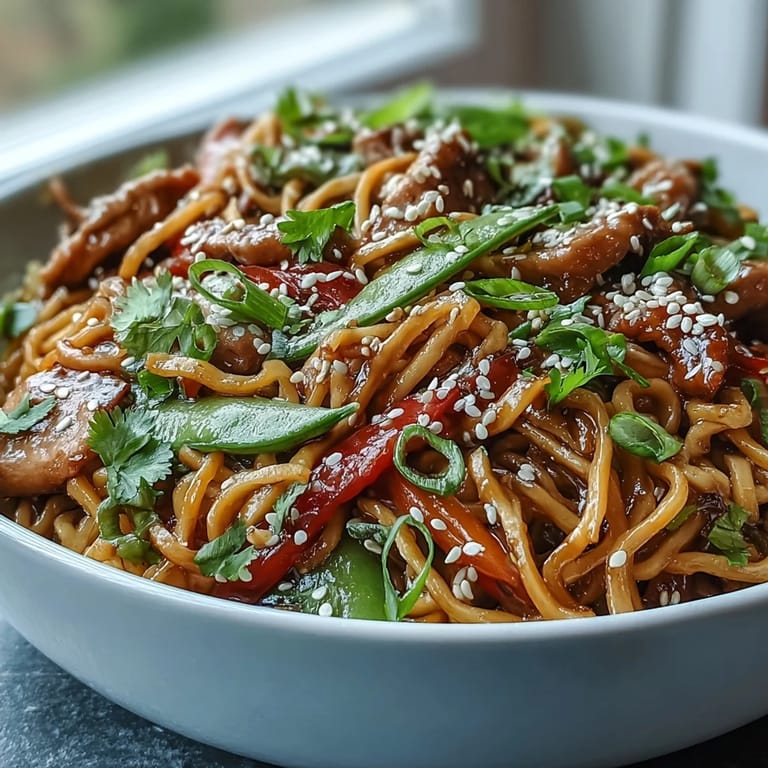
I made this for my neighbor after she mentioned craving Chinese food but being too tired to go out. She stood in my kitchen watching the whole process, amazed at how quickly it came together. When I plated it with a sprinkle of sesame seeds, she laughed and said it looked like something from a restaurant menu. That night, she texted me a photo of her own version, proudly announcing she'd added bok choy and doubled the ginger.
Ingredients
- Pork loin or tenderloin: Slicing it thinly against the grain keeps it tender and lets it sear quickly without drying out.
- Soy sauce and cornstarch: This simple marinade tenderizes the meat and creates a light coating that helps the sauce cling beautifully.
- Egg noodles or rice noodles: Egg noodles give a chewy bite, while rice noodles stay soft and soak up the sauce, choose based on your mood.
- Red bell pepper: Adds sweetness and a pop of color that makes the whole dish look vibrant and alive.
- Carrot: Julienned thin, it cooks quickly and adds a subtle crunch that contrasts with the soft noodles.
- Sugar snap peas: Their crisp texture and slight sweetness balance the savory sauce perfectly.
- Spring onions: Added at the end, they stay fresh and punchy, cutting through the richness with a mild bite.
- Garlic and ginger: The aromatics that make your kitchen smell like a proper stir-fry, sharp and warm all at once.
- Oyster sauce: This is the secret to that deep umami flavor that makes restaurant stir-fries so addictive.
- Hoisin sauce: Adds a touch of sweetness and complexity that rounds out the salty soy sauce.
- Sesame oil: Just a teaspoon transforms the whole dish with its nutty, toasted aroma.
- Brown sugar: Balances the salt and helps the sauce caramelize slightly on the noodles.
- Vegetable oil: High smoke point means you can crank the heat without burning, essential for a proper sear.
- Sesame seeds: Optional but worth it for the nutty crunch and that finished look.
Tired of Takeout? 🥡
Get 10 meals you can make faster than delivery arrives. Seriously.
One email. No spam. Unsubscribe anytime.
Instructions
- Marinate the Pork:
- Toss the pork slices with soy sauce and cornstarch in a bowl, making sure each piece is coated. Let it sit for 10 minutes while you prep everything else, this short rest makes the meat incredibly tender.
- Cook the Noodles:
- Boil the noodles according to package directions, then drain and rinse them under cold water to stop the cooking. This keeps them from turning mushy when you toss them in the hot wok later.
- Mix the Sauce:
- Whisk together soy sauce, oyster sauce, hoisin sauce, sesame oil, brown sugar, and water in a small bowl. Having this ready means you can pour and toss without scrambling mid-stir-fry.
- Sear the Pork:
- Heat 1 tablespoon of vegetable oil in your wok over high heat until it shimmers, then add the pork in a single layer. Let it sear for 2 to 3 minutes without moving it too much, then transfer to a plate.
- Stir-Fry the Vegetables:
- Add the remaining oil, then toss in garlic, ginger, bell pepper, carrot, and sugar snap peas. Stir constantly for 3 to 4 minutes until the vegetables are tender but still have a bite.
- Combine Everything:
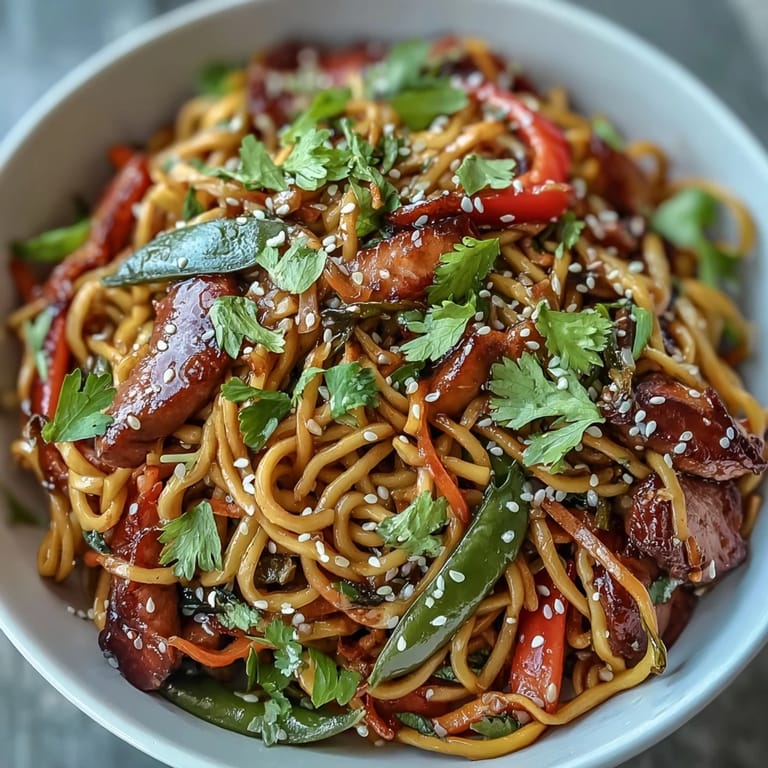
- Return the pork to the wok, add the cooked noodles and the sauce, then toss everything together for 2 to 3 minutes. The noodles should be glossy and well coated, with the sauce clinging to every strand.
- Finish and Serve:
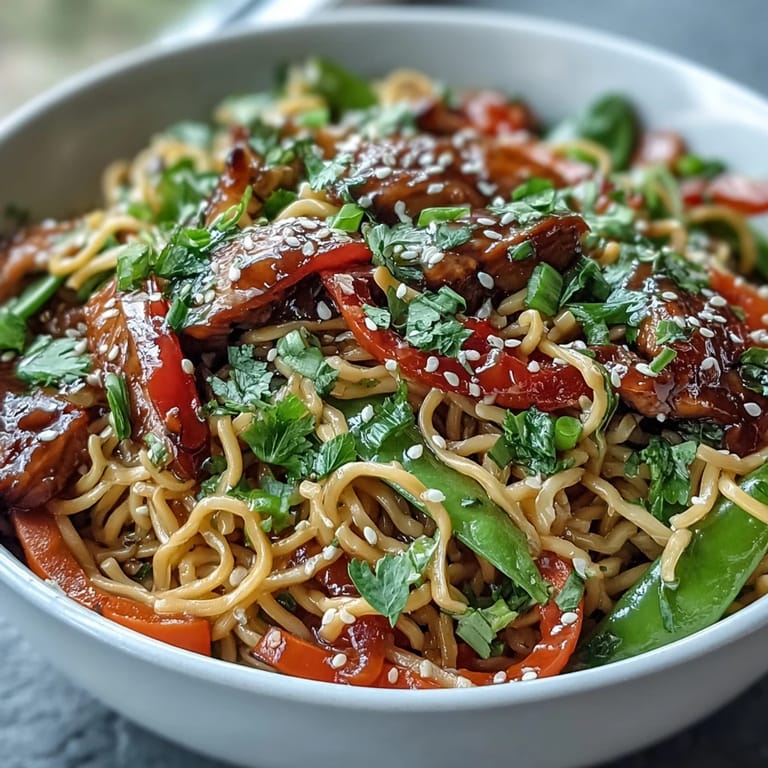
- Toss in the spring onions, give it one last stir, then remove from heat immediately. Plate it up and garnish with sesame seeds and fresh coriander or sliced chili if you like a bit of heat.
 Pin this
 One Sunday, I doubled the recipe and packed it into containers for the week ahead. My coworker smelled it heating up in the break room microwave and asked if I'd ordered lunch from the new place downtown. When I told her I'd made it myself, she asked for the recipe on the spot. It became our Monday ritual: swapping stories about what we added or changed, turning a simple stir-fry into a shared experiment.
Choosing Your Protein
Pork loin works beautifully here, but I have swapped it for chicken thighs when that is what I had on hand. Shrimp cooks even faster and turns the dish lighter, while tofu soaks up the sauce like a sponge if you press it well and sear it until golden. The key is slicing everything thin so it cooks in the same quick timeframe. Each protein brings its own texture, but the sauce ties them all together with that same savory, glossy finish.
Noodle Options and Texture
Egg noodles have a springy chew that holds up to tossing, while rice noodles stay soft and silky, almost melting into the sauce. I have even used soba noodles when I wanted something earthier, though they can be delicate and break if you stir too aggressively. Whatever you choose, slightly undercook them during boiling since they will finish cooking in the wok. The goal is noodles that are tender but not limp, with enough structure to carry the sauce without turning into a clump.
Making It Your Own
This recipe is forgiving and practically begs for improvisation. I have added baby corn for crunch, shiitake mushrooms for earthiness, and bok choy for a leafy contrast that wilts perfectly in the residual heat. Sometimes I double the ginger when I am feeling under the weather, or add a splash of rice vinegar at the end for brightness. The beauty of stir-fry is that it adapts to whatever is in your fridge, turning odds and ends into a cohesive, satisfying meal.
- Try adding a handful of cashews or peanuts for extra crunch and richness.
- A squeeze of lime juice at the end brightens the whole dish and cuts through the savory sauce.
- If you like heat, stir in some chili oil or fresh sliced chilies along with the garlic and ginger.
 Pin this
 Now when I hear the sizzle of pork hitting hot oil, I think of all the times this dish saved a hectic evening or brought someone to my table. It is proof that the best meals do not need hours, just a little heat, a good sauce, and the willingness to toss everything together with confidence.
Recipe Questions
- → Can I use a different type of noodle?
Yes, you can substitute egg noodles with rice noodles, udon, or even soba noodles. Adjust cooking times according to package instructions.
- → What cut of pork works best for stir-fry?
Pork loin or tenderloin are ideal as they're lean and tender. Slice thinly against the grain for the most tender results.
- → How do I prevent the vegetables from becoming soggy?
Use high heat and don't overcrowd the wok. Stir-fry vegetables quickly, keeping them moving constantly for a crisp-tender texture.
- → Can this be made ahead of time?
While best served fresh, you can prep ingredients in advance. Cook just before serving as noodles tend to absorb sauce and become soft when stored.
- → What can I use instead of oyster sauce?
For a vegetarian alternative, use mushroom-based oyster sauce or a combination of soy sauce with a touch of sugar for similar umami depth.
- → How can I make this gluten-free?
Use tamari instead of soy sauce, rice noodles, and check that your oyster sauce and hoisin are certified gluten-free.