 Pin this
 I learned to make risotto on a rainy Tuesday when my neighbor Marco showed up with a bag of fresh mushrooms from the farmers market, insisting we had to use them that night. I'd always been intimidated by the constant stirring, the fussy ratio of liquid to rice, but watching his hands move methodically through the pan while he told me about growing up in Piedmont, something clicked. Now whenever I make it, I feel that same sense of calm—like the stirring itself is a meditation, and you're coaxing something creamy and luxurious out of simple grains.
The first time I served this to friends, I was so nervous about the timing that I actually set a timer for the stirring intervals. Halfway through, I realized nobody was watching the clock—they were all gathered in the kitchen, drawn in by the aroma of garlic and mushrooms hitting the pan, asking if they could help. That's when I understood risotto isn't really about perfection; it's about that moment when your kitchen becomes the best place anyone wants to be.
Ingredients
- Arborio rice: The short, starchy grains release slowly to create that signature creamy texture without becoming mushy—don't swap it for long-grain varieties or you'll lose the magic.
- Cremini or button mushrooms: Their mild earthiness doesn't overpower the dish, though I've learned that cooking them separately first prevents them from releasing too much water and diluting your risotto.
- Olive oil and butter (for mushrooms): The combination gets them golden and caramelized faster than either one alone.
- Yellow onion and garlic: These are your flavor foundation—mince the onion finely so it disappears into creaminess, and don't skip the garlic or you'll miss its gentle sweetness.
- Vegetable broth: Keeping it warm is non-negotiable; cold broth will shock the rice and interrupt the cooking process, making the texture uneven.
- Dry white wine: It adds a subtle acidity that balances the richness—something I discovered by accident when I ran out of broth mid-cook.
- Parmesan cheese: Use freshly grated if possible; pre-grated versions contain cellulose that prevents it from melting into that silky, seamless finish.
- Unsalted butter (finishing): This final knob is the secret—it's called mantecatura, and it's what transforms creamy into luxurious.
- Salt and pepper: Taste as you go, especially after adding the broth, because the cheese will add saltiness too.
Tired of Takeout? 🥡
Get 10 meals you can make faster than delivery arrives. Seriously.
One email. No spam. Unsubscribe anytime.
Instructions
- Cook the mushrooms first:
- Heat olive oil and butter in a large skillet over medium heat until the butter foams. Add sliced mushrooms and let them sit for a minute before stirring—this helps them release their moisture and brown rather than steam. You'll know they're ready when any liquid has evaporated and they're golden, about 6–8 minutes.
- Build your flavor base:
- In the same pan, add your finely chopped onion and cook until it turns translucent and softens, roughly 3 minutes. Add minced garlic and cook just until fragrant, about 1 minute—don't let it brown or it'll taste bitter.
- Toast the rice:
- Stir the Arborio rice into the onion mixture and cook, stirring constantly, until you see the edges of each grain turn slightly translucent, about 2 minutes. This crucial step seals the rice and prevents it from turning into porridge.
- Add the wine:
- Pour in your white wine and stir until the rice absorbs it, maybe 1–2 minutes. You'll hear it hiss slightly and smell something wonderfully winey—that's when you know it's working.
- Add broth gradually and stir:
- Using a ladle, add warm vegetable broth one ladleful at a time, stirring frequently. Wait until most of the liquid is absorbed before adding the next ladleful—this slow process is what creates creaminess. Continue for about 18–20 minutes until the rice is creamy and still slightly firm when you bite it.
- Finish with mushrooms and cheese:
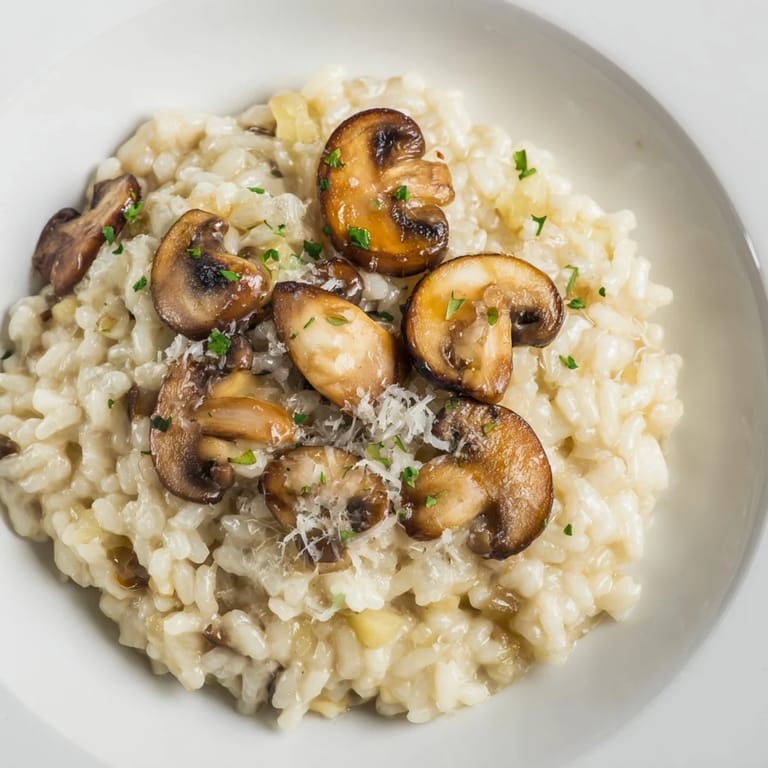
- Stir in your reserved mushrooms, the 2 tablespoons of butter, and grated Parmesan cheese. Cook for 2 more minutes, then taste and adjust salt and pepper. Remove from heat immediately—risotto waits for no one.
- Serve right away:
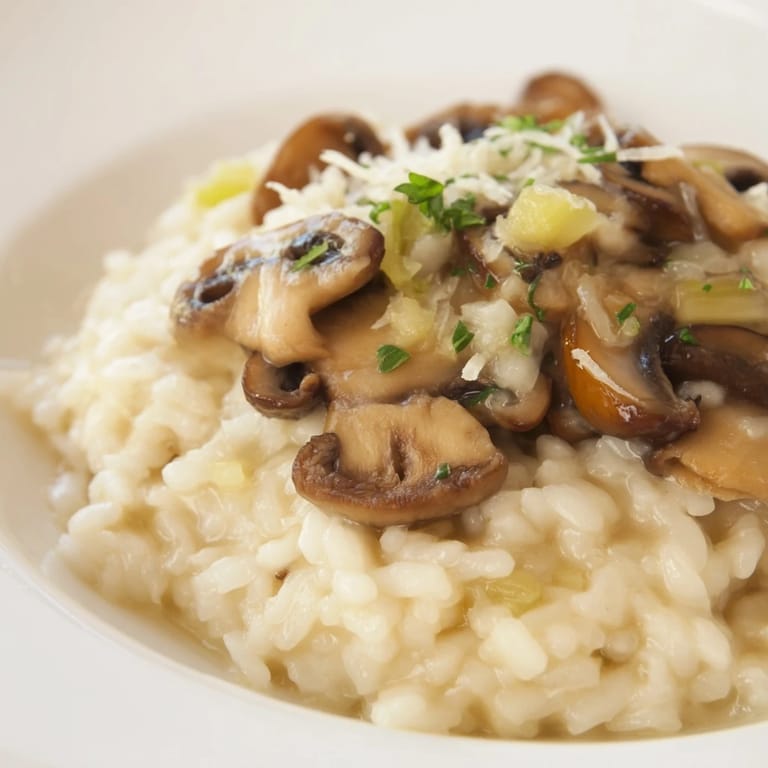
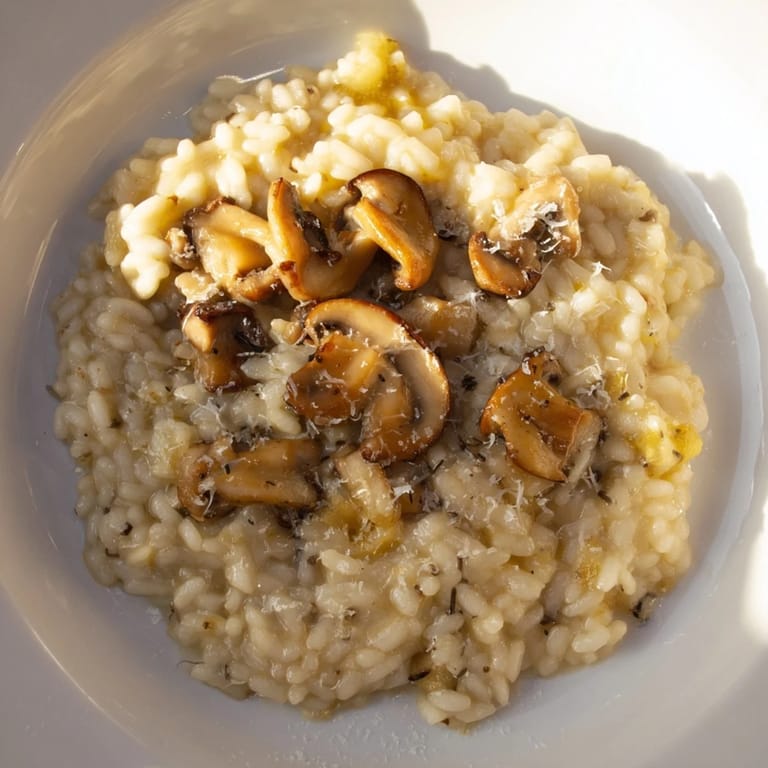
- Spoon into warm bowls and top with extra Parmesan and fresh parsley if you like.
 Pin this
 There's something about risotto that makes people slow down. Last spring, I made this for a small dinner, and what was supposed to be a quick meal turned into a three-hour evening of lingering at the table, laughing over second bowls, nobody wanting to leave. That's when I realized this dish isn't just food—it's an invitation to stay a little longer.
The Rhythm of Stirring
The stirring isn't drudgery if you shift how you think about it. I've learned to use a wooden spoon with a flat edge, moving it in slow figure-eights across the bottom of the pan, feeling for any grains sticking. Some people find it meditative—others put on a favorite song and use it as a timer. The motion itself becomes part of the cooking, a small act of care that shows in the final texture.
Mushroom Variations Worth Trying
Button and cremini mushrooms are reliable, but once you're comfortable with the technique, experimenting gets fun. I've used oyster mushrooms for earthier notes, porcini for a deeper umami punch, and a blend of whatever looked good at the market. Each type brings its own personality, and the risotto adapts beautifully—just remember to adjust your cooking time slightly if you're using thicker varieties that need a bit longer to soften.
Wine Pairing and Service
A crisp white wine alongside your bowl feels natural and elegant—Pinot Grigio, Sauvignon Blanc, or even a light Vermentino all complement the earthiness of the mushrooms without overwhelming the creamy rice. I've also found that risotto tastes best served on warm plates, so I heat mine for 30 seconds in the oven or simply run hot water over them and dry quickly. One last thought: if you end up with leftovers, try gently reheating them the next day with a splash of broth and a little extra butter stirred in.
- Serve immediately after finishing for the best creamy texture and warmth.
- A drizzle of truffle oil or a sprinkle of fresh herbs can elevate this from weeknight to special occasion.
- This dish really shines as a main course with a simple green salad and crusty bread on the side.
 Pin this
 Every time I make risotto, I'm reminded that some of the best meals come from simple ingredients and the willingness to stir, to taste, to pay attention. This dish is proof that comfort and elegance aren't opposites—they can live together in one warm, creamy bowl.
Recipe Questions
- → What type of rice is best for this dish?
Arborio rice is ideal for its creamy texture and ability to absorb flavors while maintaining a slight bite.
- → Can different mushrooms be used?
Yes, a mix of wild mushrooms can enhance flavor and texture, though cremini or button mushrooms work well too.
- → How should the broth be added?
Add warm broth gradually, one ladleful at a time, stirring frequently to achieve a creamy consistency.
- → Is it necessary to use white wine?
White wine adds depth and acidity but can be replaced with extra broth if preferred.
- → How can the dish be garnished?
Fresh parsley and extra grated Parmesan are excellent garnishes to brighten the flavor and presentation.
- → What cooking tools are recommended?
A large skillet or saucepan, wooden spoon, ladle, and cutting board are essential for preparation.