 Pin this
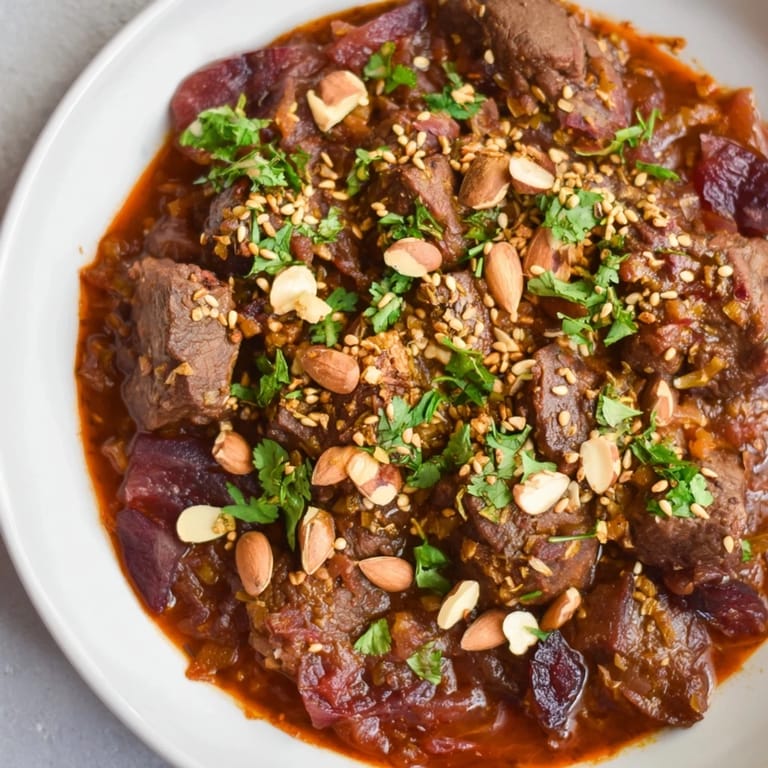
 The first time I really understood tagine was watching my neighbor slide a clay pot from her oven, steam rising like a secret being released. The kitchen filled with cinnamon and something floral I couldn't name, and I realized this wasn't just stew—it was a conversation between sweet and savory, tender meat and the warmth of spices that made everything feel like home. That one meal changed how I thought about slow cooking, and now whenever I make this Moroccan lamb tagine, I'm chasing that same feeling of comfort and discovery.
I made this for my sister's birthday dinner on a cold November evening, and I'll never forget how quiet the table got when everyone took their first bite. Someone asked if I'd learned to cook in Morocco, and I just smiled—because in that moment, it felt like I had. The aroma that filled the house for hours afterward was almost as memorable as the meal itself.
Ingredients
- Lamb shoulder, cut into 2-inch cubes (1.5 kg): Choose meat with some marbling; it keeps everything moist and rich during the long braise.
- Olive oil (2 tbsp): Use good quality—it's one of the few ingredients you really taste in the beginning.
- Onions, finely chopped (2 large): They dissolve into the sauce and create a natural thickener, so don't skip this step.
- Garlic cloves, minced (4): Fresh garlic blooms when it hits the warm spices, so mince it fine and add it to the aromatics.
- Fresh ginger, grated (1-inch piece): This brings brightness that dried ginger can't; grate it just before adding.
- Ground cinnamon (1 ½ tsp): This is the soul of the dish, so buy it fresh if you can and don't be shy with the amount.
- Ground cumin (1 tsp): It adds earthiness that balances the sweetness of the fruit.
- Ground coriander (1 tsp): This subtle spice ties everything together without dominating.
- Ground turmeric (1 tsp): It gives the sauce a golden hue and a warm, almost healing quality.
- Ground black pepper (½ tsp): A small amount prevents the spices from feeling flat.
- Ground allspice (½ tsp): It whispers in the background with notes of clove and nutmeg.
- Ground ginger (½ tsp): This complements the fresh ginger without overwhelming it.
- Saffron threads, pinch (optional): If you use it, bloom it in warm broth first to release its magic.
- Beef or lamb broth (400 ml): Homemade is best, but a good quality store-bought works—avoid anything too salty.
- Canned chopped tomatoes (400 g): They add acidity that cuts through the richness beautifully.
- Honey (2 tbsp): This enhances the sweetness of the prunes and rounds out the spice blend.
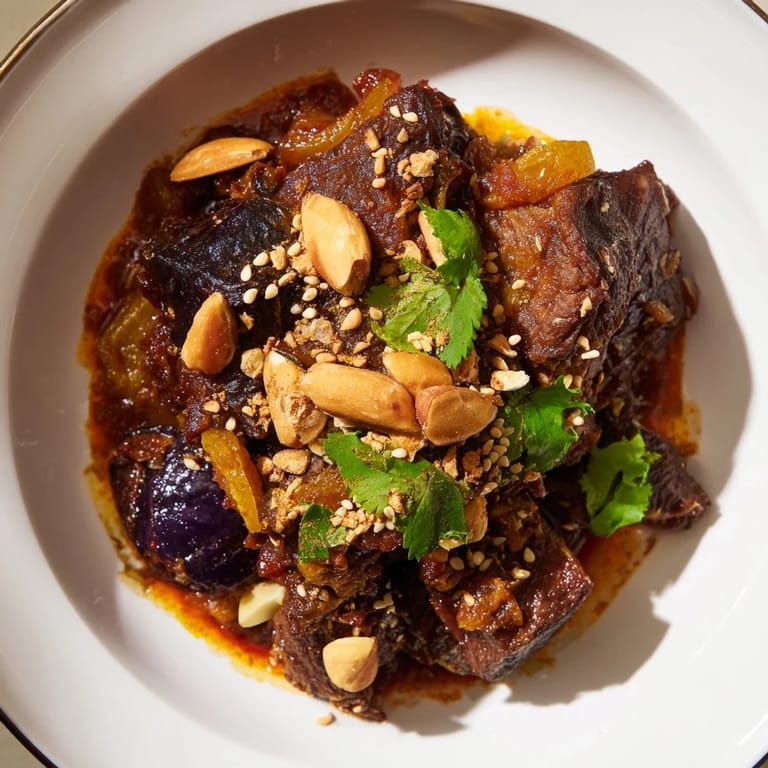
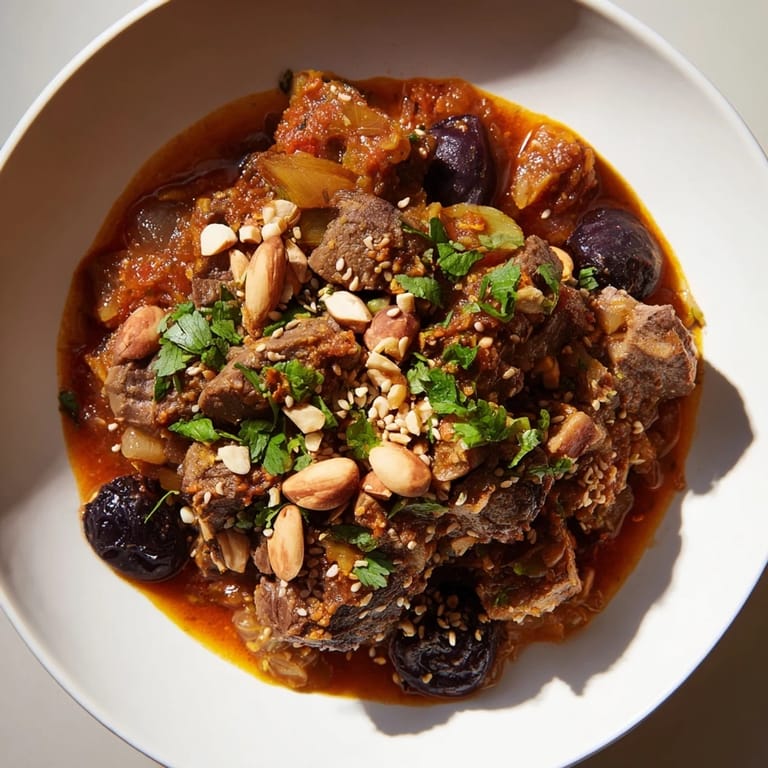
- Pitted prunes (200 g): These become almost jammy by the end; they're not a garnish, they're part of the soul of this dish.
- Whole blanched almonds (80 g): Toast them yourself—it takes three minutes and transforms their flavor completely.
- Toasted sesame seeds (2 tbsp): These add a nutty finish and a little textural surprise.
- Fresh cilantro or parsley, chopped (handful): Add this right before serving so it stays bright and doesn't wilt into the sauce.
- Salt: Taste as you go; the broth may already be salty, so adjust carefully.
Tired of Takeout? 🥡
Get 10 meals you can make faster than delivery arrives. Seriously.
One email. No spam. Unsubscribe anytime.
Instructions
- Set your stage:
- Preheat your oven to 160°C (325°F). If you have a traditional tagine, use it—but a Dutch oven works just as well and holds heat more evenly.
- Brown the lamb:
- Heat 1 tbsp olive oil in your pot over medium-high heat until it shimmers, then add lamb in batches so it actually browns instead of steaming. This deep color is where the flavor lives, so don't rush it and don't overcrowd the pan.
- Build the aromatics:
- Add the remaining oil, then onions, garlic, and ginger. Stir often and listen for that gentle sizzle—you want them soft and golden, which takes about 5 minutes. Your kitchen will start to smell incredible at this point.
- Toast the spices:
- Sprinkle in all your spices and saffron, then stir constantly for about 1 minute. This is the moment the raw spice smell transforms into something warm and inviting—your nose will tell you when it's right.
- Bring it together:
- Return the lamb to the pot, then add tomatoes, broth, and honey. Stir until everything is coated and the liquid comes to a gentle simmer—don't let it boil hard or the meat will toughen.
- The long braise:
- Cover the pot and slide it into the oven, or reduce heat to low on the stovetop. Let it cook undisturbed for 1 hour and 30 minutes, stirring occasionally so nothing sticks to the bottom. This is when patience becomes an ingredient.
- Toast the almonds:
- While the tagine cooks, warm a dry skillet over medium heat and add almonds, shaking occasionally for 2-3 minutes until they're golden and fragrant. Transfer them to a plate immediately so they don't burn.
- Add the fruit and nuts:
- After the first 1 hour 30 minutes, add prunes and almonds, stir everything together, and cover again. Cook for another 30-45 minutes until the lamb is so tender it falls apart with a spoon and the sauce has thickened into something luscious.
- Taste and adjust:
- Remove from heat, taste carefully, and add salt only if needed. Sometimes the broth and honey have already done the seasoning work for you.
- Finish and serve:
- Scatter sesame seeds and fresh cilantro or parsley over the top just before serving. The herbaceous brightness against the rich spices is the final note that makes everything sing.
 Pin this
 I've learned that food like this reminds people of moments bigger than themselves—a wedding, a difficult conversation that turned beautiful, a random Tuesday that felt like a gift. When someone asks for this recipe now, I know they're not just looking for instructions; they're hoping to create that same magic in their own kitchen.
Timing and Patience
The hardest part of making tagine isn't the technique—it's resisting the urge to peek and stir constantly. I learned this the expensive way, opening the oven every ten minutes, letting heat escape and cooling things down. Once I accepted that the oven knew what it was doing better than I did, everything changed. The meat needs that uninterrupted time to become silky, and the flavors need silence to marry together.
Serving and Pairing
This tagine is generous enough to feed six people easily, but it also reheats beautifully so you'll have leftovers that taste even better than the first night. Serve it over fluffy couscous to soak up every drop of sauce, or with saffron rice if you want something more luxurious. A wedge of crusty bread is never wrong. If you're serving wine, a Moroccan red or even a fuller-bodied rosé complements the spices without fighting them.
Variations and Swaps
This recipe is flexible enough to bend without breaking. If prunes feel too sweet for your taste, swap them for apricots or even dried figs—each brings its own character. Beef chuck works beautifully if you can't find lamb, though you might need an extra 15 minutes of cooking time. Some cooks add preserved lemons near the end for brightness, or a handful of olives for a different kind of richness. The saffron is optional but worth seeking out; if you can't find it, the tagine will still be wonderful, just slightly less floral.
- Marinate the lamb overnight in spices and oil for deeper, more complex flavor.
- Toast your spices in a dry pan for 30 seconds before grinding them yourself if you have whole spices.
- Use a mix of white and dark sesame seeds for visual contrast on top.
 Pin this
 Making tagine is an act of care—for the people you're feeding and for yourself. Every time you stir that pot and inhale the steam, you're participating in something old and beautiful that people have been doing for centuries.
Recipe Questions
- → What cut of lamb is best for this dish?
Lamb shoulder cut into cubes is ideal due to its tenderness and ability to become rich and flavorful when slow-cooked.
- → Can I use apricots instead of prunes?
Yes, apricots provide a similar sweetness and texture, offering a pleasant variation to the dish.
- → How do the spices influence the flavor?
The blend of cinnamon, cumin, coriander, turmeric, allspice, and optional saffron creates a warm, fragrant profile typical of Moroccan cuisine.
- → What is the purpose of toasting the almonds?
Toasting enhances the almonds’ nutty aroma and adds a crunchy texture contrast to the tender meat and fruit.
- → What sides complement this dish well?
Steamed couscous, saffron rice, or crusty bread help balance the rich sauce and soak up the flavorful juices.