 Pin this
 The first pot of Italian herb vegetable soup I ever made was during a rainy Sunday in October when the farmers market had been bursting with late-season vegetables. The kitchen windows steamed up as the fragrant broth simmered, creating a cozy barrier against the cold weather outside. I remember chopping vegetables with no particular plan, just tossing in what looked vibrant and fresh. As the herbs bloomed in the hot oil, my tiny apartment transformed into something that felt unmistakably like home.
Last winter, I made this soup for my friend who was recovering from surgery, carrying it carefully across town in a thermos. She texted me later that evening saying it was the first thing that had actually tasted good to her in weeks. When I visited a few days later, she had already made her own batch, the apartment filled with the same aromatic herbs, her energy visibly returning with each spoonful.
Ingredients
- Olive oil: Use a good quality extra virgin olive oil here since it forms the flavor foundation where your garlic and herbs will bloom.
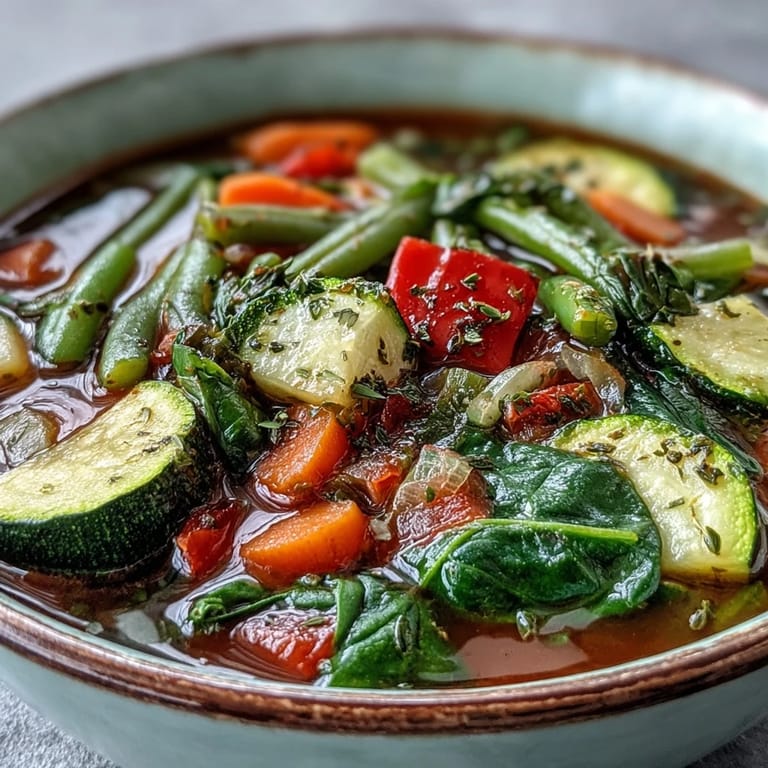
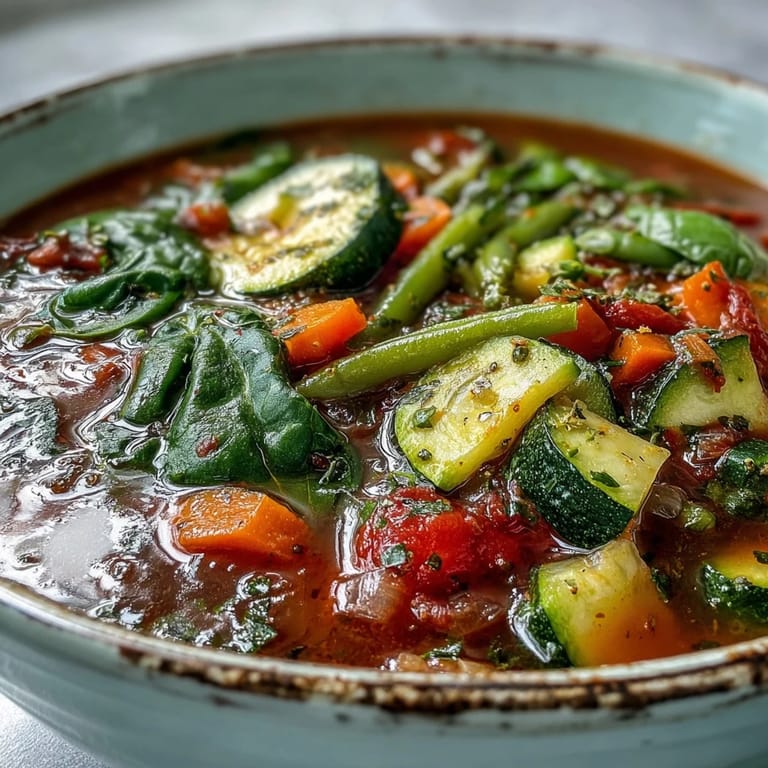
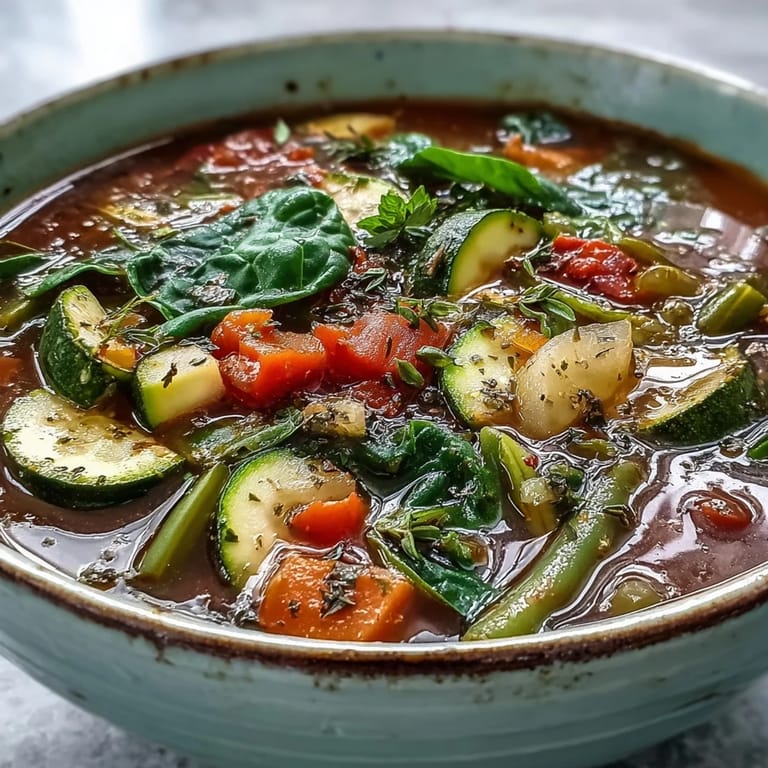
- Fresh vegetables: The combination of onion, garlic, carrots, celery, zucchini, bell pepper, green beans, tomatoes, potato, and spinach creates a garden in your bowl that becomes greater than the sum of its parts.
- Dried herbs: The oregano, basil, thyme, and rosemary work magic together - I learned they need that full simmer time to fully release their oils and flavors.
- Vegetable broth: This carries all the flavors throughout the soup, so use homemade if you have it, or a good quality store-bought version.
- Cannellini beans (optional): These transform the soup from a side to a complete meal, adding satisfying protein and a creamy texture that balances the vegetables.
Tired of Takeout? 🥡
Get 10 meals you can make faster than delivery arrives. Seriously.
One email. No spam. Unsubscribe anytime.
Instructions
- Create your flavor base:
- Heat olive oil in a large pot and add onion and garlic, letting them become translucent and fragrant. This initial step builds the foundation all great soups depend on.
- Build the vegetable layer:
- Add the carrots, celery, zucchini, bell pepper, and green beans, then cook until they just begin to soften. Listen for that gentle sizzle that tells you theyre releasing their natural sweetness.
- Introduce the liquid elements:
- Pour in the diced tomatoes with their juices and vegetable broth, then add your potato and all herbs. The broth should just cover everything, creating that perfect soup-to-vegetable ratio.
- Allow everything to meld:
- Bring to a gentle boil, then reduce to a simmer for 20-25 minutes. Your kitchen will fill with the aroma of Italian herbs as the vegetables become tender but still maintain their integrity.
- Incorporate final elements:
- If using cannellini beans, add them now and simmer briefly. Remove the bay leaf before stirring in the fresh spinach to wilt.
- Taste and adjust:
- This is your moment to perfect the soup, adding a pinch more salt or freshly cracked pepper as needed. The flavors should be bright and harmonious.
- Serve with love:
- Ladle into bowls and finish with fresh parsley and perhaps a sprinkle of Parmesan. Notice how each bowl contains a colorful mosaic of vegetables.
 Pin this
 On my birthday last year, instead of going out, friends gathered at my place where I had a big pot of this soup simmering. We tore crusty bread with our hands and filled our bowls again and again as night fell. Someone brought wine, someone else brought a simple salad, and the evening became one of those perfect gatherings that happens when food is made with care but without fuss, allowing the conversation and laughter to take center stage.
Making It Your Own
The beauty of this Italian herb vegetable soup lies in its flexibility. Some weeks I add fennel for a slight anise flavor, or swap summer squash for zucchini depending on what looks good at the market. During colder months, I might double the cannellini beans and add a parmesan rind to the simmering broth, creating something heartier that stands up to freezing temperatures. What remains constant is the herb blend, which gives this soup its distinctly Italian character no matter what vegetables find their way into the pot.
Storing and Serving
This soup actually improves with time as the flavors continue to develop. I often make a double batch on Sunday, enjoying it immediately then refrigerating the rest in portions for quick weekday lunches. The soup keeps beautifully for up to 4 days refrigerated, and up to 3 months frozen. When reheating, I sometimes add a fresh handful of spinach or a squeeze of lemon juice to brighten the flavors that have deepened during storage.
Seasonal Adaptations
Each season offers an opportunity to reimagine this soup while keeping its Italian soul intact. Spring brings tender asparagus and fresh peas, summer offers an abundance of zucchini and tomatoes, autumn welcomes butternut squash and kale, while winter calls for hearty root vegetables and dried herbs. The technique remains the same no matter the season, showing how Italian cooking philosophy adapts to what nature provides.
- In summer, try adding fresh basil instead of dried, and perhaps some yellow squash alongside the zucchini.
- For autumn, butternut squash cubes and a pinch of nutmeg create a subtle sweetness that balances the savory herbs.
- Winter versions benefit from extra garlic and perhaps some dried porcini mushrooms rehydrated in hot water for deeper umami notes.
 Pin this
 This soup has taught me that simplicity, when approached with care, creates the most satisfying meals. It reminds us that nourishment comes not just from ingredients, but from the mindfulness we bring to preparing them.
Recipe Questions
- → Can I make this soup ahead of time?
Absolutely. This soup actually develops deeper flavor when made ahead. Store in an airtight container in the refrigerator for up to 4 days. The flavors continue to meld, making leftovers even more delicious the next day.
- → What vegetables work best in this soup?
The combination of carrots, celery, zucchini, bell pepper, green beans, and tomatoes creates a balanced mix of textures and flavors. Feel free to substitute based on seasonality—butternut squash, kale, or Swiss chard make excellent alternatives.
- → Is this suitable for freezing?
Yes, this soup freezes beautifully. Cool completely before transferring to freezer-safe containers. It will keep for up to 3 months. Thaw overnight in the refrigerator and reheat gently on the stovetop, adding a splash of broth if needed.
- → How can I add more protein?
The optional cannellini beans add plant-based protein and creaminess. You can also add lentils, chickpeas, or small pasta shapes like ditalini during the last 10 minutes of cooking for a more substantial meal.
- → Can I use fresh herbs instead of dried?
Certainly. Use three times the amount of fresh herbs compared to dried—about 1 tablespoon each of fresh oregano, basil, and thyme. Add them toward the end of cooking to preserve their bright, aromatic qualities.
- → What's the best way to adjust seasoning?
Taste the soup near the end of cooking when vegetables are tender. Add salt and freshly ground black pepper gradually. A splash of balsamic vinegar or squeeze of lemon juice can brighten flavors if needed.