 Pin this
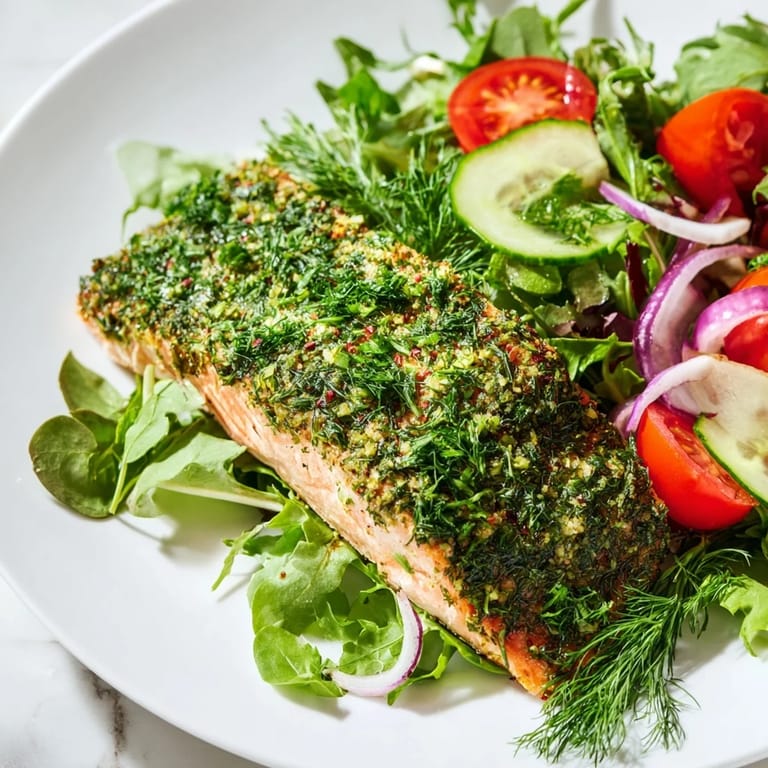
 There's something about the smell of fresh herbs hitting warm salmon that makes you feel like you're cooking something special, even on a Tuesday night. I discovered this combination by accident when I had leftover dill and parsley sitting on the counter alongside a beautiful salmon fillet, and decided to stop overthinking dinner. Twenty minutes later, I was plating it over crisp greens and realizing I'd stumbled onto exactly the kind of meal that feels both effortless and impressive.
I made this for my sister who'd been talking about eating healthier, and watching her take that first bite—when the warm herb-crusted fillet hit the cold salad—she just closed her eyes for a second. That moment taught me that simple food done well beats complicated recipes every time, and now she asks me to make it whenever she visits.
Ingredients
- Salmon fillets: Four pieces around 150g each, skinless so the herb crust makes direct contact with the fish.
- Olive oil: Two tablespoons for the herb paste, plus three more for the vinaigrette—good olive oil makes a real difference here.
- Dijon mustard: Just a teaspoon in the vinaigrette and two more in the herb paste; it acts like a flavor amplifier without tasting mustard-y.
- Lemon juice: One tablespoon in the salmon, one in the vinaigrette—acidity is your friend for brightening everything.
- Fresh herbs: Parsley, dill, and chives in roughly equal amounts; dried herbs won't give you that fresh green look or clean taste.
- Garlic powder: One teaspoon keeps the herb crust from tasting too one-note and adds a subtle savory backbone.
- Salt and pepper: Season the salmon generously since the fish absorbs flavor better when raw.
- Mixed greens: Four cups total; use whatever's fresh—arugula has peppery bite, spinach is earthy, romaine adds crunch.
- Cherry tomatoes and cucumber: These provide clean contrast to the rich salmon; halve the tomatoes and slice the cucumber thin.
- Red onion: Thinly sliced quarter of one adds sharpness that wakes up your palate between bites.
- Walnuts or almonds: Toast them yourself if you can; toasted nuts have complexity that raw ones don't offer.
- Feta cheese: Optional but worth it for the salty tang that plays beautifully against the herbs.
- White wine vinegar: One tablespoon creates the backbone of your dressing; lemon juice works too if you prefer brightness.
- Honey: Just a teaspoon balances the vinegar's sharpness without making anything sweet.
Tired of Takeout? 🥡
Get 10 meals you can make faster than delivery arrives. Seriously.
One email. No spam. Unsubscribe anytime.
Instructions
- Heat your oven and prep:
- Get your oven to 200°C (400°F) and line a baking sheet with parchment paper so nothing sticks. This matters more than you'd think with salmon.
- Build the herb crust:
- Mix the olive oil, Dijon mustard, lemon juice, and all three fresh herbs together in a small bowl until you have a loose paste that looks bright green. The herbs should be finely chopped so they adhere to the fish rather than falling off.
- Coat the salmon:
- Place your salmon fillets on the prepared sheet and spread the herb mixture evenly over the tops of each one, pressing gently so it sticks. Don't worry about the sides or bottom; you want the herbs concentrated on top where people will taste them.
- Bake until just cooked through:
- Slide the salmon into the oven for 12 to 15 minutes, depending on thickness—you're looking for the flesh to turn opaque and flake easily when you test it with a fork. Overcooked salmon gets dry; undercooked is risky, so stay close and check at the 12-minute mark.
- Assemble your salad base:
- While the salmon cooks, toss your mixed greens, halved cherry tomatoes, sliced cucumber, and thin red onion slices into a large bowl. Add the toasted nuts and crumbled feta if you're using them.
- Make the vinaigrette:
- Whisk together the extra-virgin olive oil, white wine vinegar, honey, and Dijon mustard in a small bowl, then season with salt and pepper to taste. It should taste balanced—not too sharp, not too mellow.
- Dress and plate:
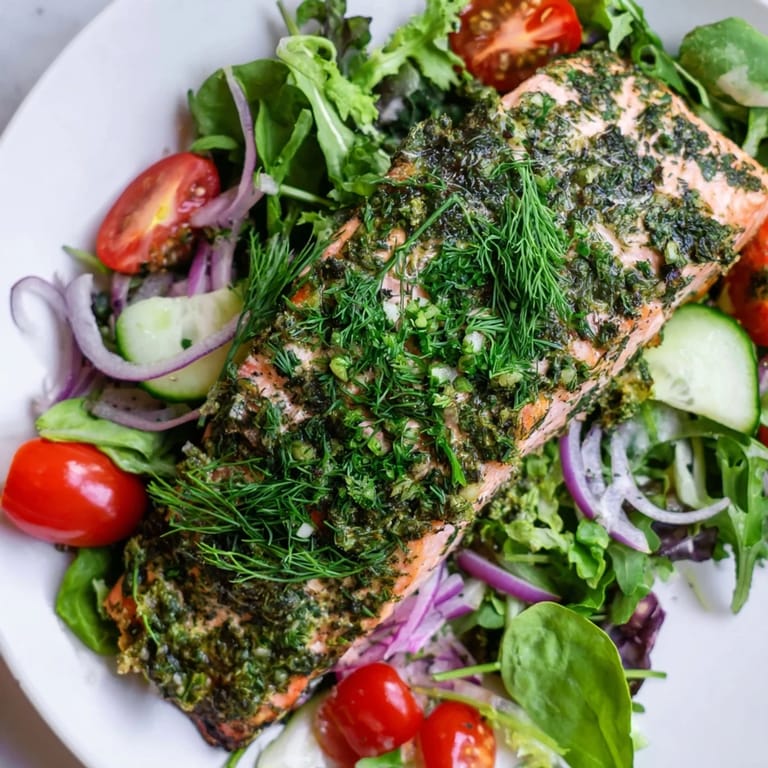
- Drizzle the vinaigrette over your salad and toss gently with salad tongs so everything gets coated without bruising the greens. Divide the dressed salad among four plates and top each portion with a warm herb-crusted salmon fillet right before serving.
 Pin this
 My mom tasted this once and asked for the recipe, saying it was the first time she understood why people got excited about salads. Turns out it wasn't about the salad at all—it was about the conversation it started, the way everyone slowed down to actually taste their food, and how something this light could feel completely satisfying.
Why Warm Salmon Over Cold Greens Works
The contrast between warm herb-crusted fish and crisp cold salad isn't just pleasant; it's intentional and delicious. When warm salmon hits cool greens, the residual heat slightly wilts the leaves closest to it, softening them just enough to let them absorb all those herby juices. The cold salad, in turn, prevents the salmon from feeling heavy or rich—it's this beautiful back-and-forth between textures and temperatures that keeps you wanting another bite.
Playing with Your Vinaigrette
The vinaigrette I've given you is a solid baseline, but it's also infinitely flexible. Some days I use more lemon juice and skip the vinegar entirely if I'm craving brightness. Other times I swap the honey for a tiny bit of maple syrup or add a minced shallot for complexity. The rule is simple: two parts oil to one part acid, a touch of sweetness to round it out, and mustard to hold it all together. Once you understand that ratio, you'll stop measuring and start tasting, which is how you know you've truly made it your own.
Fish You Can Substitute
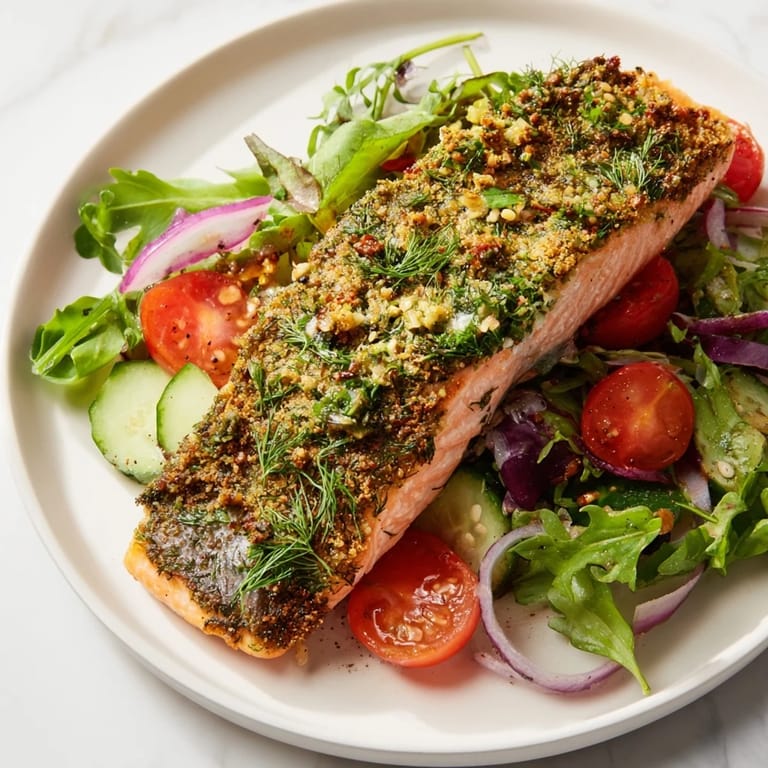
Salmon is forgiving and flavorful, but it's absolutely not the only fish that works here. I've made this with trout when salmon seemed expensive, with halibut for a milder flavor, and even with firm white fish like cod when I wanted something delicate. Any fish that doesn't fall apart easily will work; just adjust your cooking time based on thickness. Thinner fillets cook faster, so keep your eye on them and don't leave the kitchen assuming fifteen minutes will always be right.
- Trout has a slightly earthier taste that pairs beautifully with the herbs and costs less.
- Halibut is lean and mild, so it lets the herb crust shine without competing flavors.
- Sea bass is elegant and buttery, making this feel a bit more restaurant-quality if you're cooking for guests.
 Pin this
 This dish became my go-to when I needed to prove that healthy food could be exciting. Now it's what I make when I want to slow down, taste my dinner, and remember that simple ingredients treated with care create moments worth savoring.
Recipe Questions
- → What herbs are used for the crust?
Fresh parsley, dill, and chives combine with garlic powder, salt, and pepper to create the flavorful herb crust.
- → Can I substitute the salmon with another fish?
Yes, trout or other firm fish make great alternatives and work well with the herb crust and salad components.
- → How is the vinaigrette prepared?
It’s made by whisking together extra-virgin olive oil, white wine vinegar or lemon juice, honey or maple syrup, Dijon mustard, salt, and pepper.
- → Are nuts necessary in the salad?
Nuts like toasted walnuts or almonds are optional but add a pleasant crunch and richness to the salad.
- → Can this be served cold or only warm?
The salmon is best served warm to maintain tenderness, though the salad can be at room temperature or chilled.