 Pin this
 The first time I made gumbo, I wasn't actually trying to make it—my neighbor brought over a pot of it on a rainy afternoon, and the smell that drifted through my kitchen while I was chopping vegetables changed everything. That deep, smoky, almost-burnt-but-not-quite aroma made me determined to figure out how to build those layers from scratch. Now, years later, I've learned that gumbo isn't about rushing; it's about standing at the stove, watching the flour and oil transform into liquid gold, and knowing that patience is the secret ingredient.
I remember serving this to my sister's book club one winter evening, and watching them argue about whether it was better with rice or bread became the running joke of the night. Someone asked for the recipe on their way out, and I realized then that good gumbo has a way of making people feel welcomed before they even taste it—just the smell in your home does that.
Ingredients
- Boneless, skinless chicken thighs (350 g): Thighs stay juicy and flavorful through the long simmer, unlike breasts which can dry out; they're also more forgiving if you're not watching the clock.
- Smoked andouille sausage (225 g): This is the backbone of authentic Louisiana flavor; it's worth seeking out, but any good smoked sausage will work in a pinch.
- Fresh or frozen okra (250 g): Okra thickens the gumbo naturally as it cooks, but it can get slimy if added too early—timing matters here.
- The holy trinity—onion, bell pepper, celery: This combination is non-negotiable in Creole cooking; I learned to chop them roughly equal so they cook at the same rate.
- Garlic (3 cloves): Added after the softer vegetables prevents it from burning in the initial sauté.
- Diced tomatoes (2 fresh or 1 can): Fresh tomatoes add brightness, but canned work beautifully too and save time.
- All-purpose flour and vegetable oil (60 g each): The foundation of your roux; the ratio matters, and dark roux requires patience and attention.
- Chicken stock (1.5 liters): Use good stock if you can; it's not just a liquid, it's flavor you can't build any other way.
- Bay leaves, thyme, smoked paprika, cayenne: These spices work together to create depth; the smoked paprika especially adds that authentic flavor without overwhelming heat.
- Worcestershire sauce, salt, pepper: Worcestershire adds umami that keeps people asking what the secret is.
- White rice and filé powder (optional): Rice is traditional for serving; filé is sprinkled at the end if you want extra thickening and a subtle herbaceous note.
Tired of Takeout? 🥡
Get 10 meals you can make faster than delivery arrives. Seriously.
One email. No spam. Unsubscribe anytime.
Instructions
- Make your roux—the patient step:
- Heat the oil over medium heat, then whisk in the flour. You're going to stand here for 15–20 minutes, stirring almost constantly, watching it go from blonde to tan to deep chocolate brown. This is the moment when you really can't multitask; if you leave it, it burns, and burnt roux tastes bitter and you'll have to start over.
- Build the base with your vegetables:
- Once the roux is that gorgeous dark brown, add your chopped onion, bell pepper, and celery all at once. The vegetables will sizzle and you'll smell that sharp, fresh veggie aroma mixing with the warm roux smell—this is when you know it's working. Stir for 3–4 minutes until they're soft and the kitchen smells alive, then add the garlic for just one more minute.
- Brown the proteins:
- Slide in your chicken and sausage and let them sit undisturbed for a minute before stirring. They'll develop a little color and texture, which adds flavor depth you'd miss if you stirred constantly. About 5 minutes total and they should look cooked through on the outside.
- Add the okra early:
- Okra goes in now while everything's still in the sauté phase, not later. Cook it for 3–4 minutes and it'll start releasing its natural thickener, which is exactly what you want.
- Build the liquid and simmer:
- Pour in your diced tomatoes, then the stock, then all the seasonings. Bring it to a boil—you'll see steam rising and the whole pot will smell amazing—then turn the heat way down. Let it bubble gently for 45–50 minutes, stirring occasionally so nothing sticks to the bottom and everything stays in harmony.
- Finish and adjust:
- Pull out those bay leaves. Taste a spoonful of the broth before seasoning further; sometimes it needs more salt, sometimes a dash of hot sauce, sometimes just time. If you want it thicker, sprinkle filé powder over the top off the heat and stir it in.
- Serve with intention:
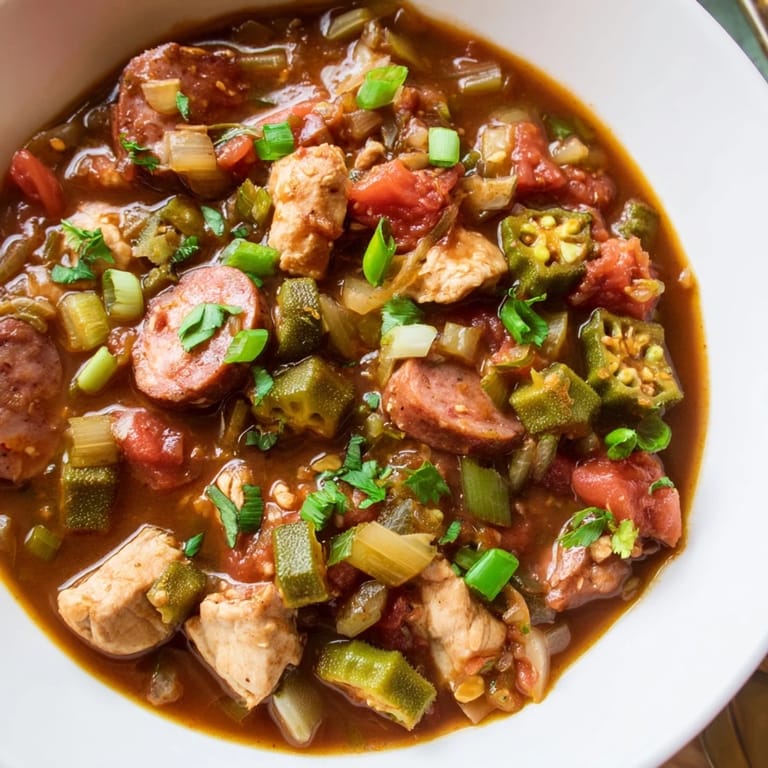
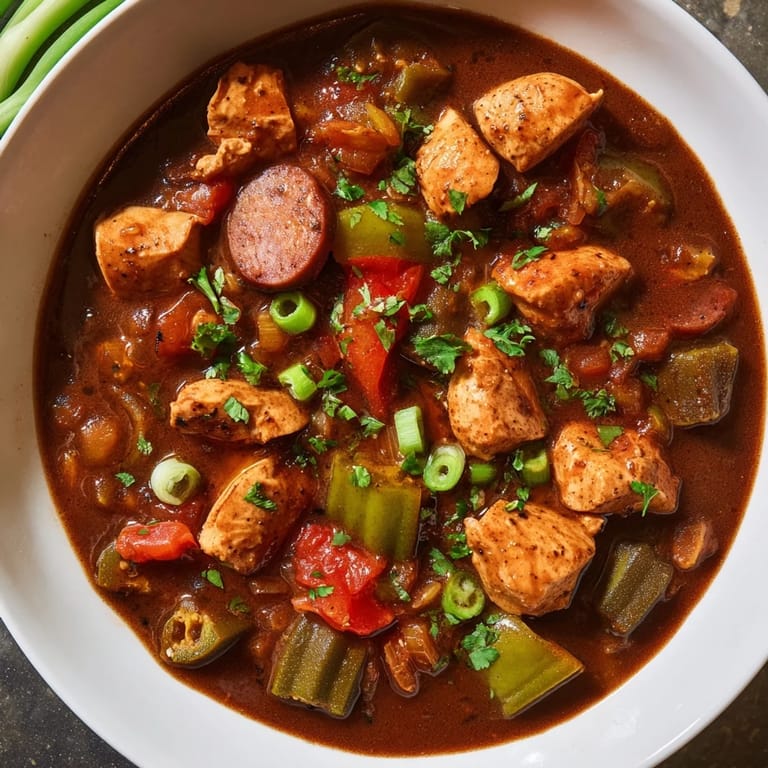
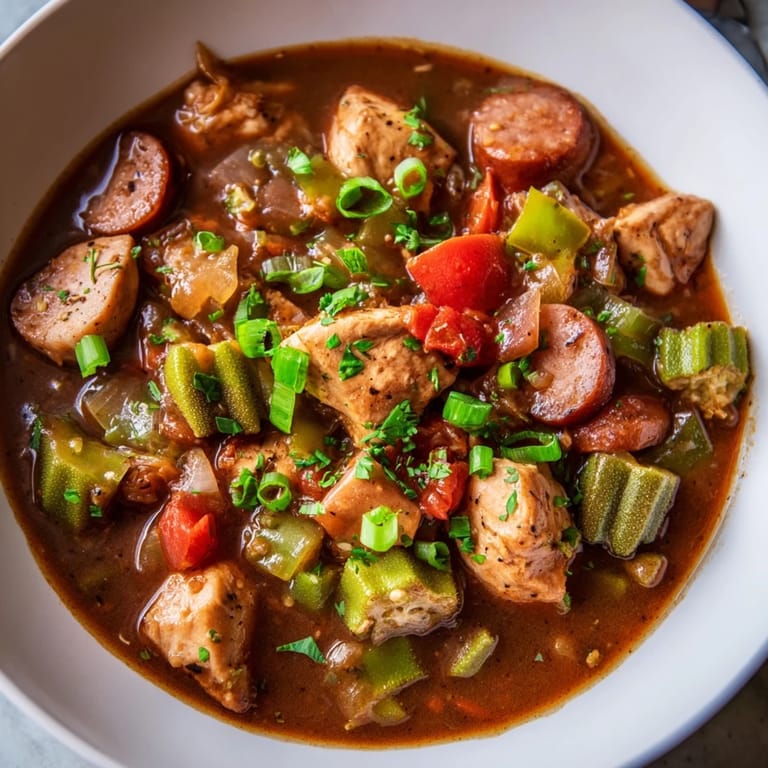
- Ladle the gumbo over warm white rice so the rice soaks up all that liquid gold. Top with spring onions and parsley for color and a fresh bite that contrasts with the richness.
 Pin this
 The moment I knew I'd truly made this dish my own was when my eight-year-old asked for seconds and my partner said, 'This tastes like love tastes'—which sounds cheesy but also, they weren't wrong. It's one of those dishes where the work you put in becomes flavor, and people feel that.
Building Layers of Flavor
Gumbo is all about patience and layering. The roux is your foundation, cooked low and slow until it's almost black. The vegetables add sweetness and body, the sausage brings smoke and salt, the chicken adds protein and absorbs all those spice flavors, and the okra thickens everything into something comforting and whole. Each ingredient has a job, and they all need time together to become one thing instead of separate parts sitting in a pot.
Variations and Personal Touches
Once you understand the structure of gumbo, you can twist it. I've made seafood versions by swapping the chicken for shrimp and crab, added extra heat for friends who like to sweat, simmered it longer on a lazy Sunday and let it get even thicker. My sister makes it with okra from her garden every summer. The recipe is flexible enough to be yours, but specific enough that you know you're making something with roots.
Serving and Storing Your Gumbo
Gumbo is one of those magical dishes that actually improves after a day in the fridge, as flavors continue to meld and deepen. Reheat it gently over low heat, adding a splash of stock if it's gotten too thick. It freezes beautifully for up to three months, so making a double batch on a weekend means weeknight dinners that taste like you've been simmering something all day.
- Serve it in wide bowls with plenty of rice so every spoonful gets both gumbo and grain.
- Crusty French bread on the side is non-negotiable for soaking up every last drop.
- Fresh hot sauce on the table lets everyone customize their own heat level.
 Pin this
 This gumbo is worth making when you have time to stand at the stove and let the kitchen fill with that deep, complex aroma. It's the kind of dish that brings people together before anyone's even sat down.
Recipe Questions
- → What type of sausage is best for gumbo?
Smoked andouille sausage is traditional, lending a smoky, spicy depth, but any flavorful smoked sausage works well.
- → How do I make the roux dark without burning it?
Whisk constantly over medium heat and patiently cook the flour and oil mixture until it turns a deep chocolate brown, about 15–20 minutes.
- → Can I use frozen okra for this dish?
Yes, but thaw and drain it before adding to reduce excess moisture and preserve texture.
- → What is the purpose of filé powder?
Filé powder, made from ground sassafras leaves, thickens the broth and imparts a distinctive earthy flavor when stirred in off heat.
- → How long should the gumbo simmer?
Simmer uncovered for 45–50 minutes, stirring occasionally to develop rich flavors and tenderize ingredients.
- → What is a good side to serve with this dish?
Cooked white rice is classic, and crusty French bread complements the dish perfectly for soaking up the flavorful broth.